Mickey Mouse is an cartoon character co-created in 1928 by Walt Disney and Ub Iwerks.











Visual Effects Society Awards nominee Claudia Chung Sanii (Zootopia) is the VFX Supervisor of the latest Pixar animated feature Elio, which is now playing in theaters. Discover some of the ‘out of this world’ challenges she and the entire team faced as they brought this sci-fi comedy adventure to the screen. (This Animation Scoop Q&A was edited for length and clarity.)
Jackson Murphy: Congratulations on the movie. I saw it last Wednesday at the early preview, and I really enjoyed it.
Claudia Chung Sanii: Oh, thank you. Thank you so much. It’s exciting.
JM: It is exciting. First I wanna ask you about being at Pixar for a number of movies in your career, and also at Walt Disney Animation Studios for some films. Do you like that back and forth ability to go from one to the other?
CCS: Oh my God. I’m so blessed and lucky to have done that. That’s so rare. I moved down to LA because of my husband’s job and I was so lucky that Disney Animation was happy to have me join them. I grew up with Disney films… so it was a dream come true after doing 10 years at Pixar to then work on “Frozen” and “Encanto”, all these princess films, and “Zootopia”, which is classic Disney of talking animals. It was a dream come true, and at the same time both studios are places of learning and collaboration. I’ve been so blessed.
JM: You’ve had quite a career. And in looking at the animated films that you’ve been a part of, like “[Finding] Nemo”, “Ratatouille”, “Up”, and now [“Elio”], there’s a theme of curiosity that goes along with all of them. Do you really take that theme of curiosity to heart, especially in working on movies like these?
CCS: Yeah, a hundred percent. I think the thing that’s beautiful about animation is it works best when we’re creating something we just don’t know about. We are exploring ideas that are hard to explore as a human. Humans aren’t the cuddliest… most accessible… it’s hard to make those connections. But in animation it’s such a great medium to explore those ideas. And you mentioned “Ratatouille”. A rat cooking… that’s crazy. (laughs) But in animation we can explore that and try that. And I love how Pixar folds in these really mature themes through this medium. There’s so many layers to that and it’s great to be a part of it.
JM: For young kids, “Elio” may be one of their first true sci-fi experiences. I didn’t quite realize going into this just how sci-fi it was gonna be, but it’s really wall to wall and it’s fantastic in that sense. Were there visual inspirations for you in the sci-fi universe to put into this?
CCS: Yeah. The directors were inspired by “Close Encounters [of the Third Kind]” and “E.T.”, lots of the ’80s sci-fi. Our DP of lighting, Jordan Rempel, is a huge sci-fi nerd. Very sci-fi-esque lighting cues. Very Spielberg-esque. He was inspired a lot in that for the lighting design. It adds this richness and filminess to our movie. Even the grain he chose… we introduced grain back into digital frames… and that grain is a heavier grain because that’s an homage to the ’80s films.
JM: And what’s interesting about this movie is that a lot of it takes place at night or in darkness. Were there a lot of challenges with that?
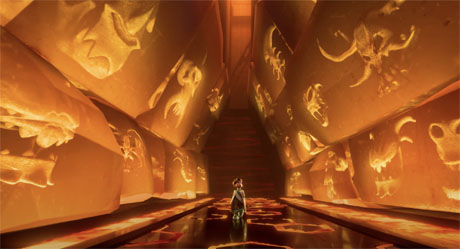
CCS: It’s a great question because, as we were developing this movie, people were really concerned. They’re like, “This is an animated feature. It’s so dark. It’s dark and scary.” But I think the directors, production designer Harley Jessup [and] Jordan really use light in a creative and specific way. The use of color is very specific. Elio’s color of green is very specific in how we use it. And that’s classic alien color too. Then as you get to the Communiverse, we really want the audience to be like, “Oh my God. This is amazing. I want to be here.” It’s kind of weird ’cause if you think of sci-fi, typically space is dark. Space doesn’t have light. Lots of sci-fi movies, when you get to space, it can be pretty monochromatic. But we want to flip that.
JM: One of my favorite shots in the movie is when Elio is falling out of the portal… right into the water.
CCS: I love that moment. The great thing about that moment is it’s in slow motion. One of the things I love about animation too, we get to change physics, how things move. The way his cape is falling around him… as you look back, it’s this bright pink beacon. You know what that means. As we make these films, we have temp music, temp sound, and we try to get as much as we want, but Rob Simonsen, the composer, actually came in after the picture was done. And he’s doing samples and stuff here and there. And I remember the screening when we first heard the score. He played those notes that are Elio’s theme. I’m like, “Damn you! You’re getting me! I’ve seen this movie a billion times”, but just to have that element on top of all the things the crew layered in… I love that you picked up on that.
JM: It’s a fantastic moment. And the way this movie opens with him being immersed in the planetarium and just that vibe and bringing us in visually, you create something that feels dramatic and immersive.
CCS: I think the idea of space is universal. It’s something that everyone on Earth can look up to and wonder about. Along this way… this film’s been in production for a couple of years now… and the James Webb Telescope landed. All the images came from that and we used some of those images in that planetary moment. We consulted with Dr. Jill Tarter, who’s the inspiration for Jodie Foster’s character in Contact. She has a great connection with Carl Sagan as well. It is universal, this idea that we are struggling or we feel alone. It might not be because our parents died. It could be for any reason. But there’s something very hopeful about stars and space and planets and galaxies. I think that’s a shared curiosity: what’s out there.
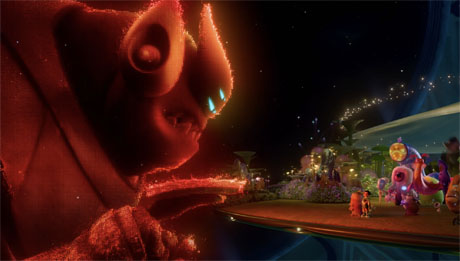
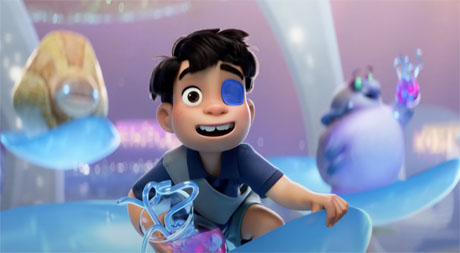
JM: When Elio gets to meet Glordon and Lord Grigon and all the other creatures that we see — wow! They are unique looking and all have their own movements to them. And in some of the action moments and the peril moments, they’ve all gotta go quickly. You’re keeping track of a lot of characters and they all probably move a little differently.
CCS: Yeah. As we make these films, we have to choose our challenges, and the Communiverse was definitely one of the challenges. But we’re always driven by the core of the movie. And it’s about this world, this Communiverse where aliens are coming from all different corners of the universe. And our process of developing those characters mimics that. So we had designers come in with different styles and we had our character team build… actually fold in their own styles into these aliens, ’cause we wanted them to be different. We wanted them to be different, but also the same world. As much to the chagrin of my character and set supervisors, we had this philosophy on “Elio”: “Let’s just do it. Let’s not say ‘No’. Let’s just do a billion aliens. Let’s just do this crazy new world…” because we’re only limited by our imagination. Hats off to the crew because they loved it. They layered on their own expression and their own personal details into each alien, each biome. It was super fun.
JM: In one of the “bargaining chip” scenes, how do you get Lord Grigon to look the way he does on that screen with the red and orange? How do you make that effect work really well?
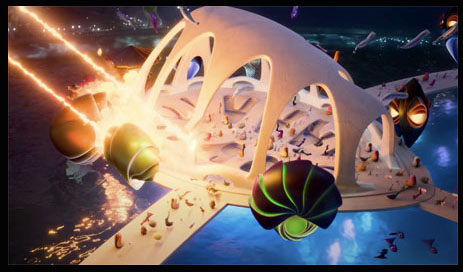
CCS: The cool balance of the Communiverse is this organic world of our aliens, but also advanced technology. The effects artists who developed that hologram look were thinking about that. “It’d be such a dream if we could take the drones that are happening now and recreate Grigon.” But we were inspired by that [and] the scope and scale of Grigon. The way we did actually make it happen is an animator would go in, animate Grigon at ginormous scale and the characters will act to that. And then our effects artists would go in and make the drones happen. We like putting the glitches in there too ’cause that gives us a sense of texture and organicness to that technology.
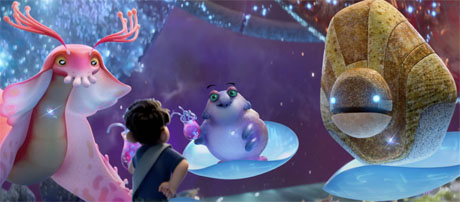
JM: That’s very cool. Was it interesting to keep track of two Elios and two Glordons?
CCS: We had so many characters, Jackson, that we were delighted that two more characters were clones of the ones we already made! (laughs) And who doesn’t want more Glordons on screen?!
JM: I believe that what you guys are doing at Pixar makes a lot of sense: You’re putting out originals and you’re putting out follow-ups. I think both are healthy in the ecosystem. Why do you believe so much in original movies… original stories like “Elio”?
CCS: I believe in what Pixar does best, which is telling authentic stories that connect to the audience in sometimes surprising ways. I’m a parent of three. I love the bored parent watching a movie and being like, “Wait, what? Why am I crying?” (laughs) Pixar is not the upstart studio anymore, but the talent here is constantly evolving. And so I think there are always new voices and the new experiences of generations as they grew up with… They grew up with “Toy Story” or “Ratatouille”, and they’re inspired by anime. I think they all have a story to tell, and I think we need to support that. We need to start with that craft of storytelling and filmmaking and give the audience this sense of wonder and delight you feel when you walk into a theater. That’s crazy — the sense of escaping our world and walking into this dark room and just being delighted. It’s magical.