Mickey Mouse is an cartoon character co-created in 1928 by Walt Disney and Ub Iwerks.









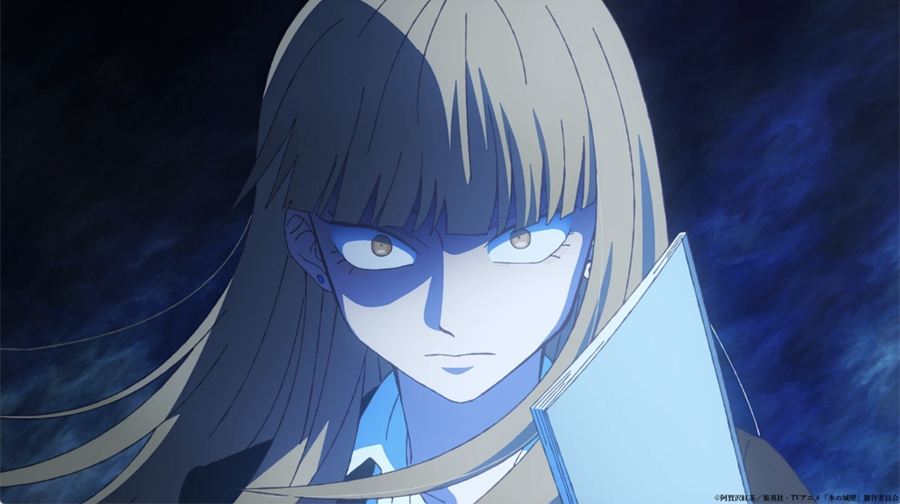
Although some people cultivate an after-the fact nostalgia for it, high school is seldom fun for students while they’re experiencing it. Hormones, insecurities, growth spurts, grades, skin problems and social pressures do not add up to a happy time. The Ramparts of Ice (2026, on Netflix) offers a well-observed look at the social and psychological minefields students navigate daily.
Koyuki Hikawa was cruelly bullied in middle school. Alternately teased and ignored, she’s convinced she’s a terrible person no one can stand to be around. As the title suggests, she’s isolated herself behind a glacial facade designed to forestall any contact with her classmates that might produce further pain. Her parents’ divorce left her even more distrustful: How could her warm, affectionate father just…leave?
Koyuki starts high school with one real friend: Miki Azumi, who is pretty, outgoing and popular. But she quickly finds herself having to deal with two guys who travel in Miki’s orbit. Everyone agrees Minato Amamiya is nice guy. He goes out of his way to talk to lonely classmates. But there’s something a little self-conscious about his attention to others: He wears his concern like a letterman’s sweater. When he tries to talk to Koyuki, he nervously puts his foot in his mouth so often the viewer expects to see sneaker prints on his tongue. His buddies point out that while Minato may have had girlfriends in the past, the relationships were always superficial: He’s never truly given his heart to a girl—or had it broken.
The fourth member of the central quartet is the gentle giant Yota Hino. He’s so tall, Koyuki discovers he’s easy to spot in a store or at the station. Yota is coping with a complicated home life. His mother died when he in elementary school, his father remarried, and he has to deal with a young stepmother and two boisterous half-siblings. When he explains all this to Koyuki, he assures her he’s OK and tells her not to worry, but it’s not surprising he seeks out odd corners in the school buildings where he can just be quiet.
Yota’s warm sincerity breaches Koyuki’s defenses: They begin to talk openly about their problems and share confidences. Koyuki realizes Yota’s reassuring presence makes her feel comfortable and at ease—feelings that are hard to find when you’re a high school student. They obviously like one another, but are they just friends or potential romantic partners? How and where do Miki and Minato fit into this romantic jigsaw puzzle?
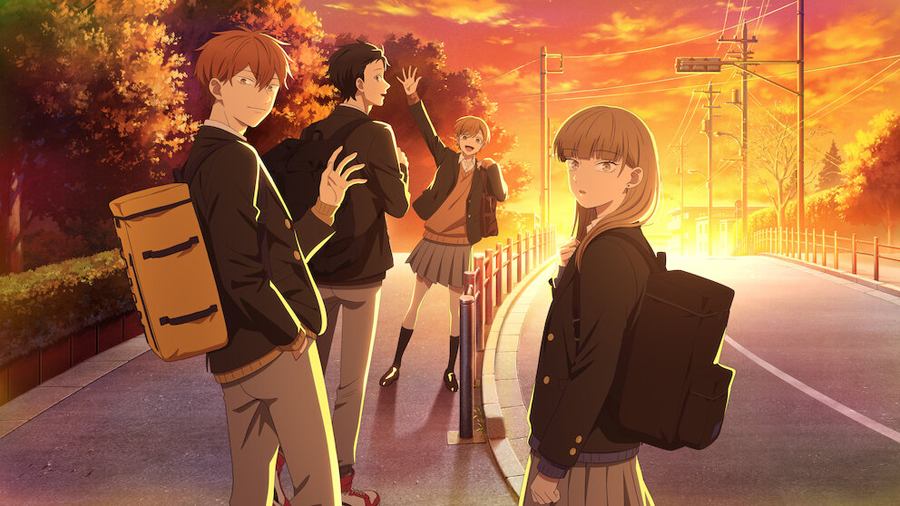
Ramparts of Ice is based on a manga by Kocha Agasawa, who also created You and I Are Polar Opposites(on Crunchyroll). Agasawa captures the feelings of teens going about their ordinary lives–hanging out together, studying, worrying–with exceptional accuracy and skill. Who’s asked to join a study session, who texts whom, who walks home together become almost a meta-language fraught with meaning. High school relationships follow weirdly skewed paths no mathematical formula can track; sorting them out can be more challenging than any homework assignment.
Directors Mankyu (Ramparts) and Takakazu Nagatomo (Polar Opposites) preserve the strong individuality of Agasawa’s characters using often very limited animation to underscore the emotions. When Koyuki and Yota compare the size of their hands—his are huge, hers petite–animation communicates the slightly awkward intimacy more effectively than a panel in a manga. Miyu Suzuki, the heroine of Polar Opposites, is an upbeat chatterbox. Nagatomo uses comic transformations—from an emoji to a pink blob—to suggest her rapidly changing moods. Koyuki is quiet and withdrawn, which Mankyu stresses through more subdued animation. She has comic moments, as when she confuses Amamiya’s first name with his dog’s name. But the changes in style more often capture the heroine retreating to her glacial fortress, rather than bouncing off the walls of her school homeroom.
Unlike the title character in Dreamwork’s Ruby Gillman: Teenage Kraken (2023) and other American heroines, Koyuki can’t depend on magical powers or transformations to solve problems. Although she’s smart, she hasn’t mastered the entire STEM curriculum, nor does she battle huge external threats. Koyuki and her friends face equally malign but more personal foes: self-doubt, insecurity, rejection, fear.
American animated heroines sometimes become so aspirational, they cease to be relatable. Like real high school students, Agasawa’s characters make mistakes and bad decisions and have to live with the consequences. They often feel embarrassed and frustrated and misunderstood. The relationships eventually sort themselves out in ways that feel appropriate to the characters—and the audience. The viewer senses Koyuki will eventually find a reasonably satisfying ending with one of the guys, but it won’t be a happily-ever-after conclusion with everyone dancing to an old rock song. Two young people will enjoy the time they share, and that’s all the story requires. Koyuki, Yota, Minato and Miki are very human teen-agers, not princesses and warrior knights. Their human limits make them feel real—and more interesting to watch than a cadre of superheroes taking out monsters and giant robots.