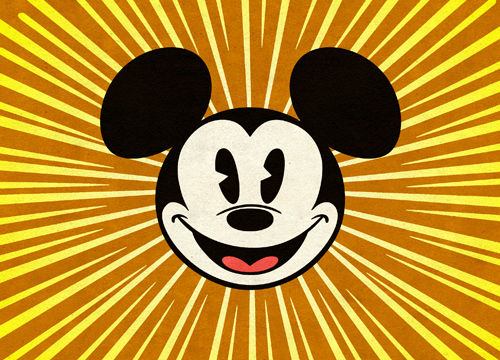
Mickey Mouse is an cartoon character co-created in 1928 by Walt Disney and Ub Iwerks.







Steps, one of Netflix’s exciting upcoming animated features, reimagines the fairy tale of Cinderella in unexpected ways. Directors Alyce Tzue and John Ripa spoke about the personal and visual inspirations behind the project, their approach to creating a fresh retelling, and the themes at the heart of the story. (This Animation Scoop Q&A was edited for length and clarity.)
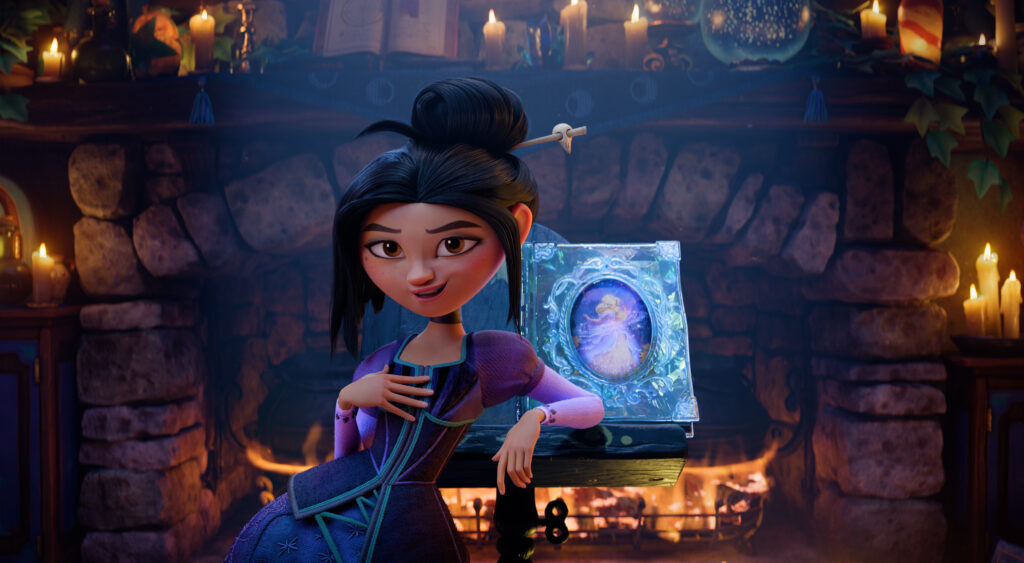
Lauren Ashton: Cinderella is obviously one of the most well-known fairy tales ever, and I dare say there have been quite a few versions where filmmakers kind of turn it on its head, right? What made you want to also pursue retelling this classic fairy tale?
Alyce Tzue: Cinderella has always been one of my favorites. And I think my personal story has a lot to do with it as well. I grew up as the only Asian kid in my class in Jersey, which had a kind of homogeneous communit. And I was a nerd, and I didn’t belong. I was a lover of fairy tales, and yet felt so different in my community, like I couldn’t find my happily ever after. So I’ve always been really interested in overlooked characters, and especially in Cinderella, as it’s one of my favorites.
The stepsisters have never been the protagonists, have been overlooked, they don’t get the magic. And so I thought that could be really interesting— to focus on a stepsister who feels like she doesn’t quite belong, and ask the question, “well, why doesn’t she get the magic?”
LA: I love that. I want to say I also love the design and the look of the film. Not just the colors and like the shapes, but the movement of the characters seem very specific and humorous. When you initially set out to create the visual landscape, what was your vision for the world, and what was most important to you both?
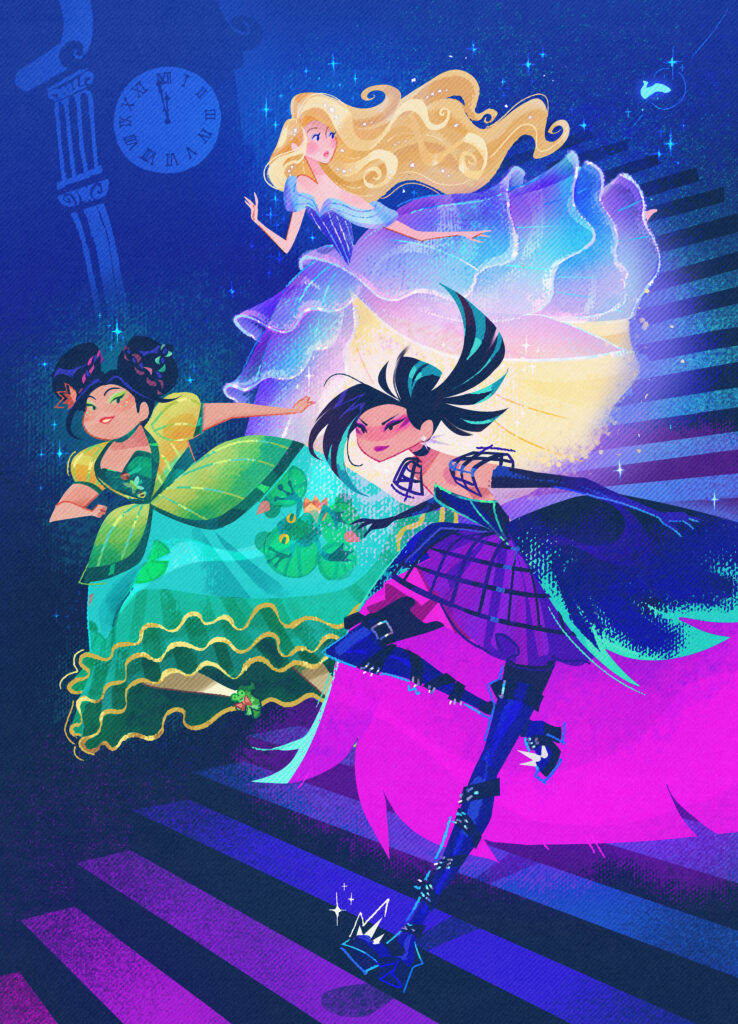
John Ripa: I think a lot of the vision comes from Charles Perrault’s French version of Cinderella. That was such an influence, and all that that story brought to it with the pumpkin, the glass slipper, the fairy godmother, etc. The era of French Rococo and Marie Antoinette played a heavy influence in the design of the world, because it’s so ornate and rich and textured. Fabrics and everything.
AT: The Marie Antoinette world was kind of “let them eat cake”, right? A lot of our textures are inspired by desserts! When you work in a fairy tale kind of fantasy world, you can make things feel richer and larger than life. So we really wanted the world to be something you almost feel like you can taste with your eyes, and that was inspired by how detailed and rich the Rococo world is.
LA: That’s so cool! Now that you describe it that way, it does seem like a lot of the texture looks very tactile and almost edible.
AT: Yeah, like some of the wood is inspired by chocolate, the paint is inspired by frosting, the wigs are cotton candy.
LA: That’s so fun.
JR: It’s subtle things here and there that I think people feel, but they may not be able to place.
LA: Nice. So there seems to be a lot of nuance to this story as well, and something I sensed from the presentation was that there wasn’t a very clear “good versus evil dynamic,” which I love. What was it like finding the story for a retelling that turns those expectations on their head?
JR: In terms of finding the plot, you first have to find the characters, and what relationships are key in the film. Because that’s what drives the plot. You never want to force characters to do something that they wouldn’t do. Once you build them, you want the characters to lead and make choices. So, some of the first steps were figuring out, “who is Lilith? Who is Cinderella? Who is Margot, who is our villain?” Then we let them kind of help find that plot.
LA: I think that’s an interesting insight for audience members and also for aspiring filmmakers. So moving further into character— how much does the vocal performance inform the story? And how does that affect creative decision making? When you’re casting, how do you know you found what you’re looking for?
AT: I mean, Ali Wong was the first to join the cast as the main character Lilith, and we really can’t imagine anyone else voicing this pivotal character who needs to have such sharp wit, humor, and comedic timing. A professional comedian just brings it in spades, and yet she has a vulnerability to her. She definitely helped us hone in on the tone of Lilith. A lot of her stand-up is really great, sharp commentary that just resonates in a sort of unexpected way. When you watch the movie, you’ll see Lilith sort of taking some jabs at the conformist kingdom that you’ll find are very, very specific to Ali Wong’s tone. She’s really helped us with the jokes for sure.
LA: So when you’re developing the script and working with the voice cast, especially someone like Ali Wong who brings that comedic background, do you all make changes to the script after hearing those performances?
JR: I think we have terrific writers on the film, and they learn the voice of the characters. For example, you could ask, “can you put this in the voice of Ali? Can you put this in the voice of Bette Midler?” They kind of learn what the specifics of the actors are, and then they start to tweak the dialogue and hone in on what makes them pop and come alive.
LA: Cool. So, which character do you feel was the most difficult to develop in this process?
AT: I would say Cinderella, because she’s such a beloved character, right? You want to fulfill the promise of what people love about this character, but you also want an original take on Cinderella. So we considered a lot of different directions.
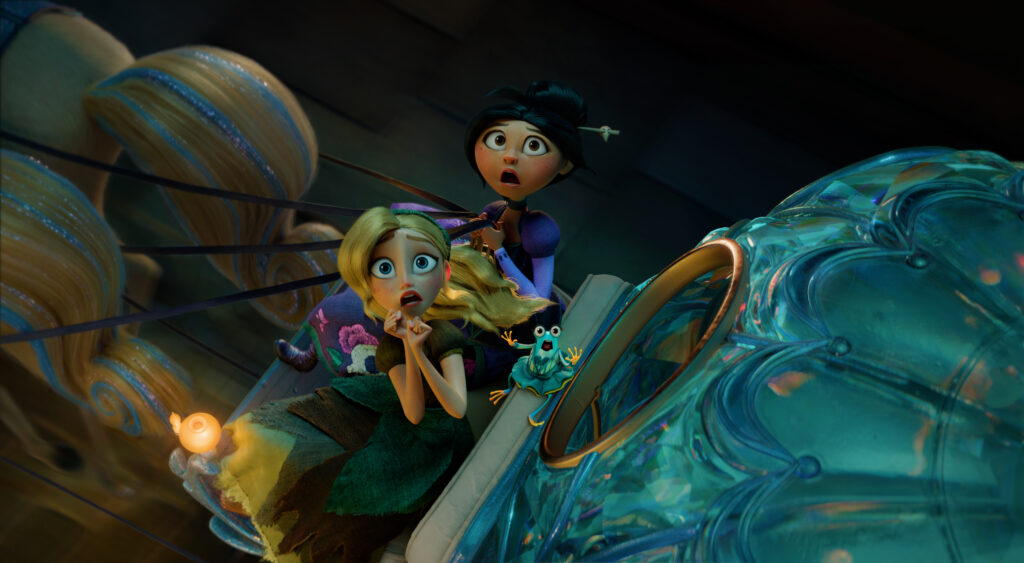
There was one idea where she spent most of the movie with the prince. But then we realized that she wouldn’t feel like enough of a layered, real-life woman that has dreams of her own. So we kind of veered away from that. And there was a burden where we were like, “well, maybe we should flip it on its head and just make her evil, and the step sisters are good!” But it’s a huge push for the movie and a huge goal of ours to make sure that there are no good and evil archetypes. It’s not as simple as that. Ultimately, it really became a story about sisterhood. And so you might go in with some expectations of who is good and who is evil, but they show their layers, and they show that they’re ultimately just human beings. And I think that is what makes our movie special.
LA: Amazing. What are you hoping that audiences will take away from this film?
JR: I think we both really resonate with the themes of empathy, inclusion, and belonging. And I think it is our hope that even just one person starts to think about who’s around them. To be a good neighbor, to reach out a hand to someone who maybe feels left out or feels different. That would be huge for us.
LA: For younger audiences, specifically girls, what are you hoping that they might take away from this?
AT: It’s been a huge goal of the movie to portray our largely female-driven cast with a diverse range of personalities and hopes and dreams. So I hope that girls will take away that they don’t have to be perfect. It’s okay to make mistakes. It’s okay to be who you are. I think that’s a huge lesson that all of our characters learn: to be authentic no matter who you are. You’re a good person. You deserve your happily ever after. That is a big message. You know, the step sisters that didn’t get their happily ever after— even they deserve their happily ever after.
LA: I can’t wait to see it!