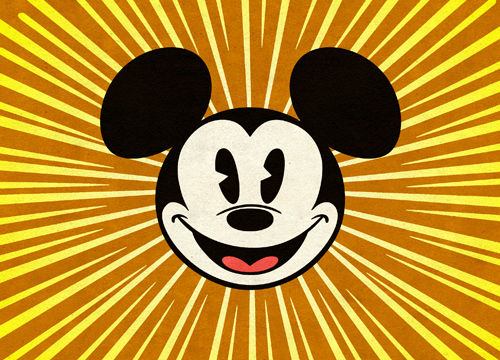
Mickey Mouse is an cartoon character co-created in 1928 by Walt Disney and Ub Iwerks.



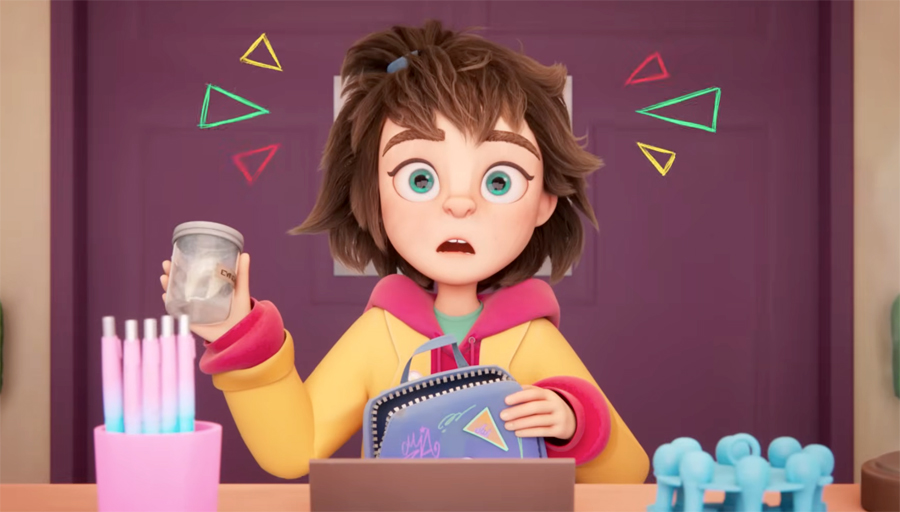
Verena Fels is the director of the spooky fun new animated feature Monster Mia — in theaters nationwide beginning this Thursday October 8th. The film, which screened at Annecy earlier this year, based on a book series about a girl who hopes humans and monsters can get along with each other. (This Animation Scoop Q&A was edited for length and clarity. Images: Sola Media)
Jackson Murphy: Congratulations on this. First of all, how does it feel to have this movie out in theaters in time for Halloween for families to really enjoy this on the big screen?
Verena Fels: It’s super amazing for me. I think it’s my first movie which goes to the U.S., so it’s super crazy how it hits in the cinemas, and a great honor. And it’s almost not believable that it’s done and finished and on screen.
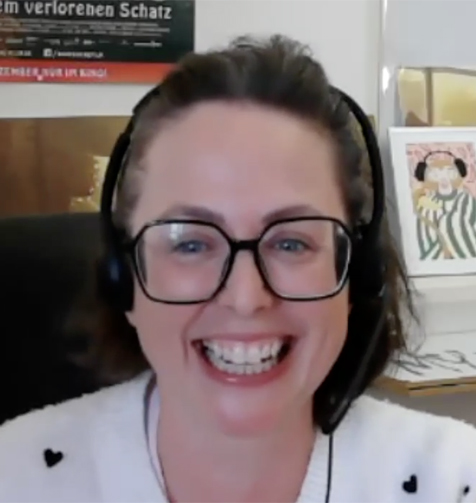
JM: You also got to screen this movie at Annecy earlier this year. How was that experience?
VF: As I was a young student, we went to France to the festival, and so for me it was like… Yeah, [I] really became a filmmaker to have my feature film there premiered. It was wonderful to see all these movies that inspired me years ago, and now I have my own movie with them. Wonderful. It was super, super exciting.
JM: Fantastic. Were you always interested in animation from a young age, getting into this medium?
VF: Yeah. I did my diploma and… even when you’re graduating high school, I did a short movie already. And then of course I studied animation, and so we went as students to film festivals. And now, as I’m a professional, I’m doing the features.
JM: That’s great. “Monster Mia” [is] based on a book series called Monstrous Maud. How familiar were you with the books going into making this?
VF: Not that much, to be honest. But I like the books, and of course I knew them. I was presented a screenplay out of them, and so I had the chance to work with the screenplay. And of course I read the one book, and I had my inspirations with that, and so I mixed a bit, and I had the chance to work one round of script writing with the authors. So I brought a lot of my inspiration in the final draft.
JM: That’s terrific. Mia is such a strong lead character in this movie. Young girl with a lot of personality. How did you wanna showcase that personality, especially early on in the film?
VF: I think this was my catching point of the story, that Mia is such a strong role model for young girls especially, but also I hope for all genders. I think I wanted to make her strong in a way that she is kind of independent, not believing everything she is taught in school or from her parents and so on. So she wants to experience the things [on] her own. And I think it’s super, super [true], especially in the times we are now, that you are not believing in everything you are seeing or have been told. You have to think for yourself and be independent and strong. Even when you’re a bit afraid of something, you can find your ways and be creative and powerful. And with friends, of course, everything is easier.
JM: Sure, yes. Having friends, and that source of independence and strength. But also she has a twin sister named Marie. How was it for you as a storyteller working with that angle? Because a lot of times twins in movies — that can create really interesting dynamics in storytelling.
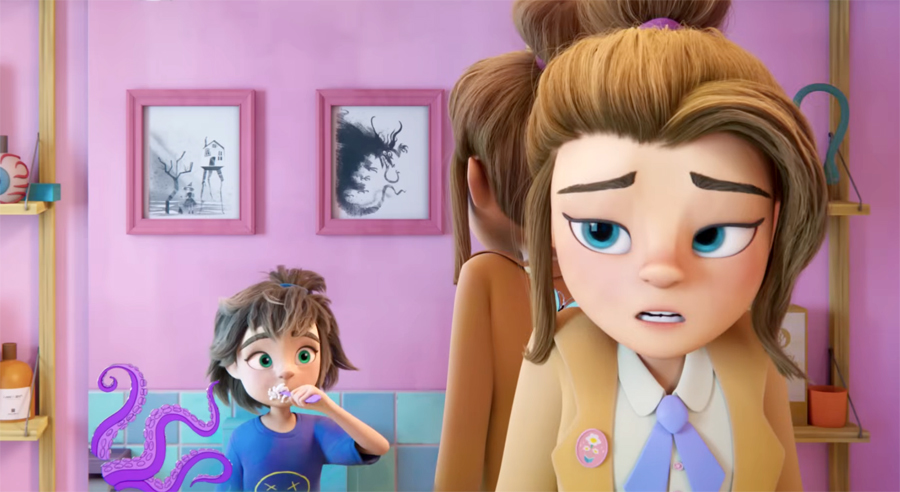
VF: For me, it was important that the relationship between the sisters is kind of real because of course, you always have a really special relationship to your parents, and especially the sisters because you don’t like each other every time. I think the hardest fights are between the sisters, but they love each other, and so this dynamic is super interesting to be really clear, really honest, but on the other hand, when it matters, you stick together and have this kind of bond between each other. And of course, the contrast was super interesting that Mia is the complete opposite of Marie and so on.
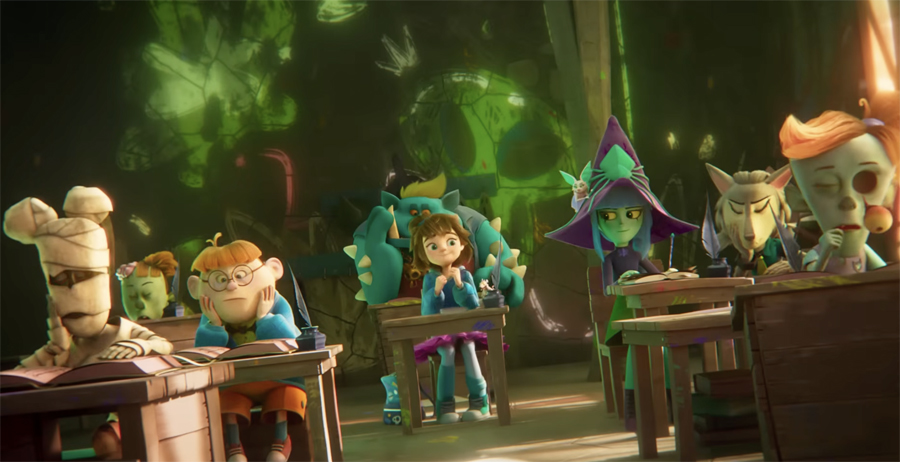
JM: And there’s a lot of contrasting here because you show the dynamics of this town of humans that hate monsters [Primrose Valley], and then Mia ends up at a school of monsters that hate humans [Rotwood Academy]. There are a lot of layers to that. There’s a lot of comparisons and elements, and how exciting was it for you to play with all of that and figure all that out, and present all of that over the course of the story?
VF: It was super because you have the chance to create two complete different worlds and films. You don’t have to stick to one world. You can compare it to each other. My main thing was always to create contrasts in everything — in light, in color, in animation, in sound. You cannot be loud without being not so loud. And you cannot be shining bright without having the shadows and the dark stuff and the edgy stuff. So this was super, super cool for me to create this crazy world, and on the other hand, Primrose with this cotton candy world, and Rotwood with this edginess. And of course bringing all these little Easter eggs in with my favorite movies and references and all this stuff.
JM: I wanted to ask you about all that because the visuals of Rotwood Academy and the way it is, and the Gothic nature of it, I had to imagine there was inspiration from classic films and classic animation that went into the designs of the school and the atmosphere.
VF: Absolutely. I think there was a little bit of my artsy genes in it from film school and all these films I had to learn also with the German expressionism. So even though it’s a mainstream and an entertaining family movie, I wanted to bring something of these references in, and it is in my genes to have these visuals. And so it was super fun to bring it on a more joyful thing into these pictures and into this world — like Dracula or Frankenstein or all these monster movies you know by heart. And then bringing them in a new context, in a new world, in my world, in my interpretation of this stuff. It was amazing.
JM: Nice. I love the headmaster’s coffin chair. That’s perfect for his personality and perfect for the atmosphere. And were you inspired by geometry? Because there are, even in some of the opening scenes where we see a bunch of houses in town and a lot of things, there’s such well-defined shapes that I went, “Whoa.” Sharp angles and all that. Were you always into geometry and looking at things in that way?
VF: Yes. I’m an engineer on one hand, with the mathematics and all this stuff. I cannot deny that, you know? I like shapes, and when you have these clear structures, you can put a lot of emotions in this stuff. I like symmetry, of course, with Wes Anderson as a superhero. He’s a great inspiration always. I like that, and I try to bring it in… the connection between the story and the pictures are super important for me because it fits to Primrose. It fits to the story that everything is ordered. You have to be in line. So the symmetry was a perfect symbol of empowering the story.
JM: Okay, no spoilers here, but there is a song and a sequence late in the movie called “The Midnight Miracle”, and as I’m watching this and listening to this, I go, “This is a tribute to “Thriller”, right?” You do a good job with that.
VF: Yeah. Thank you. It was always “Thriller” — the inspiration. I’m a kid of the ‘80s. I cannot deny it. And so I brought it in. We wanted it to be close, but not that close that it’s a total rip-off. But I think it was good.
JM: This movie’s a lot about powers and what kind of powers you have. To me, Mia’s greatest power is her compassion towards others and being with those who may be different than her, but you all have commonalities. Those great messages and themes, how important was it for you to showcase those themes and get that across in this film?
VF: This was super important. This was a key personality of her. And I wanted to show that being different is a power, is something special. You are special in the way you are, and this is cool. And I think everyone in the team was a bit related to that. Because when you’re working in animation, you’re always a bit like, “Okay, I’m a bit different. I like the people around me.” So every one of us is a little bit kind of this Mia thing and a monster thing, but everyone has [their] skills and superpowers. A lot of the team members could relate to that. Everyone can sometimes feel a little bit like, “Okay, I’m different than the people around me.” So I wanted to bring that out.
JM: Yeah. And showcasing the unique qualities and the things that you have to offer, and how important all of that is. And I feel like you have achieved so much of what young people want to when it comes to animation. You’re making movies. You’re traveling the world. You’re getting it all out there. What would you say to young people who wanna get into this and want to achieve the success that you’ve had?
VF: I think the most important thing is be true to yourself. Be authentic with what you’re doing. When you want to tell stories, you can only tell a story if it’s honest, if it matters to you, if you feel what you’re telling, if you know what you’re telling. Sometimes the young students are asking me, “Okay, I want to tell this and this and this story.” And then for me, I always ask, “Okay, are you familiar with that? Do you feel that? Do you understand the people who are living that? Do you understand the people who have those problems or those conflicts?” Because you cannot tell a story you’re not authentic… emotionally connected, not only with the intellectual properties, but emotionally connected with this stuff. And I think this is the most important thing.