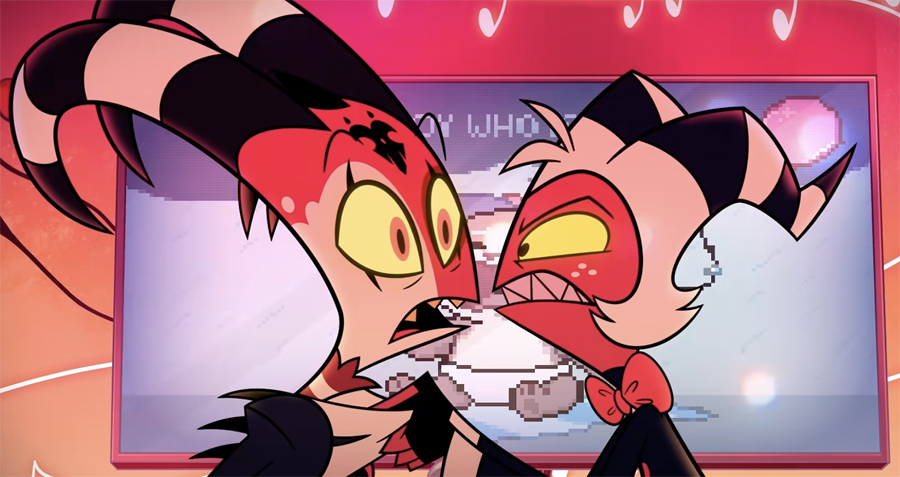
Mickey Mouse is an cartoon character co-created in 1928 by Walt Disney and Ub Iwerks.










Earlier this month, Minions and Monsters opened to a lower-than-expected box office. Personally, I found this installment to be one of my favorites in the Despicable Me universe. This made me wonder: does my love of movies and line of work make me especially receptive to its historical Hollywood setting and references?
Below, Pierre Coffin and Chris Meledandri share their creative approach to the film, why they chose to tell a story about filmmaking, and why this silly adventure will resonate with audiences—film buffs or not.
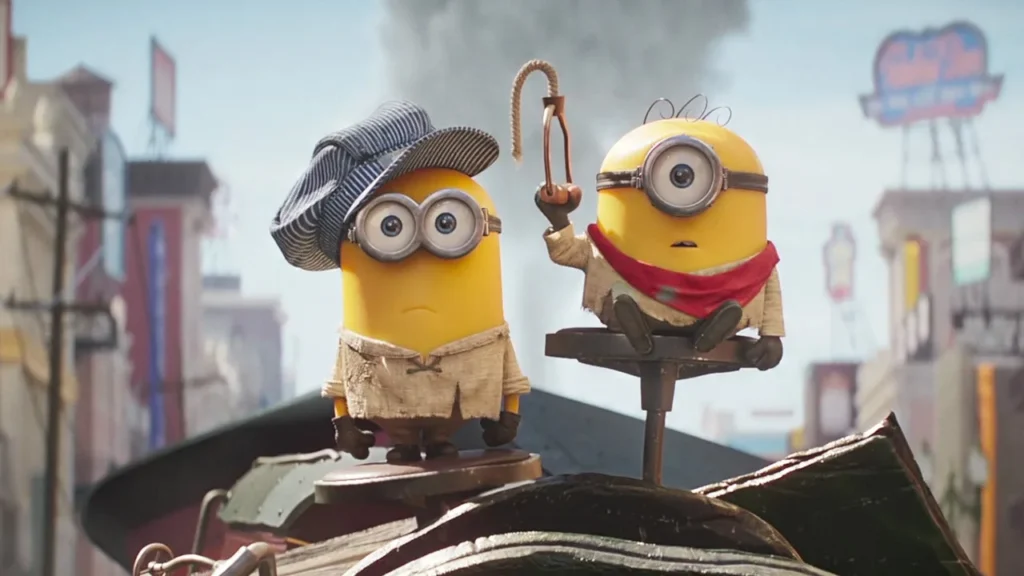
Lauren Ashton: So you’ve each been working with the Despicable Me universe for years now. What makes Minions and Monsters different from the other installments?
Pierre Coffin: We wanted it to be different for multiple reasons. My reason was I had this need of wanting to make a period piece. When it was established that the whole thing was going to happen in the 20s in Hollywood, I thought there was this visual possibility with design, with lighting, to have fun with animation, and to be able to write a script that permitted me to play around with structure. Is this a movie that is made by me, or by maybe a minion? With those new ideas, I tried to be as surprising as possible, to just go away from the previous movies that have been made. To just show that this one is not more of the same.
It has different characters. It happens in another place in time. We reveal that instead of the one tribe that was initially depicted, like with Kevin, Stuart, and Bob, maybe there are other tribes. This opens up a world of possibilities for future minion movies! The idea was just freshness.
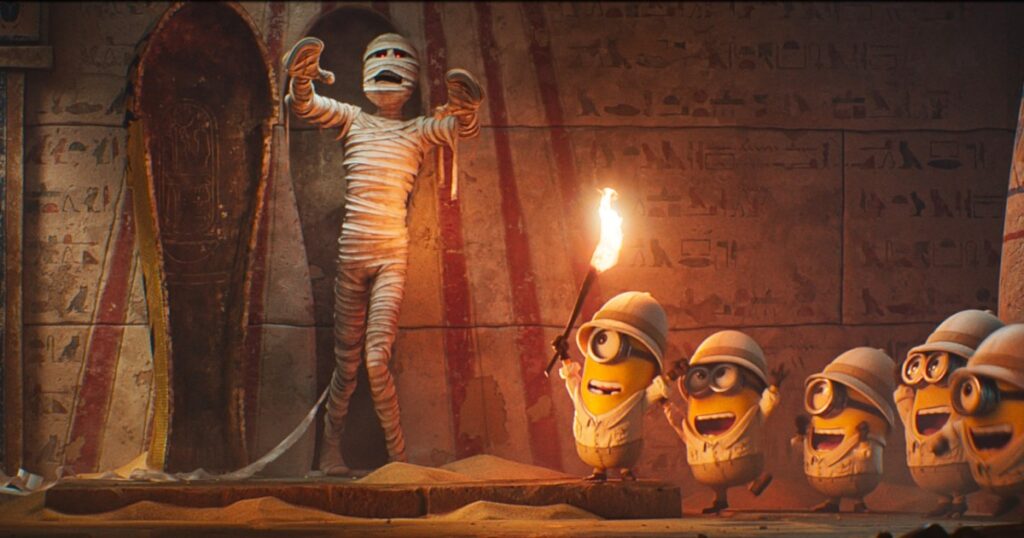
LA: The movie is genuinely so funny. How do you keep that silliness and that humor that this franchise is known for, but also keep it fresh, like you were saying?
Chris Meledandri: It really all comes from Pierre, because he needs to be excited and energized towards achieving a vision for the film (that’s very distinctive from what we’ve done in the past) in order to motivate all the other collaborators to follow suit. So once Pierre locked into this idea, he started firing on all cylinders in terms of what this world could become. You find that it energizes the group. And then there’s contributions from story artists, from the animators, from Pierre’s co-writer Brian Lynch.
The hardest thing I could imagine would be simply trying to recreate what we’ve done in the past and then maintaining the freshness that’s needed in order to really surprise audiences with the humor.
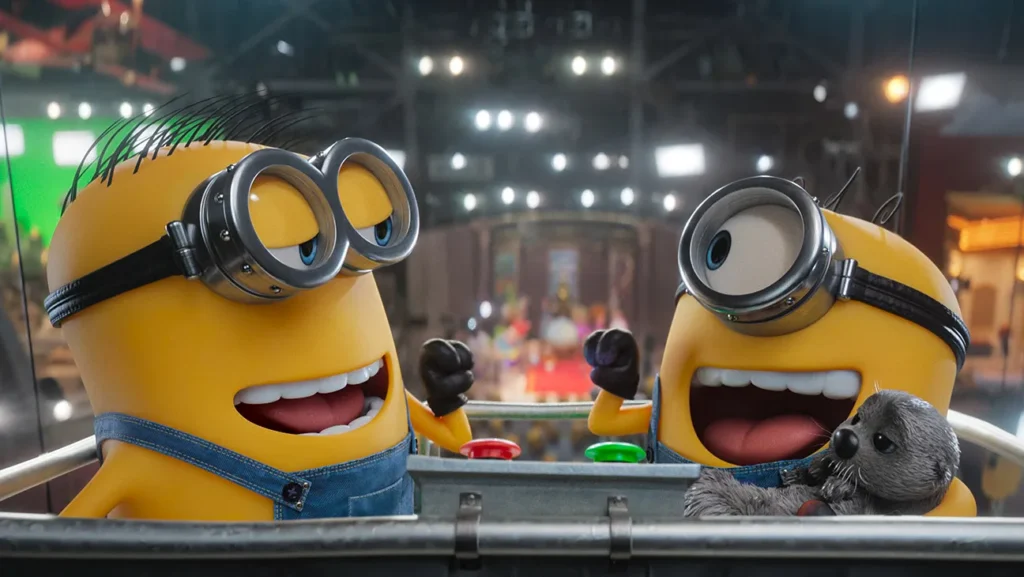
PC: And silliness and humor is really very subjective, so we try stuff and we see what’s funny in the moment, and then maybe we realize, like, three months later, it’s not as funny as we thought it was at the beginning. We have three years to make a movie, so we have three years to make it right, hopefully, and proper. But the silliness of it is part of the DNA of the minions, so we need to be able to care for those little creatures that we don’t understand, but feel for.
LA: There are some really fun new characters. Would you both share if you have a personal favorite of the new ones that we meet?
CM: Well, it’s easy for me because, first of all, Pierre named the character “James” from my son named James.
PC: And Henry is Brian’s son.
CM: But beyond that, beyond the naming of the character, James reminds me so much of Pierre. So we have the name of my son with a character that reminds me of Pierre. So those two combined to make sure.
PC: And I like Ed. I don’t know why, but one day I just woke up with an idea: wouldn’t it be cool to have a minion speak in sign language? That would say the words that the minions are saying, but in sign language? That’s why I really like this character, because he’s always there. He has a character of his own, plus he has that concept of speaking “Minionese” but in his own way.
LA: I love all the new characters. I also love how the director Max is so kind to James and Henry.
PC: There is a humanity in the new characters. Even who we think are the bad guys, they have this humanity in them.
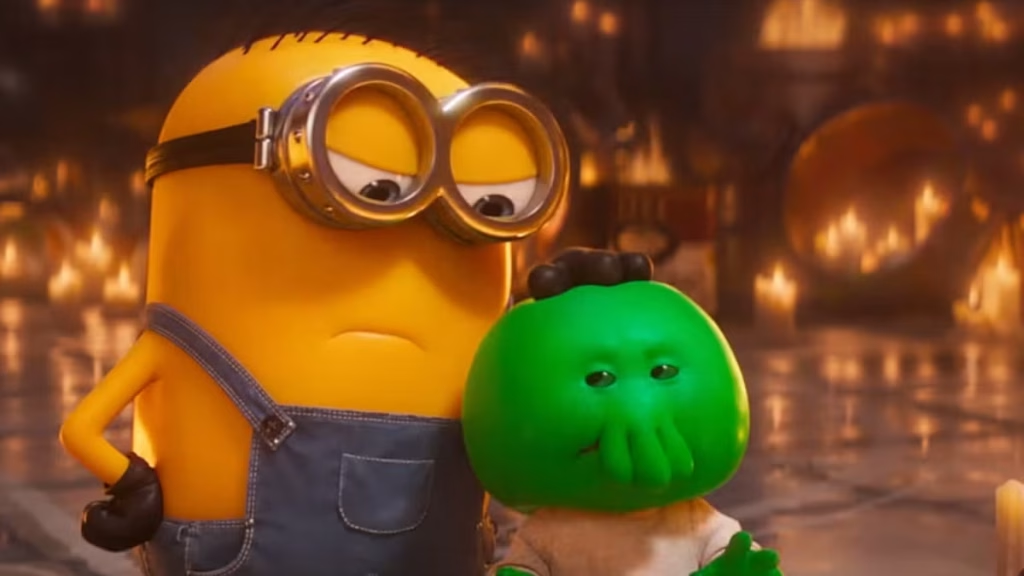
CM: I have a second one, though, which is the character of Goomi, that Trey Parker voices, who’s one of our key monsters. First of all, he’s so adorable, and I find him hysterically funny in terms of what Trey Parker did, and then surprisingly formidable for such a little guy.
LA: By the end, especially, I thought it was a very specific performance, both visually and vocally. It was really great, really fun.
So I was not expecting this Hollywood story. It was actually so weird and delightfully fun. How did the idea to make this movie about little filmmakers come about?
PC: I think that for me—just the concept of a minion who sets out to make a movie, and makes a monster movie through the process of actually conjuring up a monster that he no longer can control—that’s a really fun idea. But it didn’t really become an interesting idea until Pierre started to dive into it and really locate the core of what it was going to be. In terms of the world of the film and the layers of the storytelling.
And it brought us to this place where the movie is this incredible homage to Hollywood. But at the same time, it’s this very touching story about this one little guy (who happens to be a minion) who loves to draw and develops this dream to make a movie. And I find that to be such a touching part of this film, and ultimately defining of what this movie is, even with all of the silliness and the action. Ultimately, the heart of it is the drive to make something.
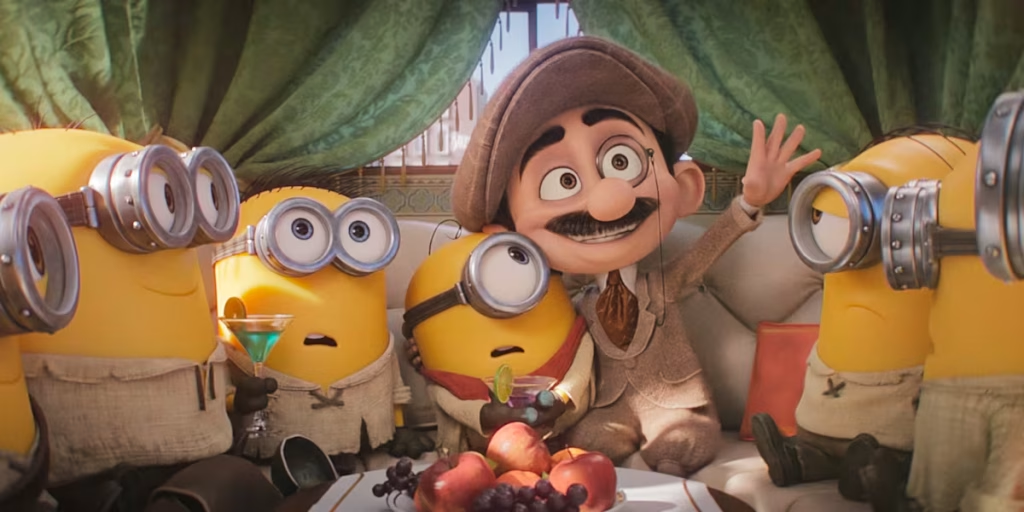
PC: I think that it’s all about finding context and what will help you either embody your character or help you nourish the visuals that inspire music, everything. And that period felt like terrain. I’ve not seen that in an animated movie, and it felt like I had all sorts of ideas when I started thinking, “oh, could it happen in Hollywood back in the day?” I had all these specific very random ideas. We had an idea about the sound right away. A lot of movies have been done with, you know, whether or not actors survived the invention of sound. Like Singin’ in the Rain. And I thought, “let’s revisit it, but this time with the minions in there.” All these ideas sort of popped up for me, and I think the era and the subject matter sort of inspired the 300 people who worked on the movie. It was a really good choice.
LA: Totally. I agree. I think that even if someone isn’t a big movie fan, I think people are going to know those references you make and really find it funny.
CM: I’ve gone to movies where I haven’t been able to understand the references and the Easter eggs, but at the same time, I really appreciate the fact that there’s depth, and it makes me want to learn what those references are. I want to be part of the process of digging in. I think we’re in a world today where we see movies over and over again if we like them, so the idea that people can go back to this film and see things that didn’t occur to them the first time through, I think it’s just a fun proposition for an audience.
LA: Yeah, totally. There’s more and more to discover each time you watch it.