Mickey Mouse is an cartoon character co-created in 1928 by Walt Disney and Ub Iwerks.






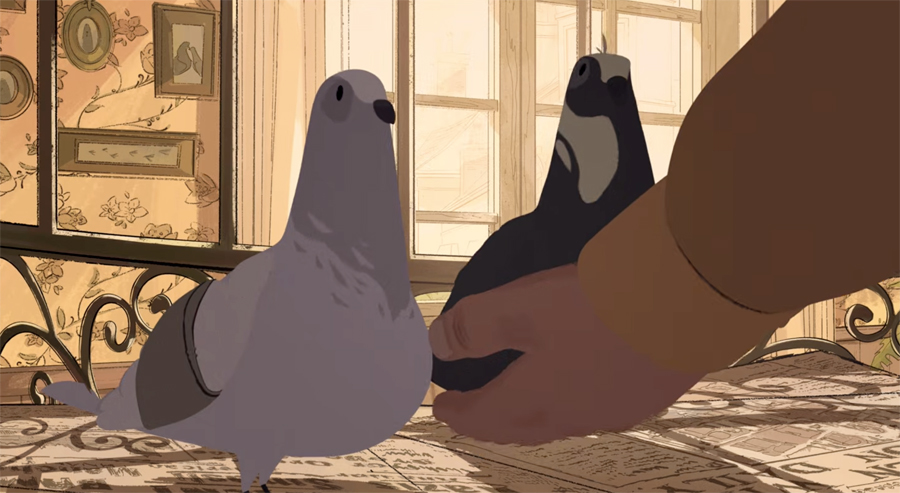
Amos Sussigan (of 2019 short Coaster) is the talented director of new animated short film Pigeons, which is vying for awards consideration. Narrated by Andy Serkis, it’s a drama chronicling major life events for these creatures, while also serving as a commentary on humanity and AI. (No Generative AI was used in the making of the short.) Sussigan is also the art director of Warner Bros.’ highly anticipated new The Cat in the Hat feature (in theaters November 6th) and the production designer of the studio’s 2028 Hello Kitty animated movie. (This Animation Scoop Q&A was edited for length and clarity.)
Jackson Murphy: Congratulations on “Pigeons”. I screened this, and I really think it’s an excellent film. I can’t wait for more people to see it. What fascinated you, first of all, about putting a spotlight on pigeons for your next animated short film?
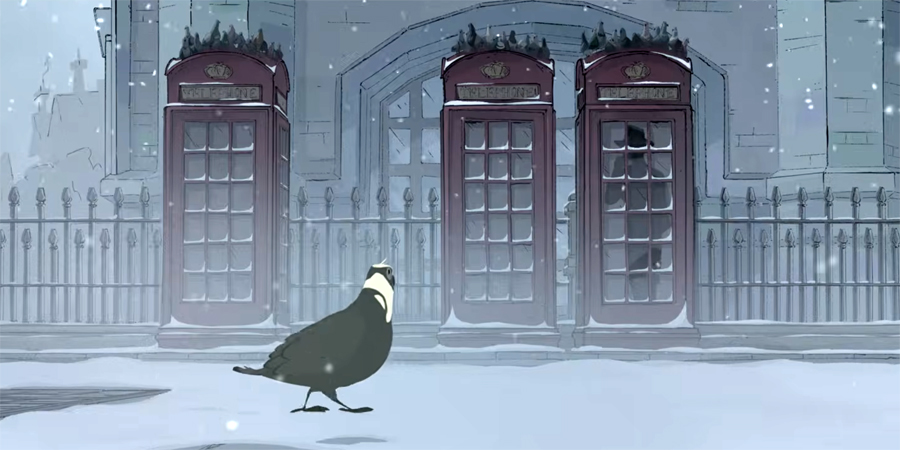
Amos Sussigan: You know, it’s funny, I wasn’t actually putting a spotlight on pigeons themselves. A friend and I, who’s also a writer and a producer on the short [Timo Von Guten], were talking about these newspaper articles about pigeons and how important they were during the war. We went down a rabbit hole on how important pigeons were throughout history. But at the end of the conversation, super casually, he added a comment that said, “Just like us with AI.” And maybe it’s the state of the industry, the film industry, the animation industry, personally how I was feeling. I was working on “Cat in the Hat”, but I didn’t have a project lined up right after. And when I flew back to Los Angeles, it was during the fires. Literally when I was on the plane, the fires started, so we couldn’t land, and then the drive home was five hours through fire. It looked even more uncertain. And the idea became very clear to me. It was: Pigeon has a job, the telephone replaces him, and then he tries to fight for food, shelter, and purpose eventually.
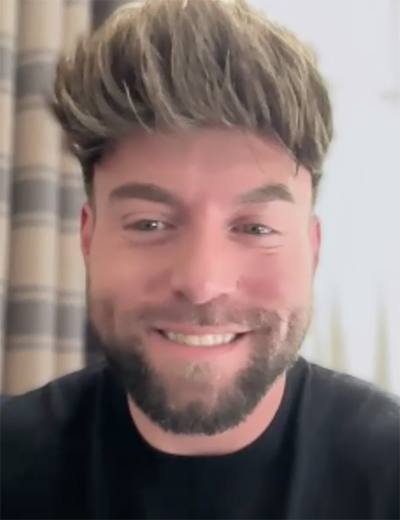
And I thought what interested me was the analogy between pigeons and humans. We could have called the short “Humans,” but it would have been probably a little on the nose. And then we thought, “Oh, animation would be the perfect medium to create kind of like this short, an analogy between kind of like what happened to pigeons, what’s happening to us.” And it is not a call to action against AI. It’s more an invitation to think about progress. Progress itself is not evil or the enemy. It’s more thinking about progress for progress sake, without remembering what came before, or the consequences of said progress that could be very complicated, and I think that we find ourselves in that exact moment right now.
JM: You pack a lot into this short, and I wanted to ask you about the emotional arc because as you watch this, there absolutely is an emotional arc — the layers that you were just describing. So in feeling that out, you say it sort of came to you pretty quickly, but then fleshing it out over this short film, what were the challenges of wanting to express all of that?
AS: I think from the beginning, the structure of the short was the same. It never changed. We made the short in 12 months with $20,000.
JM: Wow.
AS: It never changed, so we needed to be very firm in what we were trying to say. The second thing is I wanted to pay homage to animation itself, so tapping into the look and the style of “101 Dalmatians” but putting on top 3D animation and 2D Disney effects. And I really wanted to kind of treat it… I think that sometimes the discussion about AI technology and automation is treated maybe a little kind of lightheartedly. It’s either doomsday or it’s whatever. But I wanted people to look at the first pigeon and laugh about it and think that we were watching a heartwarming old-school animated movie that slowly, gradually got darker and darker. And then towards the end, you’re looking at the pigeon that now you know and maybe reminds you a little bit of what you were going through as an artist, or as a person. And then it makes you think about where we are and kind of, “What does that mean?”
And then another thing that we wanted to do was to treat it as a documentary / Animal Planet. The narration that comes in with Andy Serkis and the writer Julian Wagner. We can treat it as describing the description of a system, of something that repeats itself. We do not have to dramatize it. And that’s what we worked on with Julian Wagner. And when we brought in Andy Serkis, it was because it was giving us both… it’s gonna sound extremely dark, but also like your grandpa at the same time, without having to spell it out. In an Animal Planet documentary, it’s not that the narrator is gonna go like, “Oh, shucks, so bad. The guy got eaten.” It’s just like, “This is nature. This is a system. This is…” And so we thought that we could go a little darker with how we took the movie towards the end because the narrator was pretty even-keeled and almost detached. He’s like, “I’m just describing what’s happening. This is, you know, the circle of life,” kind of thing.
JM: Sure. You get that experience from Andy Serkis. You were production designer of his “Animal Farm” animated film released earlier this year. [I interviewed] Andy. It was a pleasure to meet him, and I loved learning about how much he loves animation and has for his entire life. So yes, with his narration in this, it is descriptive. Tone is so key… and I think you strike the right tone because of what you do throughout, but also with Andy Serkis’s narration. So how was it working with him on finding that right tone for this?
AS: Andy is amazing. I feel so grateful I got to work with him on “Animal Farm”. He’s been nothing but gracious. He always gave me the space, as a production designer and also on this project. Even if I have worked with Andy for the longest time, you don’t know if you can reach out to him and be like, “Hey, do you wanna work on something for free? It’s just like a bunch of artists that got together,” and so on. We had our executive producer, Bianca Marrocco, who also worked with me on “Animal Farm” that helped us, facilitating that. I wanted [Julian Wagner] to write a super nice letter with a deck and so on, make it really spiffy, treat it super professional. But then at the end I kind of chickened out, and I just sent an email, and it’s like three lines, and the script, and a couple of images. And Andy wrote back, and he’s like, “Absolutely, I’d love to do it. I’m shooting “Gollum” in New Zealand, so we need to figure out the timing.”
When he came in, he was so prepared. And the first thing that he told me, which I really appreciated, and he didn’t have to, but he wanted to let me know that I am the director of the short. It would’ve been very easy for me to be like, “Whatever Andy wants to do.” But that’s the first thing that he said, “You’re directing this. Just go ahead.” And then when we were actually recording Andy, we worked really closely with both Bianca and Julian to break down the script and just understand every line, what it meant. The general note is more detached, less dramatic.
JM: You mentioned that it feels like an Animal Planet experience, and I think that also comes through in the details you show about the behavior of the pigeons. Learning that they’re creatures of habit, learning their certain emotions and movements. Was there anything that surprised you in any research process or diving into specific scenes about pigeon behavior and then relating that to human behavior?
AS: One of the things that we wanted to do was to treat the pigeons and the animation as if they were pigeons. So we were trying to stay away a little bit from the idea of making them look like humans, like dead-on humans. So there’s a lot of flying, gliding, landing, eating the berries. There is something fascinating about them always knowing what home was and constantly coming back. That’s something that I didn’t know.
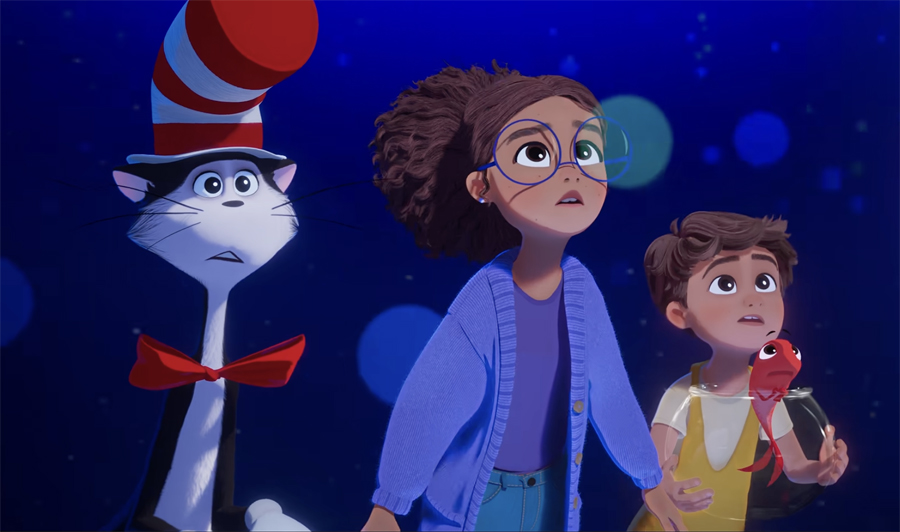
JM: “The Cat in the Hat” is in theaters November 6th. You are the art director on this, and I have seen the trailers. I can’t wait to see the film. It looks so colorful. It looks so energetic. And I was a big fan of the 2003 Mike Myers movie. That film is wild and… fun. What did you enjoy the most about putting all of your experience and your creativity into the look of “The Cat in the Hat”?
AS: The best part of working on “Cat in the Hat” was getting the chance to work with Aidan Sugano. Aidan Sugano’s the production designer. He was the production designer of “Nimona”, and I was a huge fan of his. He gave me the space to do my thing, specifically the color theory, color script and lighting for the movie, and he’s been extremely gracious. The whole overall arching theme of how do we treat colors on “The Cat in the Hat”? How do we make it poppy? How do we make it different? How do we follow the idea of the color red and how the cat brings the red into a world? We do start the movie in black and white, just with the red colors or the colors straight up from the book that are just five colors. And it’s been awesome to be able to do that on a major animated feature film. There are all these things in animated movies that it needs to be poppy and color everywhere. So I feel like both Aidan and the directors, Erica Rivinoja and Alessandro Carloni, gave me a lot of space to be part of it. I’m extremely grateful to Warner Bros. for allowing me to be there at WBPA… and be part of this movie.
JM: I think it’s gonna be a huge hit… a big hit for families. I saw you’ve also done some work on the “Hello Kitty” movie. I know you can’t really share anything… but has that been fun being a part of that? That’s a huge global brand.
AS: I wouldn’t be able to talk that much about “Hello Kitty”, but I am the production designer on “Hello Kitty”. As soon as I finished “Cat in the Hat”, I moved on to “Hello Kitty”, and it’s wild. Hello Kitty is multi-generational. It’s worldwide. Everybody knows her and the Sanrio characters. It’s wild. It’s amazing to be just engulfed by this culture and these characters that… have stood the test of time. They’ve been around for like 50 years. I am fascinated by the way that they designed them and the simplicity that they use for these characters. It’s very different than “Cat in the Hat” or the Dr. Seuss properties. And it’s a fun challenge.
JM: Nice. Well we can’t wait to see more of that as well. And because you’re doing all this press and promotion for “The Cat in the Hat”, as well as “Pigeons”, you get to travel the world. You get to showcase all that you have accomplished to everyone when it comes to your shorts [and] your features. What do you love the most about sharing animation and sharing what you’ve done to audiences of all ages all over the globe?
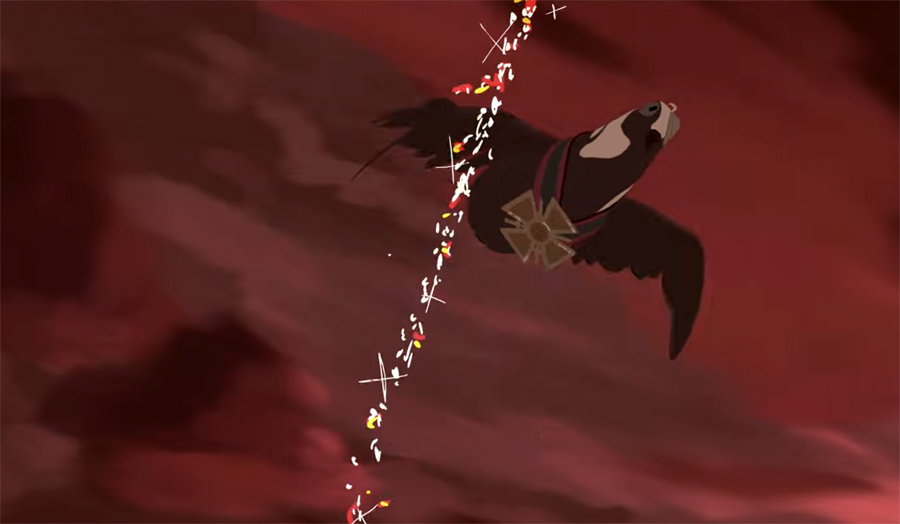
AS: I wish I could travel a little more, but it’s really hard. So it’s been really hard to travel for the shorts, especially with “Cat” and “Hello Kitty”. The first thing is just having to experience the festivals for the short or the campaign with people that have never done it before. “Pigeons” had around 60 people. They all worked for free. They donated their time and talent for free. And I feel that it is my responsibility to make sure that the short gets seen. And that they get to experience all these little things that maybe for me that I’ve done other shorts before or I’ve worked on feature films before. For me, I’ve done it but it’s amazing to see them experiencing it. So that’s the most important thing — trying to get as many people as we can.
And then more in general about animation: I think animation is still sometimes misunderstood. Animation makes so much money compared to like live-action. And I think that understanding how things are done in animation is amazing because it just really shows how many decisions you have to make. In live-action you have to make a ton of decisions too. But sometimes in animation it’s how many times you have to figure out what’s the color of the shoestrings of an extra in the background that you see once. In live-action you probably can get away with it. You’re not picking that color. But in animation you have to. You’re forced to make so many decisions. So when I go and we share, for example, like on “Cat in the Hat”, how we did the color script, what each color means… How does the color evolve throughout the movie? I love to see how people are amazed. And they’re like, “Holy cow. I see it.” So I love to see that sense of realization — how complex it is.
I think that sometimes animation is still considered a medium that is just for kids. I don’t find that. I think there are so many layers. Sometimes it is. These movies take so long and they’re so expensive that you try to reach the biggest audience as you can. You make it four quadrants… for families… But there’s still so much depth to it. And don’t be fooled by the colors. I also think that in “The Cat in the Hat”, at the end of the day it’s a movie about connection. And I think that’s a very meaningful message about connecting in the present and understanding the connection between the brother and sister, between the kids and the mom. So I think that animation might be disguised with really, really colorful colors but still have a really deep message, and I love when we get to talk about it.