Mickey Mouse is an cartoon character co-created in 1928 by Walt Disney and Ub Iwerks.










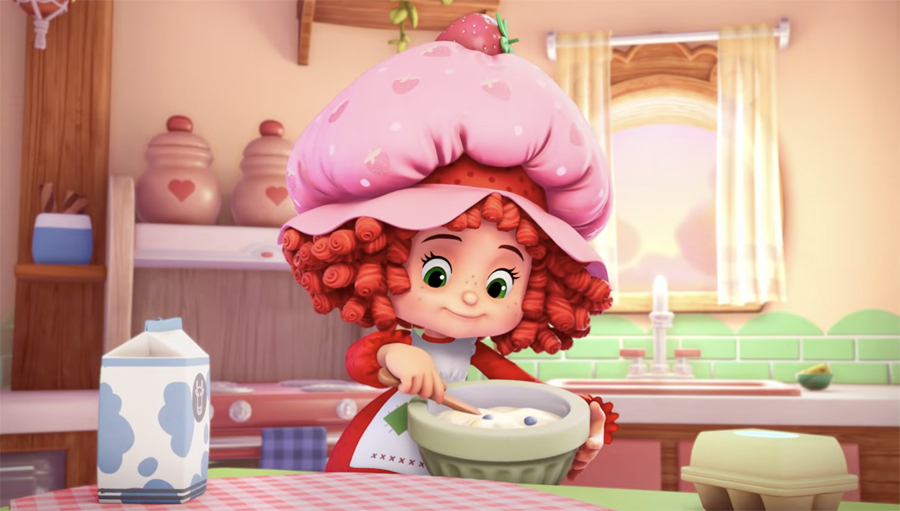
Daisy Wall is the VP of Content at WildBrain and the creative lead on Strawberry Shortcake’s Bake Shop. The new animated family series starring the beloved character premieres this Friday Oct. 16 on the official Strawberry Shortcake YouTube channel. (This Animation Scoop Q&A was edited for length and clarity.)
Jackson Murphy: What does this character mean to you? What do you think Strawberry Shortcake represents to you and to everyone at WildBrain?
Daisy Wall: Strawberry Shortcake is definitely one of the crown jewels of WildBrain. It’s one of our leading franchises. It’s obviously got an incredible almost 50-year history. So for me, it feels super exciting for our team to kind of get to dive in and sort of bring this reimagined character to life and show hopefully our existing fans and also some new ones what we love about Strawberry Shortcake, which is her incredible spirit, attitude, and all the things that have made her so beloved across so many generations.
JM: She is a fantastic character. I screened the first episode, which is really nice. I can’t wait for everybody to check all these out. And you mentioned the different generations, and you think about parents and grandparents watching this with young kids and the legacy factor. What does the legacy factor mean to you in creating a show like this?

DW: It’s a really big consideration for us. Obviously, when you’re working with something that has meant so much to so many different generations, it can feel like a pretty big weight of responsibility to give those people what they love about their character. Each person that we speak to who’s loved Strawberry Shortcake throughout their lives kind of loves a different version of her. We’ve had so many throughout the history, but what’s remained consistent is that feeling of community, sweetness, the idea of love and care going into a baked good and being shared with the world around you, starting right in your own backyard — making, baking, and creating. We’ve tried to keep that consistency throughout. So we’re trying to juggle a lot of amazing little pieces of this character and bring it into our little three-minute series. Kind of a tall order, but I think Strawberry can handle it.
JM: Yeah, you do a lot in just three minutes. Why did you feel like three minutes would be the sweet spot for each episode of this show?
DW: I come from a world of a super baking punny world, so I’m gonna use another one. They felt like a really good length for a short snackable treat for parents and kids to gather around and watch together. And also felt really useful for the platform that we’re going out with first on YouTube. Also the episodes are built to kind of live together. So you can watch more than three minutes. You can feel like you’re kind of existing in that same sort of world for as long as you want, as many episodes that we have to offer in season one.
JM: And YouTube has become such a powerhouse when it comes to just putting content out there, putting animation content out there for families, and through what you’ve done with the WildBrain network and all the YouTube channels. You enjoy building that up and feel like this is the right place to get this out there to everybody?
DW: Yeah, for sure. So YouTube, for kids and I think for so many of us, is growing into such a destination for watching content. We did a study last year that said that it’s a top destination for families and kids in sort of shared screen time. We have a massive network. It has allowed us to put out what we wanted to put out with Strawberry Shortcake and stay true to the brand, with full creative control kind of remaining within that DNA. We’re lucky to have been able to have that platform.
JM: Nice. And what goes into mapping out 26 different stories, coming up with all the different ideas, all the messages that you want in them? How was that process?
DW: We have a really incredible team of writers. We brought back many of them multiple times for this show, and we just sort of all sat together and thought about all the key moments, working closely with our YouTube channel managers and our network managers to look at, “What are people looking for online at these different phases throughout the year that they would want to watch, and where does Strawberry’s DNA sort of intersect with that?” We have episodes that kind of range throughout holiday, from big holidays, like even Halloween, all the way down to Galentine’s Day, which is something that Strawberry obviously cares a lot about, as well as being sure we showcased all of the friends that we currently have on offer in season one. We wanted to make sure we got to kind of dig into each of their character traits. So we sort of tried to parse out all those little different pieces along the way — make sure you got to see a lot of Raspberry, you got to see a lot of Orange Blossom, you got to see a lot of Huck, etc. throughout the season.
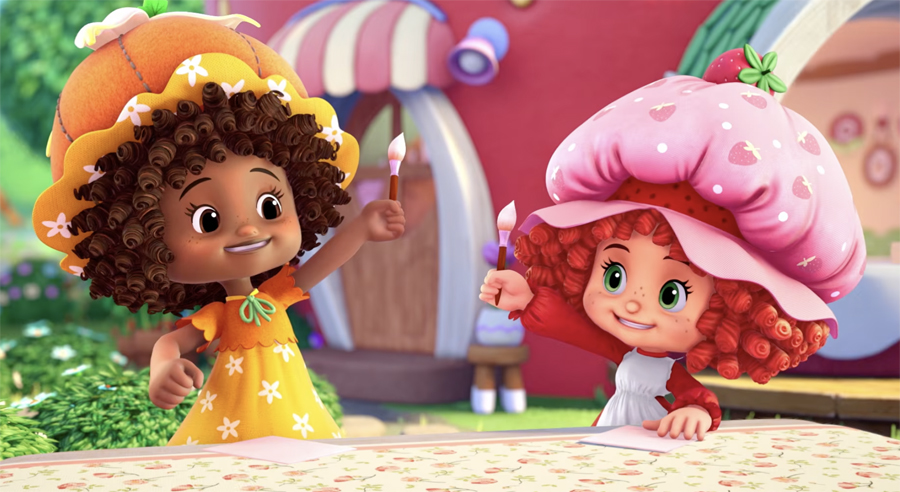
JM: Friendship is such a huge component of Strawberry Shortcake. Always has been, and so spotlighting a bunch of different characters, a bunch of her friends, and that relatability factor for kids watching this with their friends, doing activities maybe they do with their friends, that’s got to be really important to all of you.
DW: Yeah, absolutely. Strawberry Shortcake, since the beginning, has really felt, for me, a lot about community and friendship. She started as a greeting card through American Greetings, which is such a classic way to show friendship, to show you’re thinking about someone, to show that you care. And each of her friends brings something different to the table. What’s cool about Strawberry Shortcake is she’s the friend you want to have, but she’s also the friend you want to be. She’s not always the hero. Sometimes she needs help. Sometimes she’s helping out.
JM: I love that in the first episode, it’s all about a work-life balance, and that’s a really mature and serious theme, but you make it approachable for kids. So those themes, how critical is that of something like that, making it so approachable and friendly in that way?
DW: It’s super interesting you say work-life balance. It’s something we think about with Strawberry. She’s obviously a business woman, and that’s not always relatable to little kids four to eight,. Maybe they’re not quite there yet. But the thing that we can pull from that for all audiences is she cares about making, baking, creating, and crafting. Mm-hmm. She wants to find time to be with her friends. She also wants to find time to kind of like fill her cup and do stuff that she loves and explore her own gifts and her own art, and she’s kind of wrestling with how to do both. I think that episode is also super about the idea of actually being in the moment that you’re in. Maybe it feels like you wanted to do this perfect day in this perfect way, but maybe got a bit bogged down by the things that pop up in everyone’s life. Even four-year-olds and five-year-olds’ days don’t always go exactly as they planned. So it’s trying to find what you can from each day and enjoy it, embrace it, and have a good time.
JM: I like that that comes through, for sure. There’s gonna be some songs in these episodes — I believe eight of them. That’s really great. What went into making the songs work for “Strawberry Shortcake’s Bake Shop”?
DW: We have a team of amazing composers who worked with us, and it’s been such a collaborative process the entire show. Every single person has their own stake in the game. Our composers Jody [Tompkins] and Theofania [Pavli] created amazing songs that also have bits of baking baked in. There’s salt shakers, there’s whisking, there’s oven timers. But also we wanted to make sure it felt kind of handmade and felt like that kind of cozy, crafty, folksy, cottage core sound, alongside with something that felt kind of accessible and mainstream for kids. As far as content for what the songs are about, they’re about all sorts of things. They’re about appreciating your family, making the best out of a sticky situation, if your sticky toffee pudding doesn’t come out perfectly, for example. Embracing friendship and self-love, and just all these different pieces that feel kind of core to Strawberry.
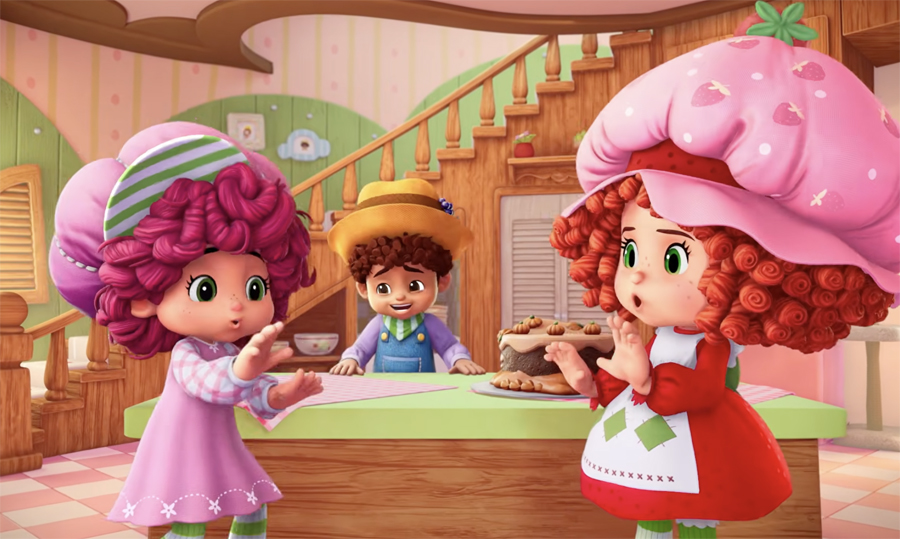
JM: That’s great. And also, the fact that young kids watching this who wanna get into baking. There have been so many shows over the years, like “Kids Baking Championship” and so many things that embrace that so much, and I think it’s wonderful that this show is gonna embrace that and showing baking to kids. Get them started at a young age!
DW: Yeah, for sure. We also have “Strawberry Shortcake’s Berry Best Baking Show”, which we actually teach kids actually how to bake on.
JM: Nice.
DW: But I think overwhelmingly we’re finding that kids and parents really wanna make stuff together and create together. And that’s something that Strawberry’s always able to do and show kids.
JM: I have to ask you about the fact that these characters, including Strawberry Shortcake, [are] transitioning to CG, and the designs of them, and creating this very friendly world, what was that process like? Because the animation looks very sweet. It looks very fun for families to watch this. You did a great job with it.
DW: Oh, thank you so much. Yeah, we have an incredible team that’s worked on this, and also really cares about it. I think that’s one thing we’ve been really lucky to have, that something about this brand has made everybody really care a lot about it, which has been really cool. Redesigning the characters for CG was definitely a really interesting process. I think we’ve gotten fairly positive feedback on it, but obviously her character from the beginning was this sort of watercolor painter aesthetic in 2D from the greeting cards, and we wanted to bring that into the CG world while still giving it that really warm, cozy feeling. So I’m glad that you’re feeling like that’s coming through. We played around a lot with the look of her actual face and how it could translate into CG, and we wanted to give her bigger eyes and a bit more ability for greater expression, because we felt like that was gonna help carry the comedy and all of that. But it was a really joint effort between our incredible creative team on the WildBrain side, who works on all those incredible style guides and all through the brand, as well as our creative production team and designing team who pulled it all together.