Mickey Mouse is an cartoon character co-created in 1928 by Walt Disney and Ub Iwerks.









The incredible Coyote vs. Acme underdog story has been well documented — and props to Ketchup Entertainment for coming to the rescue and putting it in theaters. We spoke to Ben Anderson, the animation supervisor from DNEG, about pulling off the trickiest and most satisfying live action/animation hybrid since Who Framed Roger Rabbit? He explains what it was like collaborating with director Dave Green and the rest of the team?.
Bill Desowitz: Talk about how tricky this 2D-3D integration of classic Looney Tunes character animation was set in the modern, live-action world of Albuquerque.
Ben Anderson: The storyboard and SketchViz process on Coyote vs. Acme started in 2021, long before filming began. It was a quick way for them to flesh out ideas and problem-solve. The filmmakers then used SketchViz on set to help with the shot composition. The shots were framed to complement the character performances as much as possible, and that made our job in animation much simpler. We were able to concentrate on the performance, and I think it paid off in the end as the cartoon characters feel believable in the human world.
BD: What were the unique challenges and opportunities for DNEG in preserving the iconic visual language and comedic spirit of the Chuck Jones cartoons but as 3D characters?
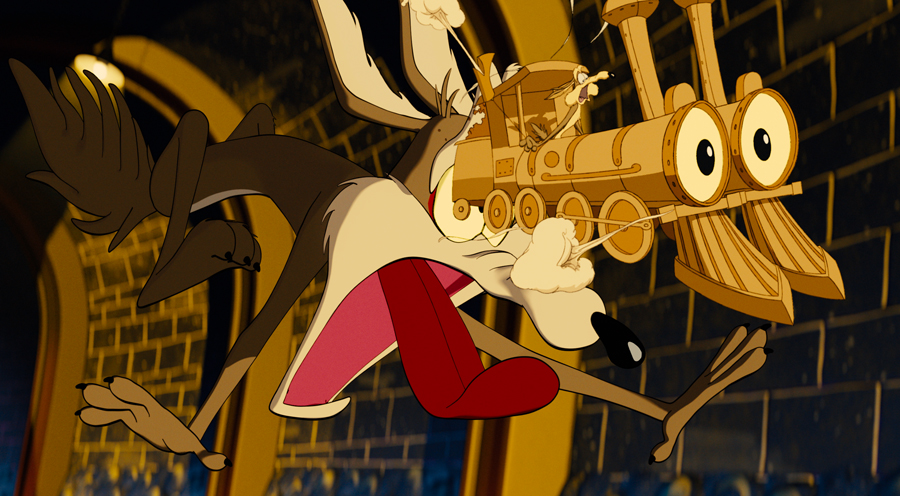
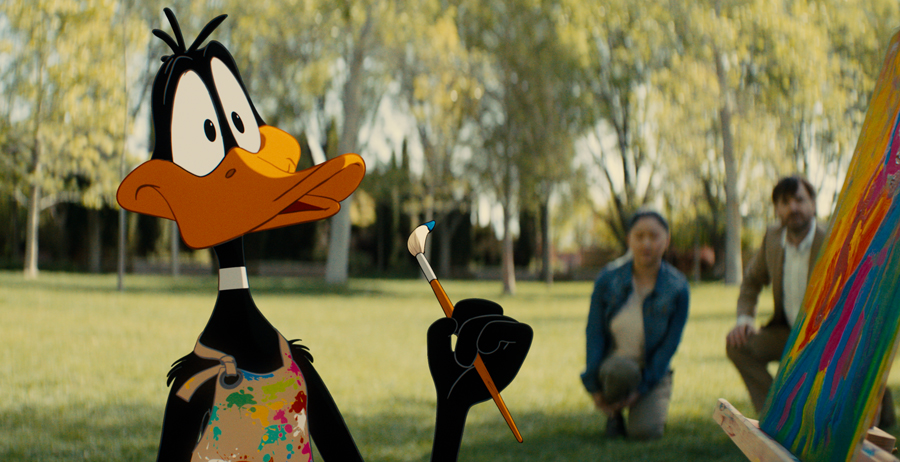
BA: We really wanted to treat this like a 2D film and to really pay tribute to the classic characters as much as possible. From a design perspective, there are a lot of appealing 2D design choices we had to integrate into our 3D model. Our rigs needed to be quite robust, as we needed to be able to design each pose as much as possible. From small things like adding extra tufts of fur to Wile E’s hands in close-ups to being able to adjust where the neck connects to the skull for more dynamic posing. Not to mention all the exaggeration required for the more cartoony performances.
Along with being able to reach the level of posing we desired, we also explored how we could integrate that classic Chuck Jones timing in the real world and how it would fit within a more modern visual language. We explored animating characters on 1’s versus 2’s for moving cameras and even hybrid timing for different character parts.
Other unique challenges included the dry brush look for the speed lines. We categorised the different types of dry brush lines we see in the classic cartoons and were able to create some simple planar rigs with animated textures attached to them that we could use along with extra limbs and other body parts to help us achieve that 2D look.
BD: How early did you start on this, and what were the early discussions like with director Dave Green, as well as with DNEG VFX supervisor Alexander Seaman, 2D Animation Producer Ryan Delaney, and Head 2D Story Artist Carlos Lutterbach?
BA: I joined the project about midway through filming. I would have regular catch-ups with
the DNEG Animation Director, Keith Roberts, while he was on set in Albuquerque and I was in the DNEG studio in London. We would discuss the assets and strategise about any obstacles we might face once the plates arrived. I would also share our early character tests with Keith to make sure we were heading in the right direction.
Alexander Seaman and I would discuss how best to make Wile E. Coyote and the other characters feel 2D and all the design principles that surrounded that process. Because VFX artists are very good at making things look real, there were a lot of new approaches to the workflow we had to create and
develop to make these characters feel 2D. For instance, plenty of development went into creating the toonlines for the characters, such as line weight and thickness; this is not something we traditionally handle in VFX.
While I didn’t have regular catch-ups with Carlos and Ryan, their presence was definitely felt on the film through the SketchViz and storyboards. Carlos also supplied us with model sheets to describe his approach to drawing Wile E., and these were very helpful for the animation team.
Having everybody in-house at the DNEG studio in London was great. It fostered a very collaborative environment. This then translated outwards to the artists because everybody became really invested in this project, and I hope that can be felt in the final version of the film.
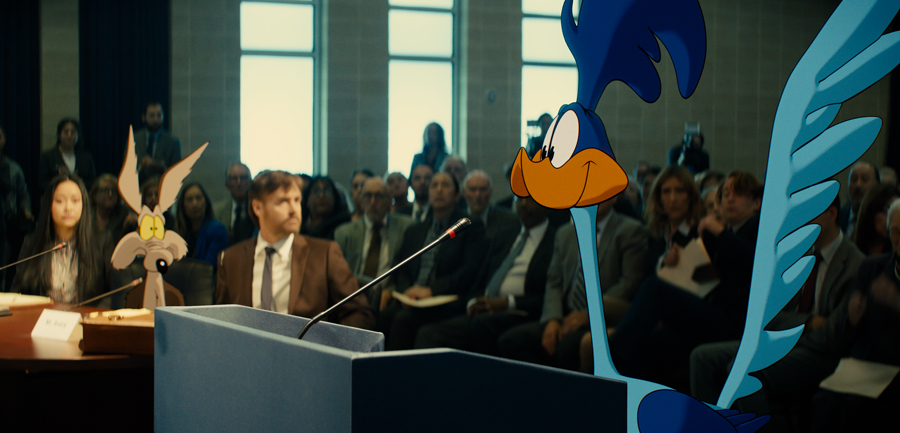
BD: What were some of the cartoons that you studied, and what did you learn about Coyote, Roadrunner, and Foghorn Leghorn? What were the key personality and performance traits that made them work here?
BA: Like a lot of people who grew up watching Looney Tunes, I am a Chuck Jones fan, so this felt like a chance to raid the closet of all the cartoons that have been stuck in my brain for years. I was very happy to find out that the green Batman suit from Gee Whiz-z-z-z-z-z was in the film.
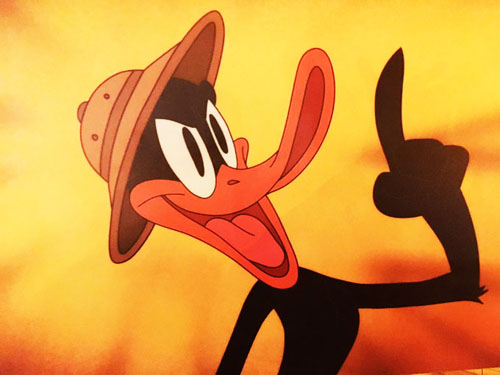
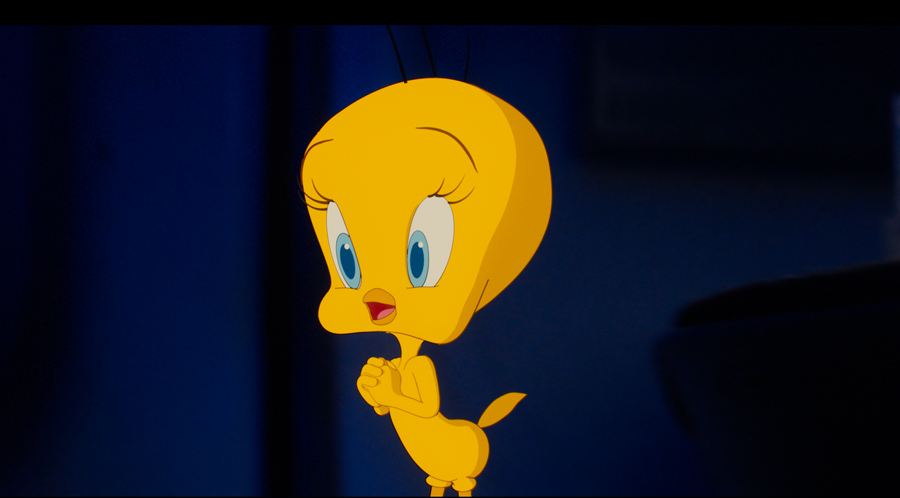
We used different approaches to gather references. For example, for our internal Daffy character study, we used his explosive rant from Duck Amuck to stress test our rig and see if we could reach that level of performance. For the actions we knew our characters would exhibit frequently in the film, we found as many examples from the classics as possible so we weren’t tied down to one instance of that action. How does the Road Runner antic before he flaps his toes and zooms off, or how does Tweety flap his wings? We really wanted to try and emulate the 2D classics as much as possible.
There were also moments where some familiar characters were placed under unfamiliar circumstances, and that is where the animators had to craft new performances for these characters. Dr. Lorre sliding through an icy warehouse comes to mind. Also, Foghorn was a special case because we had on-set reference from actor Joe Cobden wearing a big green suit. It gave us a great starting point to jump
off from and introduce this new version of Foghorn we see in the film.
BD: Given that this article will appear in Animation Scoop, the site owned by animation historian Jerry Beck, who is a Looney Tunes expert, do you know if any of his books were used as reference by your team?
BA: I am definitely familiar with Jerry Beck. The crew threw themselves into the project, which meant not only watching a lot of cartoons, but also reading a lot about the history of Looney Tunes, and I’m sure Jerry’s books would have been part of that collection.
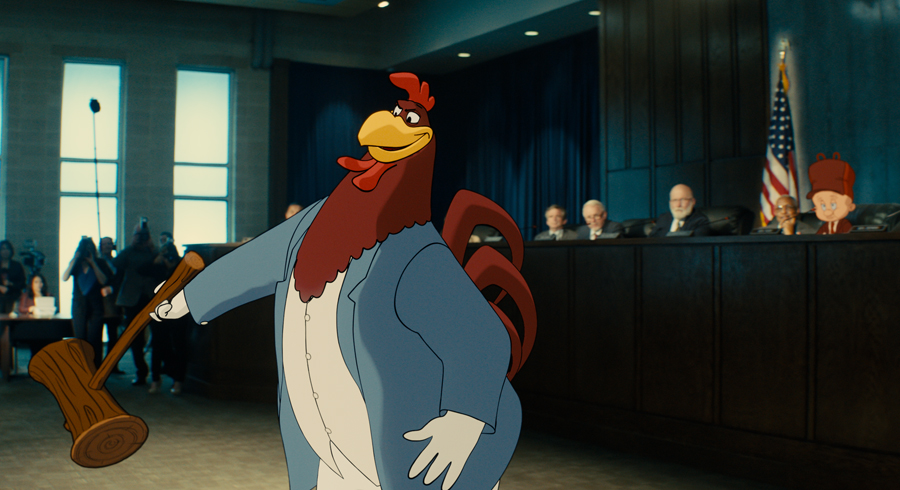
BD: Let’s talk about the demands of Coyote in the desert scenes with Roadrunner versus the more static office or courtroom scenes, where the pantomime is more subtle but no less emotional.
BA: The desert scenes in the opening Fast Food chase were our chance to create a classic Wile E. versus Road Runner cartoon. High action with loads of gags and accidents. It was our chance to recreate that classic world in CG and give it a modern update and twist while trying to keep what made the originals so beloved.
This sequence also sets the tone for the characters, so we paid careful attention to make Wile E. and Road Runner feel as true to the classics as possible. During the desert scenes, we were also able to lean more heavily on the 2D reference from the cartoons. Because we were creating these environments, that meant we also had a bit more freedom to experiment with cameras and play with cartoon physics.
The courtroom and office sequences couldn’t have been more different. We were placing Wile E. in situations I don’t think we have ever seen him in before. We had to figure out how to keep the emotion and entertainment level high while Wile E. sat behind a desk for long periods. Because Wile E. and Road Runner don’t speak, that meant the pantomime and posing became very important, along with a limited number of signs. The animators really had to lean into the storytelling poses to make the expressions and emotions readable. That way, Wile E.’s thought process and intent would be instantly clear to the audience. But as you know, you can’t keep a genius still for very long, so there was always a wild gag coming round the corner for Wile E.
BD: Talk about developing the flexible toon line toolset and giving artists control and recreating the hand-drawn quality of the original cartoons.
BA: The animators had a setting they could apply to provide an approximation of the final linework on our animation in Maya. The final linework was handled by departments further down the production pipeline. Based on the discussions with Alexander Seaman about line quality and line weight, we knew it was never going to be a one-size-fits-all solution for the artists. Every shot would need individual attention. Even when we would hold a pose in animation, the lines would do a gentle boil as if they had been redrawn over and over.
A misplaced line or the wrong line thickness could change the look of the characters instantly. So each artist generating the final lines would take great care to reference the model sheets, and I would also have a chance to do some drawovers to help keep things on model. Either by adding lines or removing them. It was a very manual process, and I think it comes through in the final look. Computers are very good at making things look perfect, so we spent the time to make things feel handcrafted as much as possible.
BD: What about pulling off Coyote’s elaborate schemes with Acme gadgets?
BA: Wile E. had many complicated schemes and traps which produced a huge pile of props in this film. Many decisions had to be made when considering if a prop would be real or cartoon, but the bottom line would always be which one is more entertaining. Oftentimes, when a cartoon character was interacting with a cartoon prop, the FX would be toon effects and vice versa: when a toon character interacted with the real world, we’d use real FX.
A good example of this would be Wile E. setting off a stick of dynamite in the office. It results in a cartoon explosion culminating in a room filled with real smoke. This can also be seen in the Rube Goldberg-style trap at the hotel. When Kevin [Will Forte] enters the room, he is met with quite a few real-world props that propel him into the motel swimming pool. In the metal detector sequence at the courthouse, Wile E. keeps producing more and more toon props that culminate in a toon explosion that has real-world consequences.
BD: Looking back, what was your great achievement with Coyote vs. Acme, and what do you make of the surreal journey the film made to get released and how it’s become such a successful underdog story?
BA: The entire crew bought into this project from day one, and for many people it was a dream come true to work on these characters. So naturally we were crestfallen when we heard the news of the project being shelved. On the flip side, we had actually been able to make a movie we were proud of, and we were receiving lovely reviews from the people that had seen the final version.
However, just like Wile E., a little adversity was not going to stop this movie. Thanks to the groundswell of positivity surrounding Coyote vs. Acme, it has finally seen the light of day after three years of waiting.