Mickey Mouse is an cartoon character co-created in 1928 by Walt Disney and Ub Iwerks.







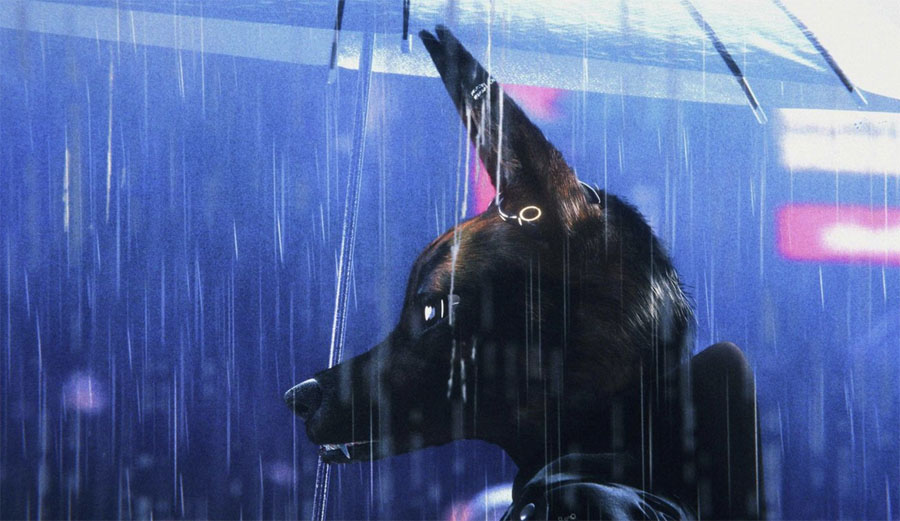
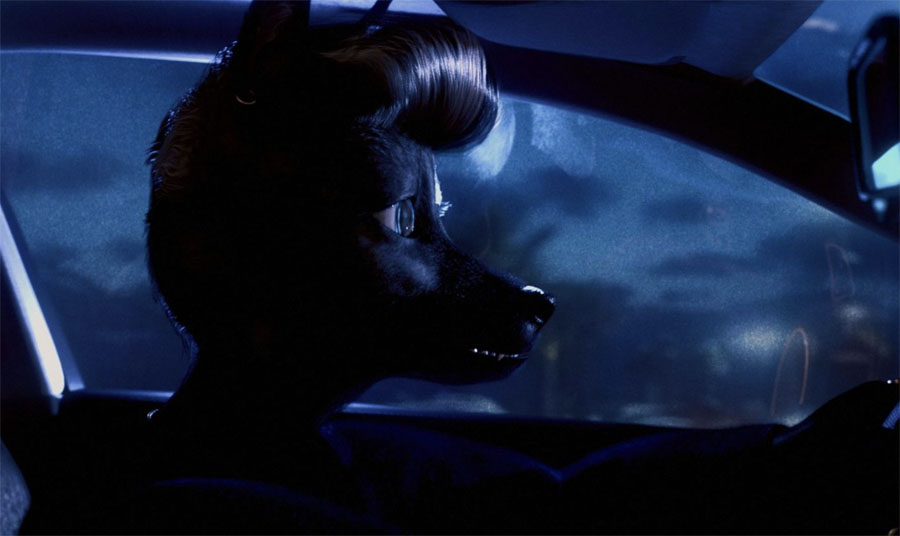
Bouchra, a bold animated feature for adults now available on VOD, Digital and MUBI, is about a jackal woman living in NYC who’s writing her first feature film and is navigating complex relationships. Bouchra is vying for awards season consideration, and is directed by Orian Barki and Meriem Bennani. (This Animation Scoop Q&A was edited for length and clarity.)
Jackson Murphy: Orian, how has animation as an art form and a medium inspired you throughout your life?
Orian Barki: I grew up on watching Disney movies and being obsessed with Disney and Nickelodeon, Cartoon Network, “Ren and Stimpy”. When I was a teenager, I watched on MTV this show called “Downtown” that I really loved. And it’s a show that is basically kind of like a documentary, very atmospheric — a show about teenagers in New York. I love how it is animated visually, it’s so beautiful, but also the way they wrote the script is that they interviewed teenagers from all around New York, and then constructed the stories out of interviews from kids in real life and lived experiences. I would say this show really, really inspired me and affected me.
JM: You can feel the grounded nature of the conversations, and New York City, through what you do in the movie. And Meriem, through your background, through your love of animation, what do you love so much about it, and what makes it a great way to tell personal stories like this one that you have for this film?
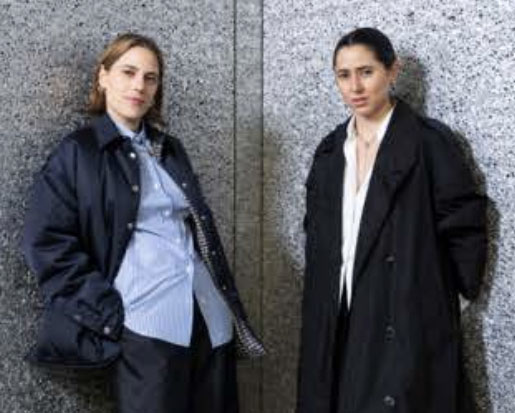
Meriem Bennani: I think animation, as a medium is endless. It tends to become a topic. When we do live-action, we never say, “What drew you to live-action?” Maybe we say, “What drew you to cinema”, but we don’t kind of isolate the medium as a subject, and I understand why, obviously, I’m playing devil’s advocate as an animator. But I think it’s just the medium, as many others… you work with the same elements as live-action. You have music, timing, plot, framing, a visual quality, plus one of having to do world-building from scratch, which is not untrue also of live-action. There’s so much decision-making, which is something that is really hard in animation, but it makes you be super intentional about every aspect of what you’re doing. Animation styles should be a product of what the story is asking for. This film has a very particular style that we developed for this story. It’s not necessarily what we would do every time, but we thought this is what this story needs. And it makes me think, as an animator, why is it that studios have often the same style? Not based on the story, the style is based on maybe friendliness. What is gonna be the most friendly, intuitive thing that people want to see?
And so part of the project of making this film was thinking, “What can an adult animation look like?” Allowing us to tell a very intimate story, to answer your question more directly. There are two things. There’s the methodology of us using reality when it comes to the story and voices. There’s something very naturalistic about the dialogues, because they are barely not real. They’re taken from real conversations, and we use a lot of improv, and also the main phone calls between the character of Bouchra and her mother, which are the spine of the film, are recreations of phone calls I’ve had with my mom. So I think that’s kind of what the dialogues bring in terms of grounding into a certain reality or emotional nuance. And then when it comes to the style itself, visually, it has elements of indie film, because it’s 3D, so you can place characters in a camera, and you can direct in a way, and there’s depth of field, which maybe certain animation styles don’t have. And so it allowed us to kind of really ground things, make you feel like the characters you could touch them. They wear different clothes every day. Time is real. They will die one day. It’s not like every day is the same day with the same outfit. So that allowed us to create emotional depth. But at the same time, you’re looking at animals. It is animated, so we can be playful and play with the medium, and sometimes be a bit more surreal, or bring in some kind of symbolic layer to all of it.
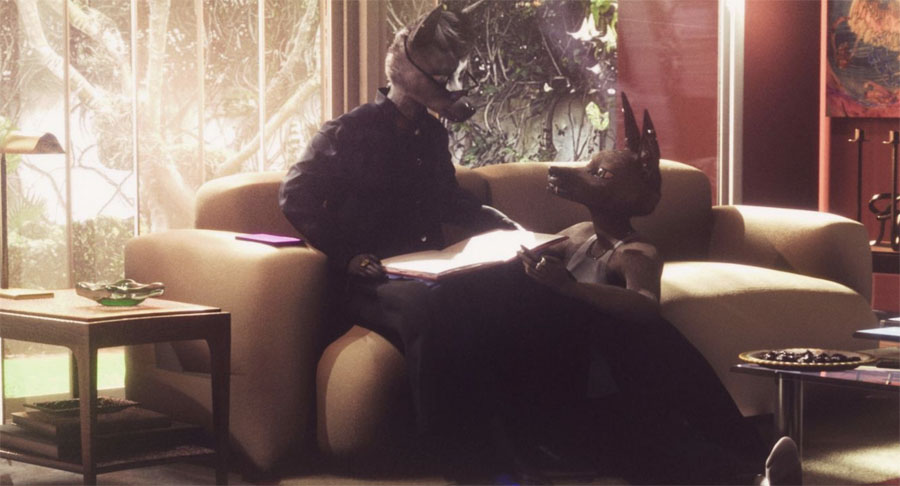
JM: The conversations are excellent, and they do feel natural, and that comes across very well, and you’re so right about all the decision-making and the details in the clothing, that’s really excellent. Bouchra is a jackal woman living in New York City, and she’s writing and making her first film, and the layers you have with that element are so good. Orian, what was most important for you about what you wanted to present when it came to the screenwriting process. What was important to you about showing that through this character in this movie?
OB: Bouchra is working on her feature film. It’s something that she always dreamt of doing, and it’s sort of the trigger for the film, because in order to be able to complete her film, she needs to understand her mom better. She needs to have these conversations with her mom, so it sort of sets up… an inciting incident for the film. But it’s really a little bit like the chicken and the egg, because it’s not like making the film is the most important thing. The most important thing is really their relationship. Maybe the film is just the tool for them to be able to have these conversations, to sort of say now it’s the time, or maybe it’s the other way around, where she wants to make the film so much that now they have to have these conversations, and it doesn’t matter. Their relationship is based on a foundation of love. And this film is about the love that they share with each other, and how they are going to now invest time in understanding each other. But it’s also about the love of cinema — our love of cinema and our love of filmmaking. So these relationships kind of mirror each other and they need each other to realize in order to complete. And it was fun for us to show the process of making the film in the film. It was fun for us to show the storyboards, to show her brainstorming, walking around, wanting to do this, dreaming about doing this. At the end of the day we’re making a film that’s inspired by our lives, and we’re filmmakers.JM:
Meriem, you have a lot of commentary in the movie about pop culture, and there’s a little bit about Netflix, and television shows, and reality shows, and movies. What made you want to incorporate some of that into the film? I think it’s really smart and interesting in how you place those moments in the film.
MB: I don’t think that there was a kind of intention to bring in pop culture. I think the thing about pop culture is that it’s culture that we live with. So it was part of the things that were caught in the tide of us bringing our life and observations and conversations into the film. Just naturally, it comes with that.
OB: Yeah. But I guess it’s also part of the film being meta or… not even being meta, but it’s like, Bouchra’s life is… She’s a filmmaker, so she’s obviously going to watch a movie during the movie. And that’s just a scene, a transitional scene, where we see her do something that she loves. She’s watching TV at home. Again, I think it goes back to our naturalistic style of… we’re not finding… a substitute world for her. We’re really actually following the world… what she does, and how her life looks like, which is kind of inspired by how our life looks like as filmmakers. We go watch movies, we watch TV, that’s what we do. We’re interested in that.
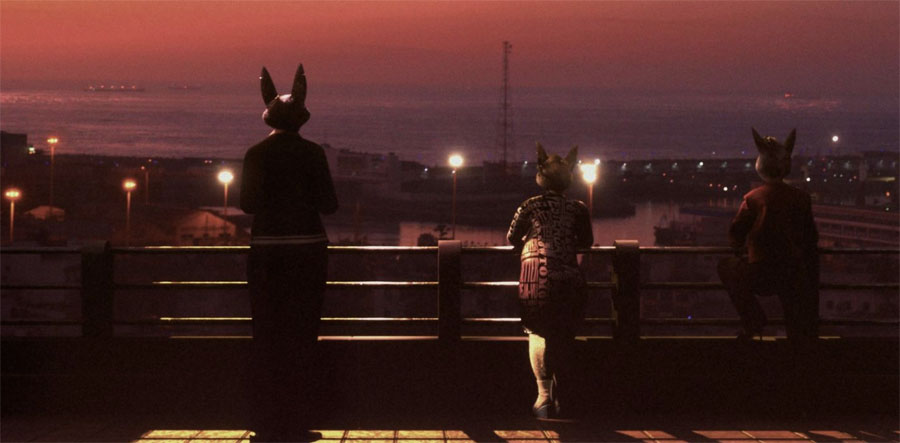
JM: Sure. And Orian, there’s also this honesty with Bouchra wanting to be in a romantic relationship. And we see the ups and downs in a few cases there, her challenges with it, her hopes with the romantic relationship. What was most important to you about this element of the movie, and I think the honesty and the truth that it really brings?
OB: Outside of the main storyline, which is Bouchra and her relationship with her mom, we wanted to also show her life as a lesbian in New York, in Casablanca, to show her desire, to show her fun. We didn’t want it to be just, “mother-daughter”. We wanted to have a more rounded experience of her love life and being queer. She was in a relationship for a long time, and I think that echoes in the conversations that she’s having with her mom, because it’s something that she couldn’t share with her mom. Now she’s single, so she’s telling her mom, “Maybe you can come visit me, because I live by myself.” Part of her life as an adult is to have romantic relationships.
JM: Also very effective, Meriem, the atmosphere that you create with New York City, the atmosphere you create with Casablanca. Also the smooth jazz music, which is a character in the movie as well. What’s most important to you about that element and creating an overall atmosphere and experience that this film gives you?
MB: I think that’s the fun of directing a film. Whatever the atmosphere is has intentions behind it, but also… What we get to do in making a movie is creating a world. There’s no such thing as a real world. I think everything is an interpretation, so this is one of our interpretations of maybe how this place is filled for us. There’s a lot of saxophones and wind instruments, The soundtrack was made by Flavian Berger. We wanted to record real instruments, because the film being already digital and CGI, we wanted to counterbalance it with non-electronic music and have something that feels very warm and grainy. But there’s also this film noir vibe, where it almost feels like, with the cinematography that John Michael [Boling] went for, and this music, there’s this kind of maybe layer of [an] investigation movie. Making a film is an investigation, in a way. She’s looking for something emotionally, and there’s the letter. It was a fun layer for us to add, to create a vibe around her story.
JM: This film has been out for a little bit. It has screened at film festivals. It was in select theaters earlier this year to qualify for awards at the end of the year, and it has been so well received. How, for both of you, has it been to receive this reception from audiences and how they felt about the film?
OB: I had no idea what to expect when we put out the film because this is a film that’s, in terms of story, it’s very nuanced. It’s interested in the subtleties in of relationships, and it’s multiple languages. And in terms of the aesthetics, it’s artsy in a way that we love, but we weren’t sure how people are gonna perceive it. And I think that it’s really, really fun to see that people are interested in it, especially from the perspective of… People are curious, and they want to see new things, and that was one of our biggest intentions. Let’s create something that looks different, that we haven’t seen before. Let’s create a story structure that feels different, that is not based on story devices that are a protagonist and antagonist, someone has to be the villain, there has to be a conflict that drives the story, and there has to be a resolution at the end. We were interested in things that feel more similar to real life, that maybe they’re less epic, but they’re more complex. And it’s been really great to see that people are interested in it, and it also has to do with how intimate and handcrafted the film is. People are now being really blasted by AI and content and things that are being made very quickly and very efficiently to just be consumed at. This film is not coming from that place at all, and I think that it’s felt. Even though these are anthropomorphic animals, people want to feel something personal and intimate and human, and I think that it’s felt.
JM: Absolutely. The connection is there. The flow is there of a unique experience. This movie has its own rhythm to it, and it’s really refreshing to see that and to feel that. Meriem, how has the experience been of audiences around the world taking this in? And I do feel like, yes, it’s an indie experience, it’s an arthouse experience, but there [are] universal connections and themes to it that really come through.
MB: It’s been great. I think the idea of universal is really complicated, and I kind of refuse to blissfully ignore it. This idea that multiple languages means something is not going to be seen as much… these are all market things. People are not stupid. And they’re not lazy, which I think we’re meant to believe people want to see superhero movies in English, and they don’t want to read subtitles. And maybe it’s true, but I feel like… the idea of universal place as the center where the center has been placed, but there’s no such thing, in a way. It is part of one of the things that is important for us in this film. You can connect with animal characters. You can connect with a Moroccan lesbian and her mom… the way I grew up connecting to Hollywood kids. I’d never been to L.A. I didn’t know how it felt. (I’m here right now.) But I was still able to empathize. So it’s important to
almost kind of put that aside in thinking about film because then it limits what is possible.