Mickey Mouse is an cartoon character co-created in 1928 by Walt Disney and Ub Iwerks.












Remember A Connecticut Yankee in King Arthur’s Court? Mark Twain’s hero, Hank Morgan, a 19th century American, is knocked unconscious and awakens in the England of King Arthur in A.D. 528. Though it’s a world initially unfamiliar to him, his 19th century knowledge gives him an enormous advantage.
In Japan, stories in which protagonists are transported or reincarnated into another world are known as isekai. Often, their knowledge, experience, or abilities from their previous lives give them advantages in their new surroundings. Such is the case with Sword Art Online (2012), How a Realist Hero Rebuilt the Kingdom (2014) and Re:Zero − Starting Life in Another World (2016).
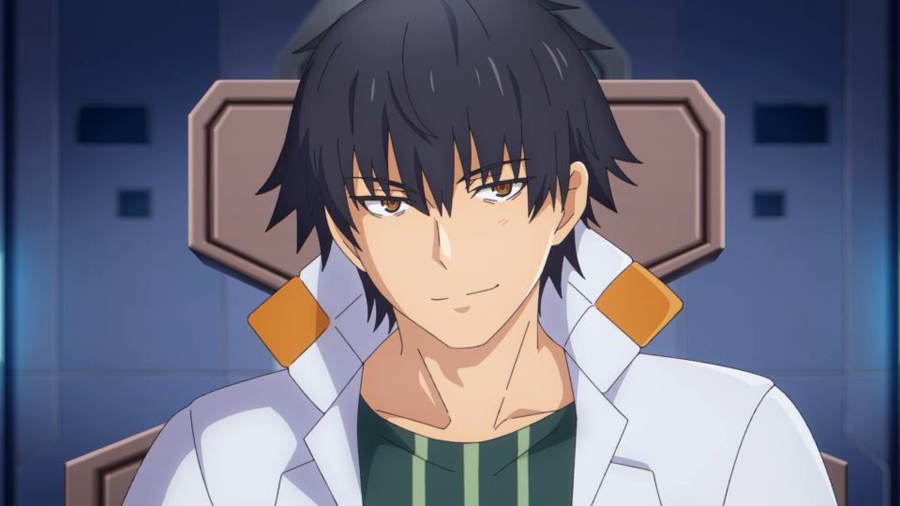
Now comes Reborn as a Space Mercenary: I Woke Up Piloting the Strongest Starship!, an example of a sub-genre, space isekai. Modern-day Japanese office worker Takahiro Sato awakens in a universe remarkably similar to his favorite science-fiction video game—and finds himself in the cockpit of an extraordinarily powerful starship. Taking the name “Hiro,” he becomes a space mercenary, fighting space pirates, and impressing young ladies. Of course, his video game skills come in handy.
Reborn as a Space Mercenary: I Woke Up Piloting the Strongest Starship! began as a web novel by Ryūto, serialized on Shōsetsuka ni Narō beginning in February 2019. Fujimi Shobo began publishing it as a light novel series under its Kadokawa Books imprint that July, with illustrations by Tetsuhiro Nabeshima. A manga series began in November 2019, with eleven tankobon volumes published so far as of March 2026.
Studio A-CAT is producing an anime version, set to premiere October 2026. Norihiko Nagahama is directing, with Takamitsu Kono handling series composition and Masami Sueoka providing character designs.
Hiro, the hero, is played by Makoto Furukawa, a veteran voice actor with roles as Saitama in One Punch Man (2015), Benimaru and Ogre in That Time I Got Reincarnated as a Slime (2018), Taiju Oki in Dr. Stone (2019), Faye in Drifting Dragons (2020), Shaddiq Zenelli in Mobile Suit Gundam: The Witch from Mercury (2022), Tabito Karasu in Blue Lock (2023), and in numerous videogames and commercials. He is also a singer, having made his solo debut in 2018.
Crunchyroll provided the opportunity for me to speak with him at Anime Expo 2026, on July 4. We talked about his new show, his role as Hiro, his inspiration and his craft as an actor. David Higbee translated for us.
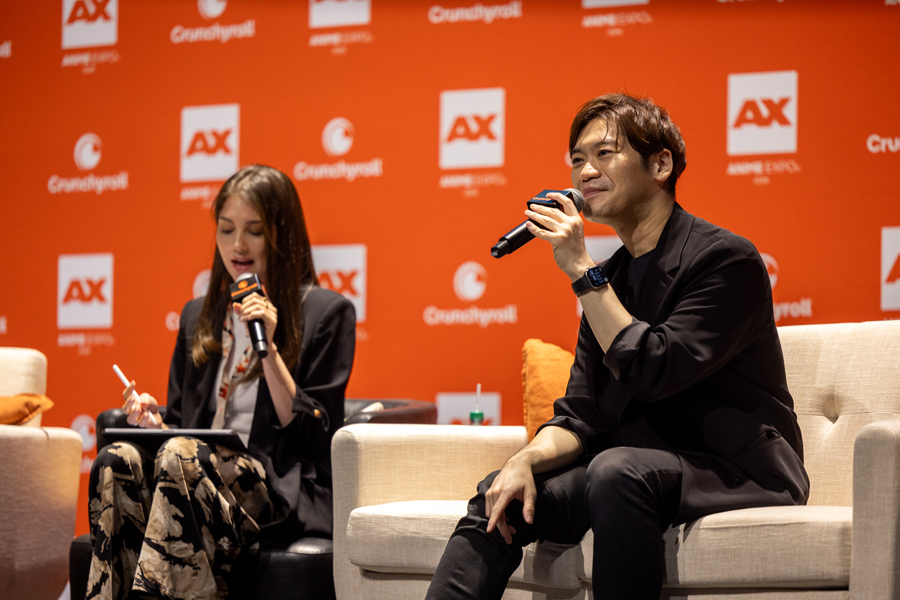
Bob Miller: Please tell me about the series.
Makoto Furukawa: As the title suggests, it begins with what is currently a very popular kind of premise: an isekaireincarnation story.
Through an unexpected turn of events, Hiro finds himself in another world and has to decide how he is going to live there. He chooses to make his living as a mercenary.
Originally, in the real world, he had been an extremely skilled player of a certain game. The abilities he developed as a player carry over directly into this other world, where he is able to put those skills to use. So he becomes active as a mercenary using a spaceship. That’s essentially the story.
Because Hiro was such an extraordinarily skilled player, he’s extremely capable, and he goes on to accomplish one great thing after another. I think that contributes to the heroic quality he has as the protagonist, and personally I think he’s very cool.
At the same time, however, he can be somewhat undisciplined or sloppy. Rather than making him unlikable, though, I think that quality makes him much easier to relate to. That’s a large part of his character, and it makes me think, “This guy is interesting. I like him.”
Miller: How does Hiro inspire you personally?
Furukawa: “Inspire” may not be quite the right way of putting it, but, as I was saying before, he has that somewhat sloppy or undisciplined side to him. I don’t want to generalize too much, but I’m also the kind of person who can be fairly sloppy, so that’s one aspect of him that I can relate to very strongly.
At the same time, when something needs to be done, he does it. That’s one of the things that leads to his major accomplishments in the story.
His extraordinary gaming skills translate directly into his abilities as a mercenary, and whenever he has to demonstrate those abilities, he’s usually in a situation where lives are at stake. He’s extremely serious at those moments. I think that kind of seriousness probably has something in common with the seriousness with which we approach our own work.
Miller: What inspired you to become a seiyuu [voice actor]?
Furukawa: There’s a senior voice actor named Hikaru Midorikawa who gives incredibly cool performances, and I really loved his voice.
For a while, though, I had drifted away somewhat from voice acting and anime. Then the time came when I had to decide where I was going to continue my education.
I discovered a school associated with Midorikawa-san. The school had a voice-acting department, and because he was connected with it, I thought, “Why not give it a try as a challenge?” That was what got me started.
Miller: What was the name of the school?
Furukawa: Its name has changed somewhat now, I believe. It’s Fukuoka School of Music & Dance. They have related schools in Tokyo as well.
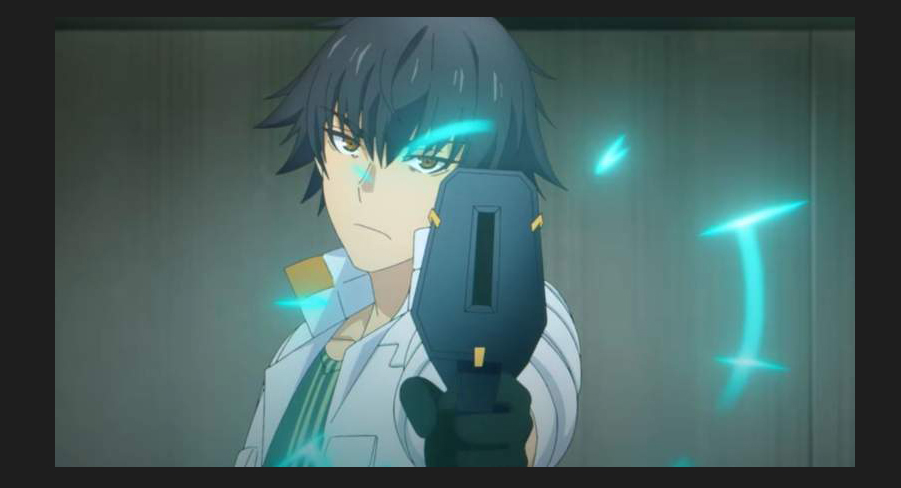
Miller: How familiar were you with Hiro when you auditioned for the role?
Furukawa: I had read the manga adaptation, so I already had an understanding of him.
He isn’t really a boy; he’s more in the age range of a young adult. So rather than making the performance too big or exaggerated, I remember approaching the audition with something closer to my natural speaking voice.
As far as how much I knew about Hiro and the original story, I had the materials that were provided for the audition, including the character settings. And I’ve continued following the manga adaptation.
Miller: More specifically, here in the States, actors are sometimes given pictures of the character and then perform based on the picture. They use the picture as a clue.
Furukawa: Oh, no, no, no, no! I was able to properly read the original work—or rather, the story—before doing the audition.
That method you described sounds difficult!
Of course, when you’re auditioning for a completely original production, they may give you character model sheets showing the character standing and various facial expressions. The character may not be completely finalized yet, but they’ll provide information such as what kind of personality the character has and what his objectives are.
Then they might give you lines that the character is expected to say later in the story. That’s the case with an original production.
But this project was based on an existing work, so I was able to audition after gaining a certain understanding of the general direction of the story and of Hiro’s personality.
Miller: Do you lip-sync to already finished animation, or do the animators animate to your voice?
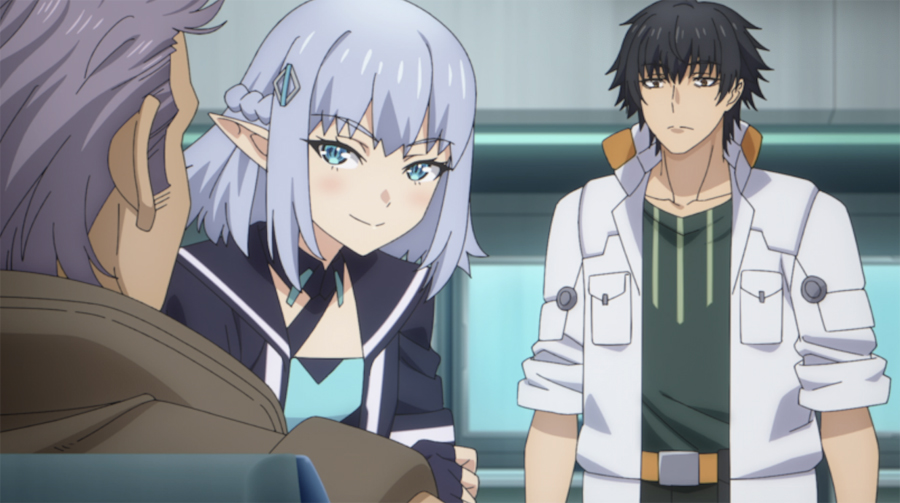
Furukawa: You’re asking about the difference between post-recording and pre-scoring, right?
In this case, the animation was produced first, and then we recorded our voices to the animation.
In Japanese animation production, it actually isn’t very common for us to record with the animation already almost completely finished. But with this particular production, for approximately the first three or four episodes, we were able to record while watching footage that was very close to the finished product.
That made it much easier to use my imagination and to understand what was physically happening in the scenes while we were recording.
Not every anime production allows you to do the post-recording with the animation in a nearly completed state. So in that respect, I was very grateful that production on this series progressed so smoothly.
Miller: Did you have the opportunity to improvise lines?
Furukawa: There was some ad-libbing, yes, but not very much. Basically, I performed the dialogue faithfully according to the script.
Miller: What do you know now that you wish you had known when you began your career?
Higbee: In relation to this production, or in general?
Miller: Either one.
Furukawa: Well, since we’re talking about this particular production, Hiro does sometimes share a bed with women. My own understanding of Hiro was that, in those situations, he would treat women in what I thought was a fairly ordinary—or conventional—way.
So I was surprised when I received direction telling me that he should be gentler and more tender with them. I thought, “Okay, that’s new information for me.” So that’s a good example of something I wish I had known before.
Reborn as a Space Mercenary: I Woke Up Piloting the Strongest Starship! premiered this month on Crunchyroll.
Special thanks to Stephanie Wong, Senior Publicist, Streaming Content & Awards, and her team from Crunchyroll: Blake Shuster, Pamela Abeka, Kaitlin Hargrove, Taylor Cocke, and Cameron Winston.