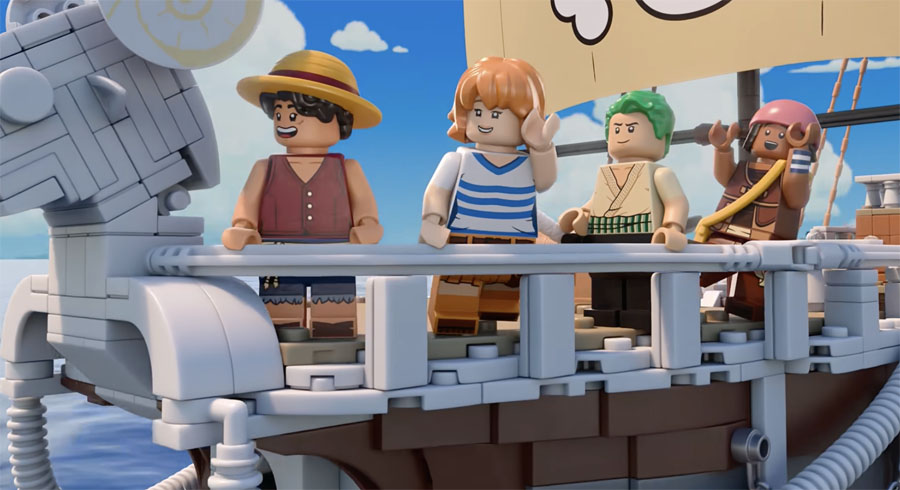
Mickey Mouse is an cartoon character co-created in 1928 by Walt Disney and Ub Iwerks.









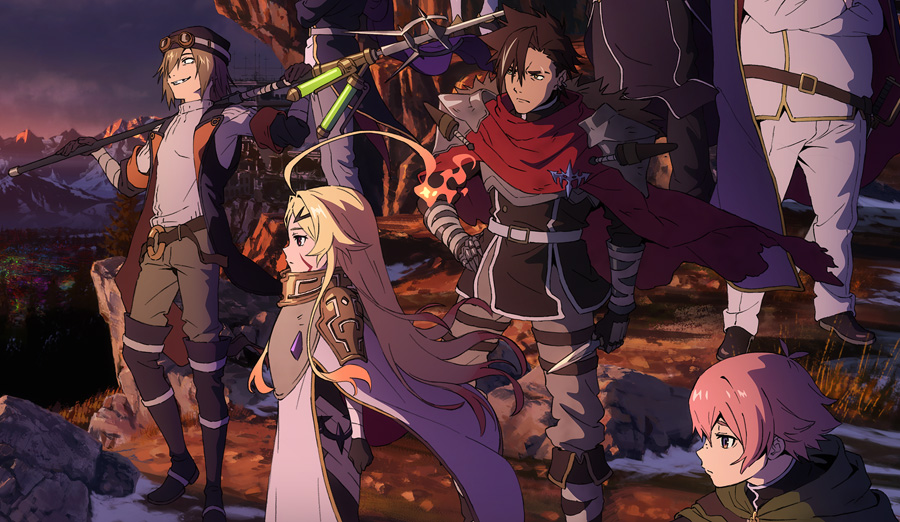
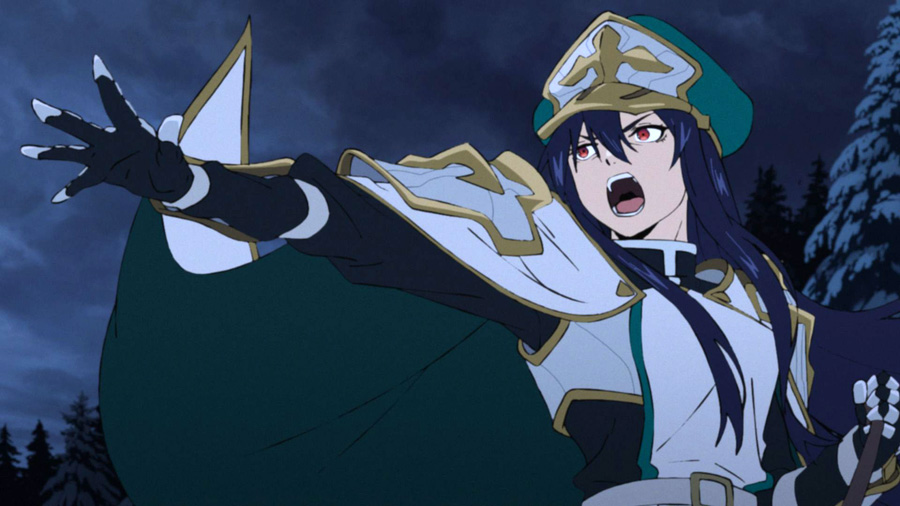
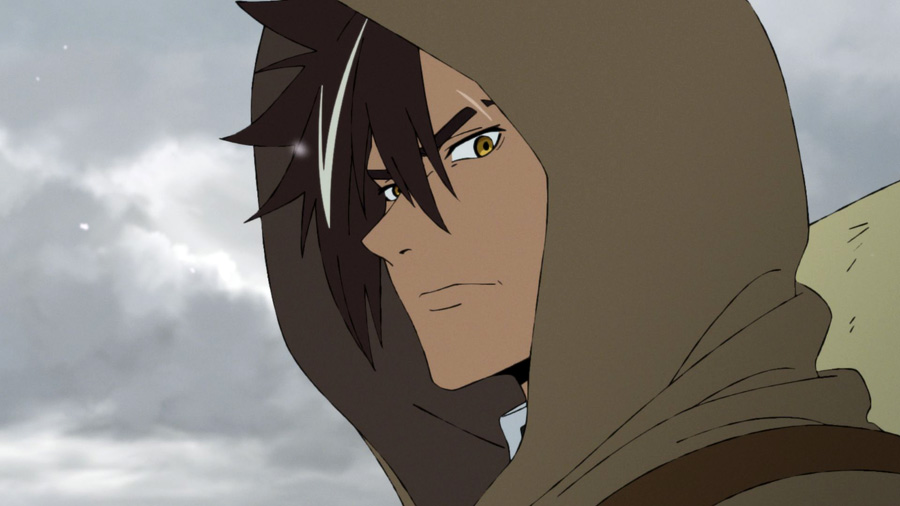
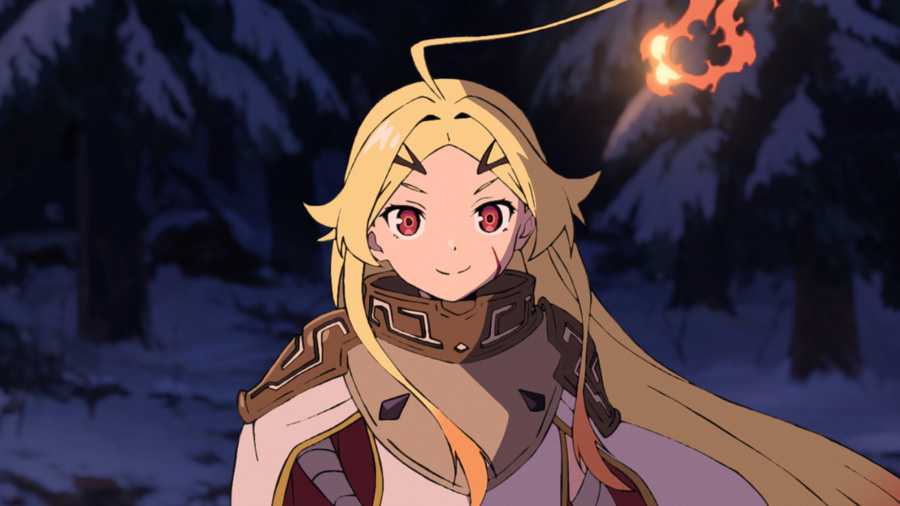
Sentenced to Be a Hero takes place in a world of demons, monsters, goddesses, and beleaguered knights embroiled in epic battles—and every creature, character, weapon, suit of armor, and explosion has to be designed and animated. It’s an enormous undertaking for the artists at Studio Kai, as one can see from the amount of detail on the screen. Who is responsible for all the animated mayhem? How did the project get started, and what can we learn from the people who made it?
To find out, I attended Anime Expo 2026, where Crunchyroll arranged for an interview with three key creatives: Yoshiki Nakakōji (Assistant Director, Creature Designer), Takeru Noda (Studio Kai Character Design), and Yasutaka Kimura (Studio Kai Chief Animation Director and character designer). Kanoa Sugimoto served as our interpreter.
Bob Miller: This question is for all three of you. What inspired you to pursue a career in anime? How did you develop your skills? What inspired you to choose this profession?
Yoshiki Nakakōji: When I was a child, I watched Cardcaptor Sakura, and that series completely drew me into the world of anime.
Yasutaka Kimura: In my case, I originally wanted to work as an illustrator. I attended an art vocational school, where one of the instructors specialized in animation. We became very close, and through him I discovered how enjoyable animation was. He taught me a great deal.
There were many works that inspired me, but my favorite is Mobile Police Patlabor 2. That film had the greatest influence on me and ultimately inspired me to pursue a career in the anime industry.
Takeru Noda: When I was a student, I watched FLCL (Fooly Cooly). I was amazed by the animation itself—the drawings were so impressive. I’d always liked drawing, but after watching that series I wanted to make drawings move like that myself. I mostly taught myself animation after seeing FLCL. I’ve watched many other works since then, but FLCL was where it all began for me.
Bob Miller: How was it decided to make Sentenced to Be a Hero as an anime and when did it enter production?
Yoshiki Nakakōji: Let’s see… it started about five years ago. The director [Hiroyuki Takashima] and producer [Masashi Masuo] introduced the original work to us and said, ‘This is really interesting.’ I read it too, and that’s where everything began.
We were working together with Kadokawa on the project. This was about six months before the first volume was published. Before the book was released, there was a web novel, and I read it that way.
After reading it, we all agreed, we definitely wanted to make this into an anime.
Bob Miller: Did everyone decide to join the project around the same time, or did Nakakōji-san join first and the rest of you come aboard later?
Yoshiki Nakakōji: Yeah, that’s right. So once the director decided he was going to do it, he contacted me almost immediately. We said, “Let’s do this,” and I think I was probably the first one to come on board. He invited me to join, and then asked, “So, what should we do about the designer?”
Takeru Noda: I asked, “Have you decided who the character designer is going to be?” They said, “Not yet.” So I replied, “Then I’d love to do it.” After that, I talked things over with Masuo-san [Animation Producer Masashi Masuo], and that’s how I ended up saying, “All right, I’ll do it.”
Yoshiki Nakakōji: So that’s basically how it was decided—about five years ago.
Bob Miller: All right. Please describe the production pipeline and how you contribute to it.
Yoshiki Nakakōji: I handled creature design and worked closely with the director during pre-production. We discussed many aspects of planning the project. In terms of actual production work, I mainly worked on key animation, although I also handled a little directing.
Takeru Noda: My job was to adapt the illustrator’s artwork from the original novel into animation character designs.
Yasutaka Kimura: As chief animation director, my job mainly involved overseeing the artwork—making corrections to the drawings, maintaining visual consistency, and supervising the overall quality of the animation. In short, I was responsible for the aspects of the production related to the artwork.
My work overlapped with Noda’s quite a bit. I focused on polishing and correcting the artwork. If the director wanted stronger emotions or a different impact in a scene, I would revise the drawings accordingly. Much of my work involved refining and improving the animation as it came through the production pipeline.
Bob Miller: What new visual or animation techniques did you try on this series?
Yoshiki Nakakōji: One of the biggest artistic challenges was reducing the amount of shadow on the characters. We deliberately used much less shading than usual to create a distinctive look. It was an unusual approach and actually made the work more difficult, but we thought it was worth trying.
Bob Miller: What do you know now that you wish you had known when you began your career?
Takeru Noda: I’d tell myself to become a faster animator. Speed is extremely important in this profession.
Yasutaka Kimura: I’d tell myself, “Don’t be too easy on yourself.” Never become satisfied with something just because you’ve finished it. Always try to surpass your previous work. There was a period when I became content with what I’d accomplished, but I realized I had to push beyond that. That’s what I’d tell my younger self.
Bob Miller: What advice would you give to people who want to become anime directors or character designers?
Takeru Noda: When opportunities come your way, don’t let them slip past. Be prepared so that when a chance appears, you have the ability to seize it.
Yasutaka Kimura: Oh, my answer? Right. I suppose my advice would be: always make a habit of doing your research, whatever the subject. Always investigate, learn, and understand what you’re working on.
Yoshiki Nakakōji: To everyone hoping to become a director or work in this field, my advice is simple: keep a competitive spirit. Go into it with the determination that you refuse to be beaten. That kind of grit is what matters.
Takeru Noda: May I add something? This applies to character designers and directors as well, but I think it’s important to do lots of things outside of making anime. That was something I came to realize myself. I think it’s better to have a wide range of experiences, to be interested in many different things, and to get out there and actively pursue them. All of those experiences become part of your creative toolbox. Whether you’re trying to enter the industry or you’re already established, continually expanding your knowledge and experiences will make you a better creator.
Bob Miller: Great. Dōmo arigatō. Thank you very much.
For my interview with Sentenced to Be a Hero English voice actors Emi Lo and Dawn M. Bennett, click here.
Sentenced to Be a Hero is currently streaming on Crunchyroll. In the U.S., the series carries a TV-MA rating for mature audiences, reflecting its graphic violence, gore, and dark themes.
Special thanks to Stephanie Wong, Senior Publicist, Streaming Content & Awards, and her team from Crunchyroll: Blake Shuster, Pamela Abeka, Kaitlin Hargrove, Taylor Cocke, and Cameron Winston.