Mickey Mouse is an cartoon character co-created in 1928 by Walt Disney and Ub Iwerks.








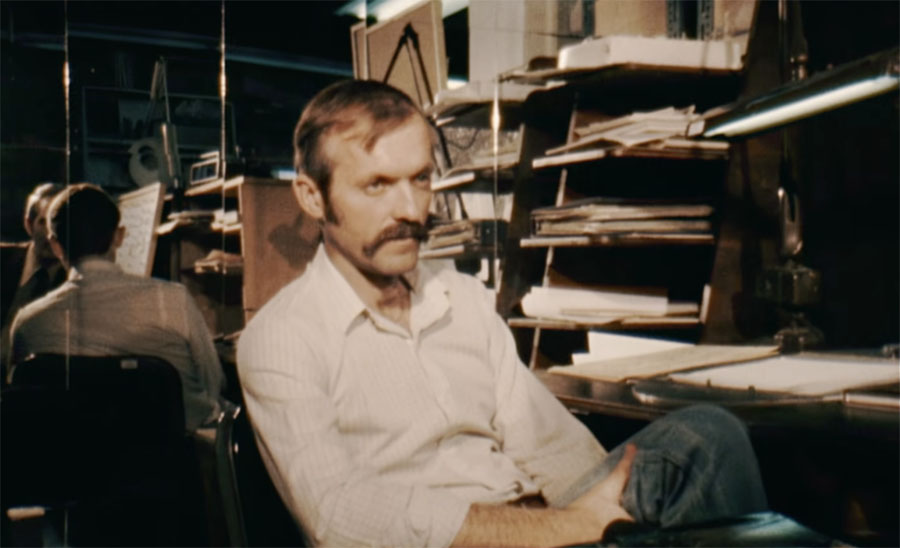
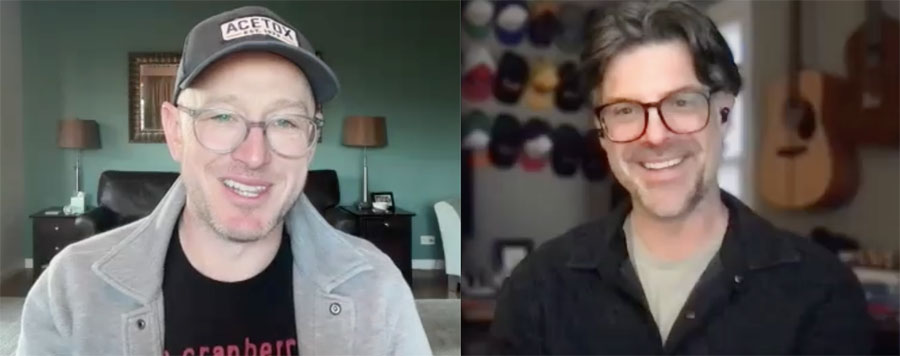
Don Bluth directed The Secret of NIMH, An American Tail, The Land Before Time and Anastasia. A new documentary on the animation icon explores his life and career in deep and powerful ways. Don Bluth: Somewhere Out There — one of the best films of the year — is available on Digital this Friday Nov. 20. Directors Dave LaMattina and Chad N. Walker take me through the making of this doc and share how Bluth’s work inspires them. (This Animation Scoop Q&A was edited for length and clarity.)
Jackson Murphy: Dave, what are your earliest memories of Don Bluth… watching some of these movies? Have that stayed with you for a long time and made you want to think about Don being a central figure for a documentary you’d want to do?
Dave LaMattina: Absolutely. The very first Don Bluth film that I remember seeing would be “The Secret of NIMH”. But I remember watching it in my basement and being so scared that I didn’t really remember any plot details. So the first real one I’m gonna say is “An American Tail”. We were visiting my relatives in Brooklyn, NY, and my aunt Donna took myself and my cousin Joe to go see it. I remember seeing Fievel on screen… and one of those department stores had Fievel toys everywhere. This film is deeply embedded in my consciousness. And you watch it all these years later — I’m 45 — and it stands up. Still has that emotional resonance.
JM: Chad, Don Bluth is 89 years old. You interviewed him for this film. How was it interviewing him from 2023 to last year?
Chad N. Walker: It was amazing. When you sit down and start thinking about a documentary, you can have a thousand great ideas (…”We should do a documentary on this person”) but what it really comes down to is finding somebody that has an interesting story but is open and honest. From the very first time we talked to Don on the phone about making this movie, he was so open and so honest. We went down to shoot the first interview with Don and he was amazing… and even thought we had a ton of camera issues and hard drives were failing, and the second day he didn’t feel very good, we kind of pivoted at that point to do audio only interviews. And when we did that, and we sat down, it was just a conversation with an icon. It was amazing. And he wasn’t afraid to go to all the hard parts — like this idea of art and commerce and the battle between the two. And he has a name for his ego and his alter ego. That razor-thin line of you need an ego to do amazing things but when does it become self-destructive? It was really fascinating talking to Don, but the fact that he was so open and reflective made it amazing.
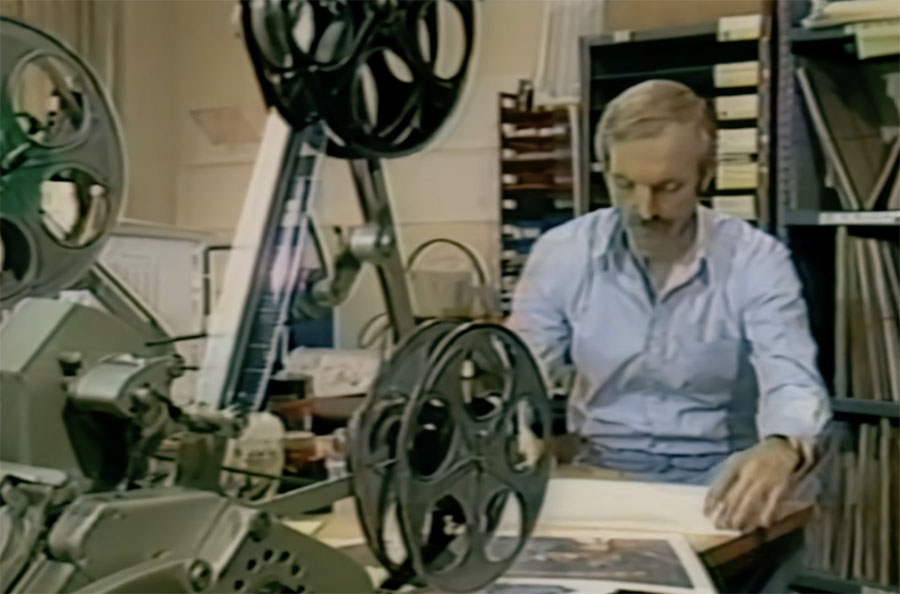
JM: His saga is incredible. Dave, you love the films that he’s done. What did you discover in talking with him and doing research about the layers to these movies? What surprised you the most about these films?
DL: After talking to Don for so much time, what I’m really shocked by is the turmoil that comes in creating any film. That was roiling beneath the surface on all of the films. For “Secret of NIMH”… Don has got his dream job at Disney, he’s so happy to be there, but then Disney starts to lose their way after Walt dies, and Don feels so strongly about this that he leaves to start his own [company]. The emotion that we see from him around that film is hopefulness, excitement and a little bit of the good terror that comes with launching your own thing and following your dreams. “Land Before Time” he talks about how they made it in Ireland. The studio moves there to make it. It becomes about family. To see those moments happening behind the screen that naturally become infused in the film… that connects with people like me.
JM: Chad, you show clips of a lot of TV interviews that Don did where he would go on talk shows and they would all have the intro of, “He wants to be the next Walt Disney.” Was it fascinating for you to look through all those clips and see those talk show interviews and how candid he was then in talking about this whole “next Disney” element to his life?
CW: Yeah. It was so surprising to see how long it lasted, too. It wasn’t just “You left Disney. You’re making Secret of NIMH. People are saying that about you.” It was all the way through “Land Before Time” and beyond. And going back to that battle between ego and alter ego that Don talks about in the movie… I can’t imagine how inflated your ego would get. Don idolized Walt Disney growing up, and people just repeatedly keep telling you, “You’re the next Walt Disney.” He manages to give good answers. But I can’t imagine the pressure and the burden, even when they go to Ireland, they clearly have big dreams to make live-action movies and someone calls in to ask, “Are you gonna do a theme park like Walt Disney?” And he’s like, “Oh yeah. We’re gonna do it.” I can’t imagine the pressure that you could potentially put on yourself to try to achieve what other people are telling you that you should be. I love how Don handled that.
JM: The way you build intensity with the Disney Animation battle in this movie is so well done. Dave, the fact that some of [Don’s] movies and some of the Disney animated movies basically opened against each other on the same weekend… it’s unbelievable. It’s crazy to think about.
DL: It is crazy. From the moment Don left Disney, he was seen as a competitor. Disney pretty purposely targeted Don. I don’t think we realized that until Don wrote a book that was a great jumping off point for us. That was very clear in the book. There’s this interview he did… on the eve of “All Dogs Go to Heaven”, Disney’s always releasing against him [for this it was The Little Mermaid]. “Let the two Gladiators go in the arena and fight it out. Keep it friendly, please, and it’s gonna make the whole art form better.” As we got to know him… it’s very clear that he definitely wanted to beat Disney, but also he really did care about this state of the whole animation industry. He really wanted to make animation better. That competition ultimately defines a lot of his career.
CW: Growing up I saw “Oliver & Company” in theaters. I was like, “Oh no! I didn’t know [The Land Before Time] came out at the same time in theaters!”
JM: Chad, there are so many stories in this film: the bags of money story, the Spielberg story, the Roy Disney story. As a filmmaker, when you learn about these stories and how you want to put these in a documentary, what goes through your mind? “Oh my gosh. These are gold. They have to be in the film!”
CW: That’s the first thing. You go, “Oh my God. This story’s amazing.” And then the second thing is, “How do we show this in a dynamic way that’s not just somebody sitting there telling you about it?” With the Roy Disney story, when Roy comes to Ireland, goes to the pub, they have that conversation, there’s no footage of that. How can you take that story, pair it with footage so that it actually means more than if someone had a camera in that pub showing it go down? We decided to pair that story with footage of a company party that they had. That’s, for Don, what it came down to. “How can I leave all these people that uprooted their lives in America to follow me in America? How can I now say yes to Roy and go back to Disney?” It’s impossible.
JM: Dave, you [show] “Siskel & Ebert” clips of their reviews [of Don’s films]. They serve as a guide for the times, the decades, the era, and what Don is going through. The way you insert them is really well done.
DL: Thank you so much. And I’m gonna tip my cap to Chad, who also edited the film. When you start to look at career’s, it nicely line-up with the trajectory of when “Siskel & Ebert” were on. My dad had it on all the time. It was really fun to go back and see that, “Oh they reviewed this… They went all the way up to Anastasia? Amazing.” It is unvarnished criticism or praise where it’s deserved. They actually capture what works and what doesn’t work in such a great way that we don’t have to do it.
JM: Also, Chad, the montages in this film. And the haunting music that accompanies the montages. You have a couple early on, and then you do this one in the final section that encompasses clips we’ve already seen and new things that appear in it. It’s one of the best sequences I’ve seen in a movie in the past few years. How did you put that together? So effective.
DL: You just made this dude’s life! That is so insightful. It’s pretty much his original vision from the very first pass on particularly the sequence you’re talking about.
CW: The composer is one of the original members of the band The Cranberries, Fergal Lawler. We talked to him about doing a bunch of stuff, and this is the one he really resonated with. A week later he started sending us tracks. It allowed us to talk musically about the tone and the vibe of the movie before we even cut a scene. That big montage is emotionally based on the stuff he had written up to that point. Don says this line about his life and the things he remembers, “It’s just like a big montage.” We really wanted you to feel like you’re traveling through his memories. Memories are not A to B to C. We use a lot of long, long dissolves… you’re really getting a taste of what it’s like to go through this icon’s mind and his memories, of all the things good and bad that have shaped him as a person.
JM: This movie is so much about a guy who believes in art, his work, following your dreams… and as a documentary filmmakers, I think you guys have to follow that path. How did that really resonate with you as you’re putting this movie together?
DL: When Chad and I are at our best as filmmakers, I think we really identify with the subject or story. With Don, the emotions that we felt from that first moment of us leaving Blue Sky together… I think Chad’s son was seven months old, and my son was two months old, and we left our jobs to go make documentaries, which is not recommended, by the way. But we did it. There’s that fun, joy and fear — all the same things that Don felt. At every stage, we identified with Don and it meant so much to us. As filmmakers… you said it yourself, he had that dream and he followed that dream. That for us the message is here. That’s the thing that resonated with Don when he watched this film… “You do what you have to do when you have a dream.”
CW: Making this movie, I was so inspired by Don because he was so honest about his journey — the hard stuff and the good stuff. Don’t let life bitter you. If you have that dream you’re chasing… and this is hard in life and the movie business where people will say “No” to you all the time… it’s really hard to hold onto that dream. It’s easy to forget where that target is. And that inspired me so much about Don. He never forgot where that target was. He had a dream, he chased it, he had so many ups and downs, but he never forgot. He did it all for us dream to save hand-drawn animation.