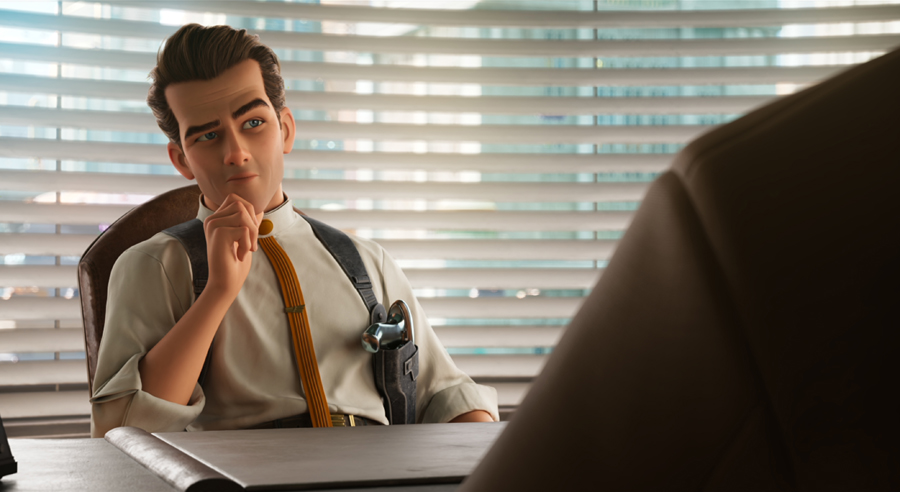
Mickey Mouse is an cartoon character co-created in 1928 by Walt Disney and Ub Iwerks.







Brad Bird is undoubtedly one of the “greats.” He’s directed some of the most riveting and visually captivating moments in animation, and his films feature incredibly rich characters that we resonate with deeply. Rather than spelling it all out, Brad Bird’s films invite us into the world and trust us to keep up.
We laugh, cry, and lean forward when watching a Brad Bird film. And as the audience, we remember the journey fondly long after we’ve left the theater.
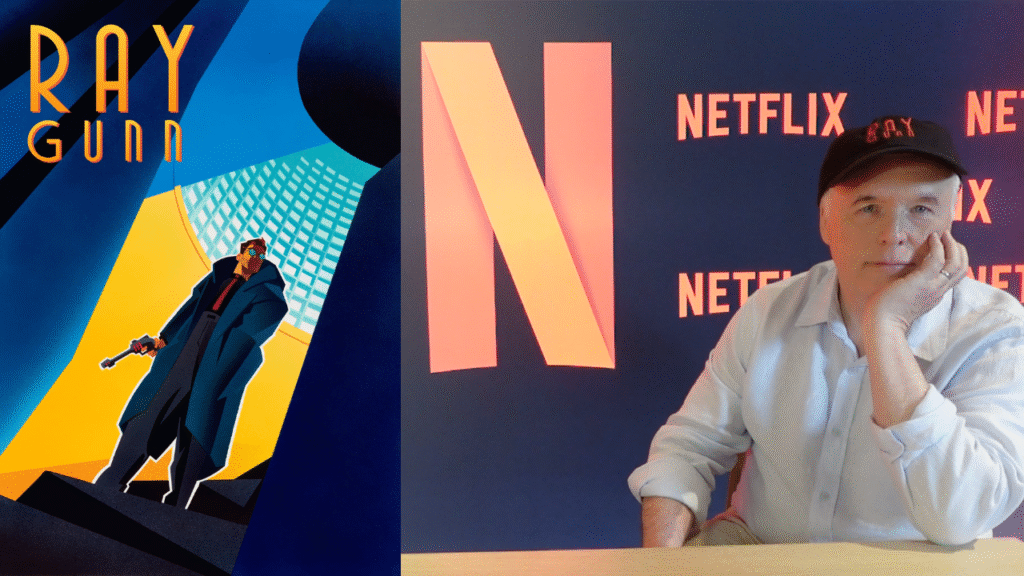
But when The Iron Giant came out in 1999, or The Incredibles in 2004, the world was a different place. Life today is arguably much more distracted, as we face nonstop and seemingly inescapable onslaughts of information at every turn. Studies show that activities like reading a book or watching any sort of long-form content are much more difficult for people today— we find it hard to sit still without checking our phones or looking elsewhere. In the era of overstimulation and familiar franchise domination, could earning an audience’s attention and interest with an original story be the greatest challenge filmmakers face today?
I asked Brad Bird about his creative process, why Netflix was the right home for his newest feature, and how exactly a great director keeps people engaged in 2026. Getting the chance to speak with this Academy-Award winner ahead of his highly anticipated upcoming feature, Ray Gunn, turned into a conversation about the ingredients of excellent cinema. (This Animation Scoop Q&A was edited for length and clarity.)
Lauren Ashton: You create characters that feel very real—not just personable, but they almost feel like they’re our friends, or like we’re part of the family. And then we get to go with them on the adventure. When you’re developing a story, do you start with these characters, the plot, or something else that inspires you?
Brad Bird: Every movie is different. And some of them start with the ending. You have an idea of an ending, and then you backwards engineer your way to that ending. Sometimes it starts with a relationship, and you go, “that’s an interesting relationship. That would be good.”
The Incredibles came from an anxiety I had about wanting to be where I was happy in my career—balancing that with having a family—and worrying about if I was not where I wanted to be in terms of what I was doing. I was starting to have a family with my wife and sons, and I thought, “if I get my career where I want it to be, I then have to give up spending time with my family, and I don’t want to be bad at being a dad or at being an artist. I want to be good at both,” and how do you do that, without hurting the other thing? In other words, how can you get the family all the time it needs, and also give all the time to your art that it needs?
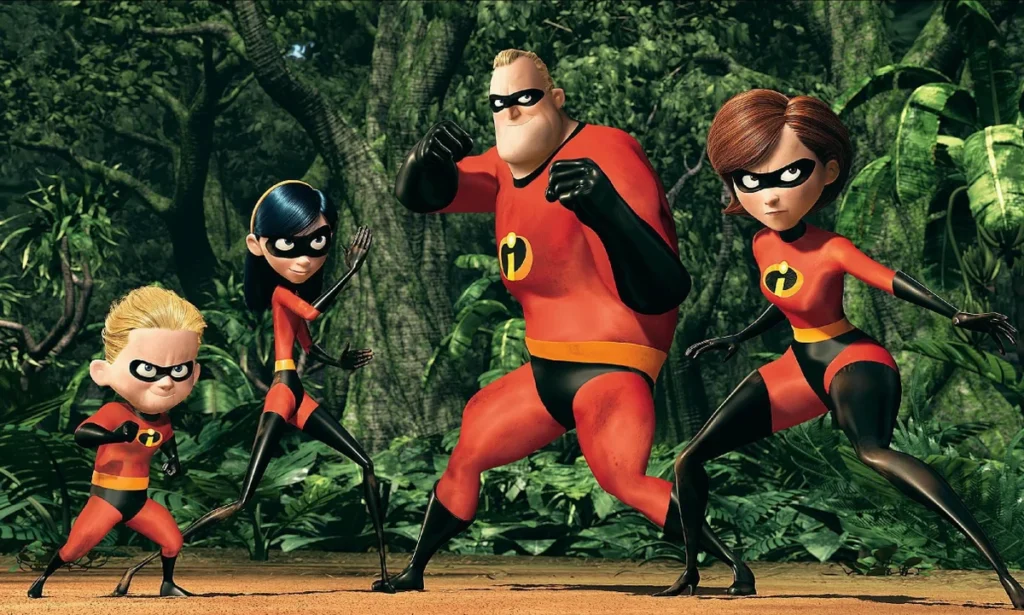
And it was that anxiety that created The Incredibles without me knowing it. I thought it was just a goofy movie about a superhero family, but it was actually a lot of my own anxiety in the idea of that film, you know? Because Bob’s not happy with his job. He liked being a superhero, and he didn’t understand what a family was, you know? One way or the other, both have riches, and how do you balance that?
LA: So inspiration sometimes comes from a personal place.
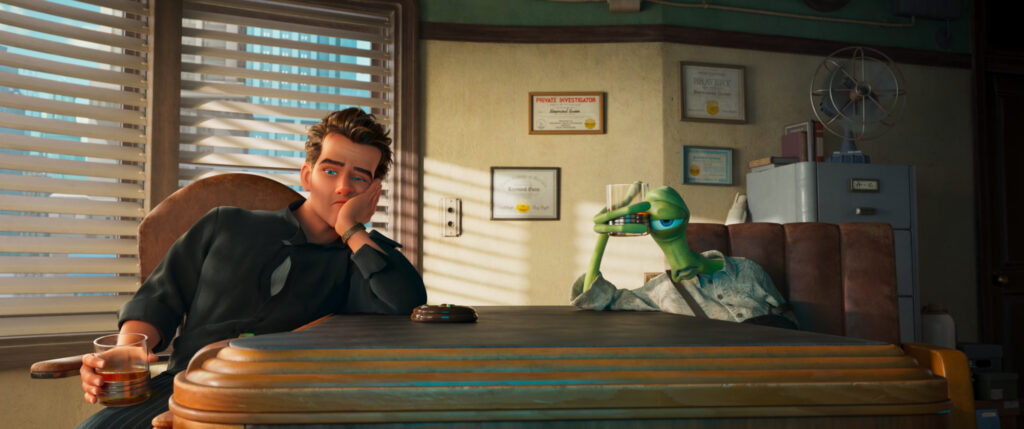
BB: Yeah, and you get to sometimes explore wildly adventurous landscapes in a film while also kind of being really true to the human experience. Ray Gunn came from me liking detective movies and wanting to see one that dealt with futurism in a film noir way.
LA: It was The Maltese Falcon meets Buck Rogers, right? I love that!
Another thing I really admire about your films is how they completely pull you in. In all of the films I’ve seen that you’ve directed, they’re so captivating. But nowadays, it feels like it’s really hard to hold an audience’s attention because we’ve just got so much overstimulation. How do you approach keeping an audience’s engagement?
BB: Well, I think audiences want to know that the storyteller is confident. If the storyteller is not confident, it’s like a bad comedian where they rush the jokes because they’re worried about any silence. So they kind of say the joke too fast, whereas a good comedian relaxes, kind of connects with the audience, and isn’t afraid of pausing, you know? There’s a confidence in that. I think that if you can be a confident storyteller, that goes a long way.
That said, you want to reward people for meeting you halfway. I remember worrying about my sons having so much stimulation that they couldn’t focus on a story that required a little time. And I remember going to see Tarantino’s Inglorious Basterds with my middle son. Several scenes in there are about suspense. They’re about people talking, but there’s something underneath it that is going to blow up. My son was riveted by it, and he was as tech-oriented as you can be. When they all got in the basement with the card game, you know, that whole scene—he was absolutely wrapped in it, and wanted to know.
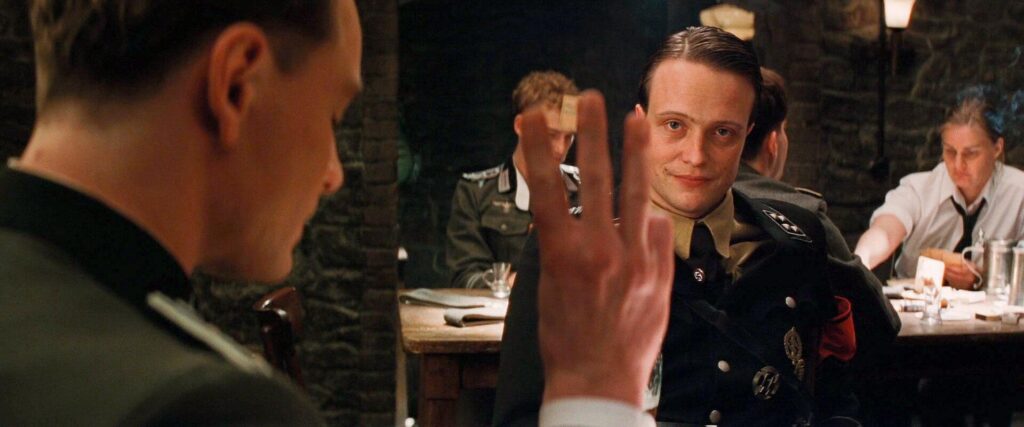
Anything that makes the audience meet the filmmakers halfway, I’m all for. I worry when people start looking at other screens, texting, answering the phone, pausing and skipping to the next action scene. That’s just not a good way to tell a story. It doesn’t give to the listener or the watcher any goodies.
LA: Right, it’s not the way the material was meant to be received.
BB: Right, and that’s why I love the theatrical experience so much. People have to get up and come to the place where the stories are being told and surrender for a little bit, you know? And I like that. If there are noisy distractions, it’s not great. It’s like trying to have a conversation with somebody in a club that’s too loud. You’re yelling at them, not having a real conversation.
LA: You’ve had an amazing career with other studios, and this is your first film with Netflix. How did this partnership come about, and why was Netflix the right home for Ray Gunn?
BB: Well, they had the, um, cajones to take an original film. And that’s really rare these days. They have been very supportive of the film that I wanted to make. And that’s worth a lot.
My hats off to Netflix. Right now we’re in an era where a lot of films, if they have any size to them, are usually offshoots or sequels or remakes or reboots of things that you’ve seen before. And that’s what makes the financial investors feel secure. Yet every tentpole that is familiar was at one point was an original! So it was really helpful that Netflix was willing to try something original and gave me warm feelings. And they’ve been great to work with.
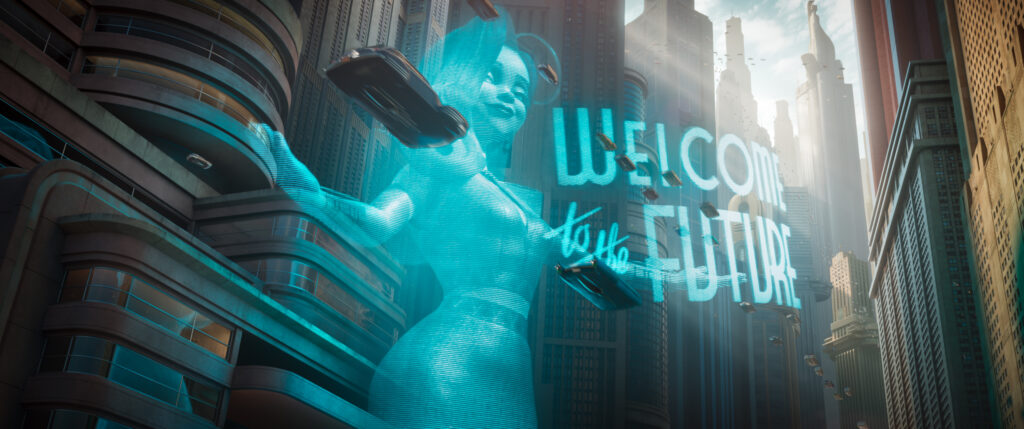
LA: So you’ve worked on some of the most memorable cinematic moments, not just in animated movies, but I’d say in film history, period (that’s my opinion, but I’m certain others would agree). On a personal and creative level, how does this project stand out for you?
BB: It’s something that I’ve had on my mind for a while. There have been some reports that are wrong that suggest that I’ve been working on it for 30 years, but I haven’t been working on it for 30 years.
I wanted to get it made, and when it wasn’t, it was put into a filing cabinet, like the end of Raiders of the Lost Ark. It was kind of forgotten. Later the studio asked if there was anything we could do together. I said “yeah, you actually have a project of mine that I’d still like to make” and they were like, “we do?” I mean that’s the way it goes… but they gave it back to me and I was able to shop it elsewhere. That’s how we wound up making the film.
LA: I’m glad you were able to do that!
BB: Me too! I’m very happy, because I always wanted to do it and felt that it was worthwhile.
LA: And here we are!
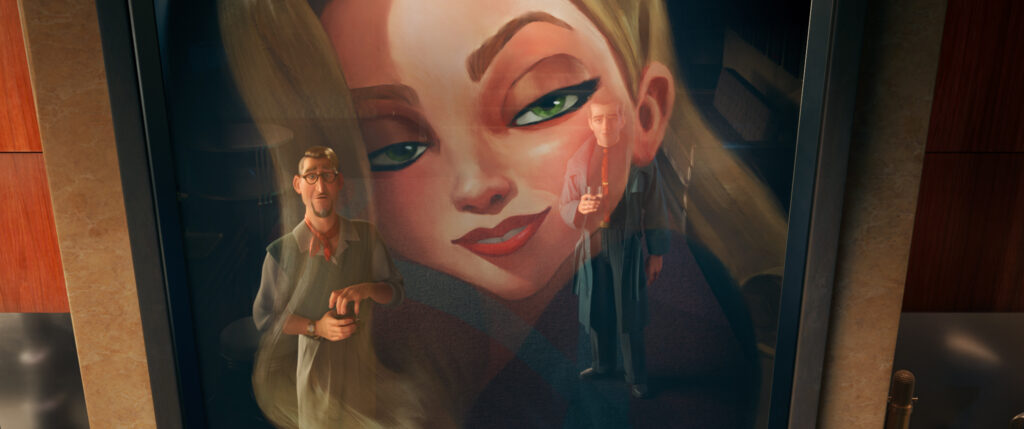
LA: So I recently, I got the privilege to speak with a retired animator who worked on some big titles in the 40s and 50s, and he told me it was hard to even comprehend how they make animation nowadays. I’m wondering for you, as you have grown with this career and technology has evolved, have you found it more challenging or has it become easier in some ways?
BB: Well, some of the fixes are easier to do now than they used to be. But the primary difficulty is just telling a story. The technology is secondary to that.
The biggest problems are usually, “how do you introduce the audience to a world? How do you get them to care about characters that are made up, and keep everybody leaning forward?” Those are the problems that never go away. You might make a film and maybe you crack it, and you feel like, “oh, I solved it. It’s a problem that I solved. Great. Now I know about problem solving!” Nope. The next thing that you encounter is a new set of problems to solve. And you’re back to feeling around in the dark, still trying to find the answer. It never gets easier.
The central problem is just telling a story. Doing it in a way that keeps people engaged. And look, if it were a thousand years ago, and you’ve got people gathered around a fire telling them a story, you’d still have the same problems. How do you get people to want to know what happens next? How do you get them to connect with things that they can relate to their own lives? How do you transport them to another place, another part of the world? Things that they’re not familiar with. How do you get them to be interested in those things? Those are perpetual problems when you’re telling a story, and that’s partially why it becomes really fascinating to work in.
The classic example is the opening shot of Star Wars. They set up the problem: visually, you see the planet come into the frame and then you’re looking at the planet. And suddenly a ship roars overhead, and the planet’s being shot at.
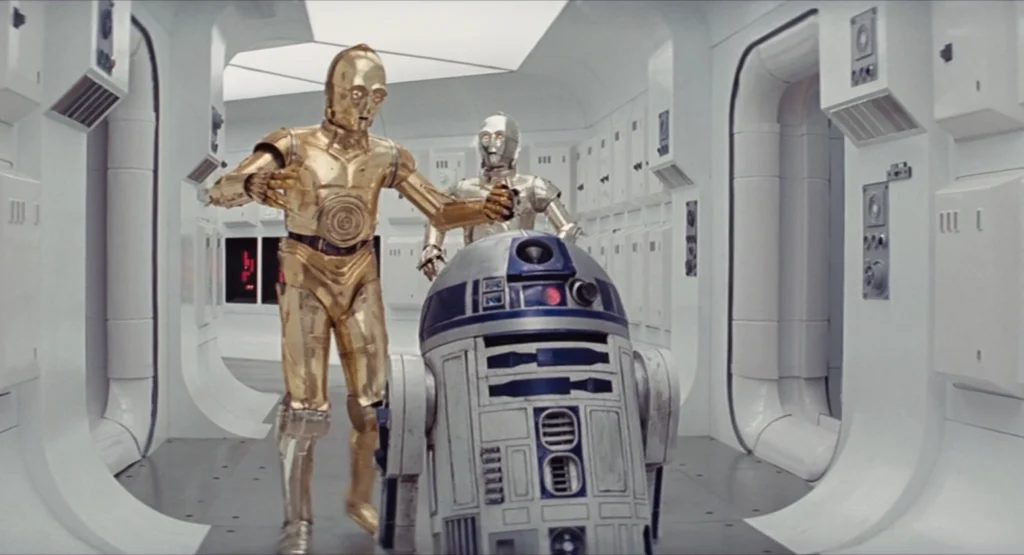
And you think “why are they being shot at? Are they bad guys?” And then this enormous ship that just keeps getting bigger and bigger comes into frame. Now, as people, we connect with the smaller fish. If there’s two fish and one of them’s big and one of them’s little, and if the big one is chasing the little one, all our sympathies go towards the little fish because that’s how we feel.
So automatically, when that little fish gets hit with a shot, and you cut inside and have these robots reacting, all our sympathies have been transferred to these robots. And not a word has been spoken. That’s the language of cinema: now you care about anyone inside the little fish. And that’s storytelling, man!
LA: You’d be a great professor, Brad Bird!
Ray Gunn will be released exclusively on Netflix on December 18th, 2026.