Mickey Mouse is an cartoon character co-created in 1928 by Walt Disney and Ub Iwerks.








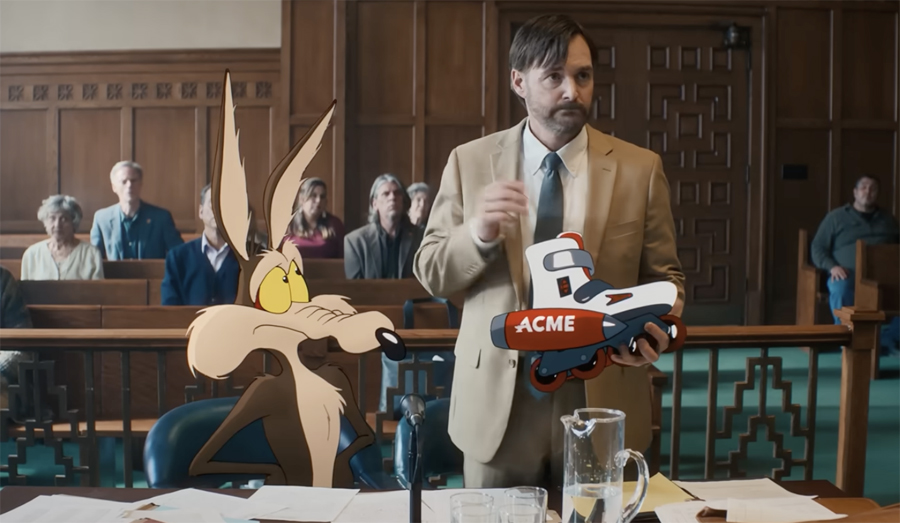
After years of anticipation, Coyote vs. ACME finally opens in theaters on Aug. 28. Director Dave Green shares his thoughts on the release and presenting the Looney Tunes characters in ways we’ve never seen them before. (This Animation Scoop Q&A was edited for length and clarity.)
Jackson Murphy: How does it honestly feel after all you’ve been through, after all this movie has been through, that it is finally coming out in theaters where it belongs?
Dave Green: It is completely surreal. We cannot believe it. All of us, we’re just… We’re thrilled. This is a party. Could not be happier, honestly.
JM: Celebration is in order because the movie’s a lot of fun and it’s great and it’s got so many elements to it — and getting it out to everybody. This is based on a 1990 New Yorker article which is really fascinating, and I guess it just goes to show you never know where stories can come from. You never know where inspiration comes from. How did you first find the article? What stood out to you about this?
DG: Well, I was not the one to find the article. I think Warner Bros. and James Gunn and Jeremy Slater, the first screenwriter on the film, collectively found the article. I’m not exactly sure. But when I read it, I thought it was absolutely genius for so many reasons, and one of the reasons is that it is the Looney Tunes tone. It is dry and funny and smart and ridiculous and honest all at the same time. And that’s to me what the very first Chuck Jones Looney Tunes were all about. They were all about that foundational tone of intelligence and wit and sarcasm, and so we tried our very best to kind of carry the torch that the article carried and bring that to the screen in this adaptation. The article handled so much stuff right that it was a great jumping off point, along with the original drafts of the script too, which people had put some hard work into.
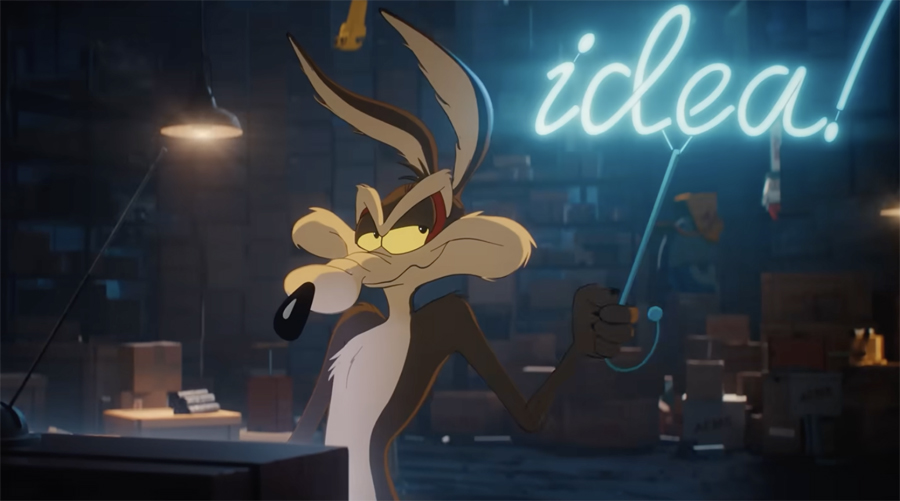
JM: Absolutely, yeah. This is Wile E. Coyote suing ACME [for] all the faulty products, all the bad things that have gone wrong in his pursuit of the Road Runner over the years. And the second scene of this movie is basically a Wile E. Coyote / Road Runner cartoon. You got the opportunity to basically direct a Road Runner / Wile E. Coyote cartoon. How did it feel putting that scene together?
DG: It was amazing. One of the first steps on this journey was I called Pete Browngardt, who worked on the “Looney Tunes Cartoons”. [He] created that show, and he gave me some really great advice. And he lent us two story artists, one named David Gemmill, another named Ryan Kramer, who are absolutely hilarious. They joined a larger story artist team, who came from different backgrounds. Their work was just laugh out loud funny. And David Gemmill, I believe, was the artist who did the first story reels on the Wile E. Coyote chase. It began as, like, a 12-minute sequence, I think that he showed us over Zoom because we were building this movie during COVID. He’d show us these long runs of that sequence. It was just laugh out loud funny. It was an amazing playground to work with those characters, to work with the set of gags that those characters rely on and also to kind of work with and jump off of the camera language that those early shorts were built with, which is a very side-scroller. You never see what’s coming as the camera is tracking rom left to right. And a camera kind of becomes a part of the joke. It was so much fun to learn from my story artists and learn from the original Chuck Jones shorts, and then give it a modern update as well and try things with camera that they never had access to, obviously, in the animated world. But yeah, that was our goal to kind of expand scope in that way.
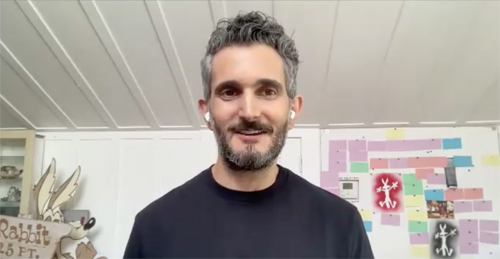
JM: This movie is very ambitious. That’s one of the words I kept thinking while watching this. This is so ambitious. You have worked in a live-action / CG combo before with “TMNT: Out of the Shadows”, so you’re familiar with that. But I feel like this is another level in terms of all these characters. There is so much movement to this film, and how did it really challenge you and surprise you, that whole process?
DG: It was all new to me, to be honest. Shooting motion capture actors is a completely different process than shooting animated characters like this, because motion capture actors walk onto set. You can have a conversation with them. You can point a camera at them. Looney Tunes characters do not exist. So it’s really about working with the invisible and then supporting the cast to feel like the characters who are invisible are actually there and basically giving them kind of proxies and things to look at and deal with to make the scene come alive. We built a life-size Wile E. Coyote puppet for Will Forte and Lana Condor and John Cena to reference on set. We had this amazing puppeteer named Dave Barclay, who is a legendary Henson-trained puppeteer who worked on “The Dark Crystal”, and he was a puppeteer for Jabba the Hutt, and he’s absolutely amazing. And he would do the first couple takes of the scene with Wile E., giving Will and all of our cast eye line. And then he would show them what Wile E.’s gonna do and what he wants, and he’s gonna pick up this piece of dynamite. Dynamite’s gonna explode, and then the room’s gonna be filled with smoke. And so we do the first couple takes with the Wile E. puppet and then strike the puppet, and then Will would do the scene without the puppet. And he was, first of all, really open to working with the puppet as a co-star in the first place and then was very good at running the scene without the puppet at all — really could track in, with his eyes, the parallax of, “Okay, Wile E.’s not standing up against the wall. He’s standing three feet away from us.” And there’s a big difference in eye line. So yeah, we had a cast who was up for the assignment and ready for that challenge and loved collaborating with Dave.
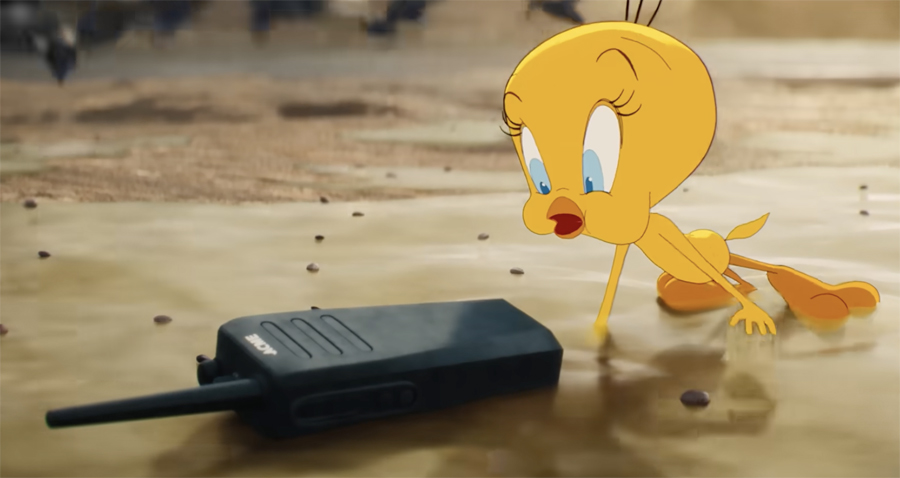
JM: I completely agree with that because as I’m watching the film, I go, “They are so game for this. They are all in.” Will Forte, Lana Condor, John Cena, they are so all in with the Looney Tunes aspect of the movie and with the legal comedy aspects of the movie. And some of my favorite moments of the movie are some of the emotional moments. What you do at the end is really, really nice. And also early on, there is this montage. It’s the moment when Wile E. sees the ad on TV with Will Forte, and you show clips from classic Looney Tunes cartoons, and you edit it in such a way that it’s like, “Wow, it’s kind of powerful, especially for the Looney Tunes fans who have grown up with these characters.” What have these characters meant to you, and how have you seen the reaction, and you hope that the diehard fans get out of moments like that in this film?
DG: That was something we found in editorial, honestly. We had a cut of the scene that didn’t have those cartoons, but my editor, Carsten Kurpanek, who’s absolutely brilliant… he and I, for some reason, we would end up finding these supercuts of Wile E. getting injured on YouTube. And we started watching them. It would remind us of gags that we had forgotten about and it reminded us that there’s so many funny moments and slices. And I think one day he just did it as a trial. “What if we cross-cut to these vintage cartoons as memory?” And early in the movie, it plays, I think, really funny, and then later in the movie, it plays it on a deeper level. But yeah, I think when you think about this character, you think, okay, he’s… I don’t wanna say a flat character, but I think the 30,000-foot view is he just wants to chase the bird. He blows up ACME products. He gets injured. Rinse and repeat. But if you really start to study him, this is a character who wants something very, very deeply, and his passion and his persistence and his resilience are what fuel his every day. And when you start to look at Wile E. that way, you’re like, “Okay, this is actually a really deep and human person… character that we’re talking about.” And once you start to think about his personhood, then you start to think of all of the injuries and all the times that ACME has mistreated him, and you start to realize, “Well that’s actually a bit unfair, you know?” And then you think about the history of injury that he’s had to sustain and how resilient he’s been and how much pain he’s had to endure. And once we started thinking about Wile E. on a deeper level like that, it kind of unlocked everything for us, and it took it from what could have been a 15-minute or a very short SNL sketch version of the movie into something that could actually sustain a full film. “Let’s start to think about who Wile E. is as a living, thinking, breathing being. So that was kind of our goal.
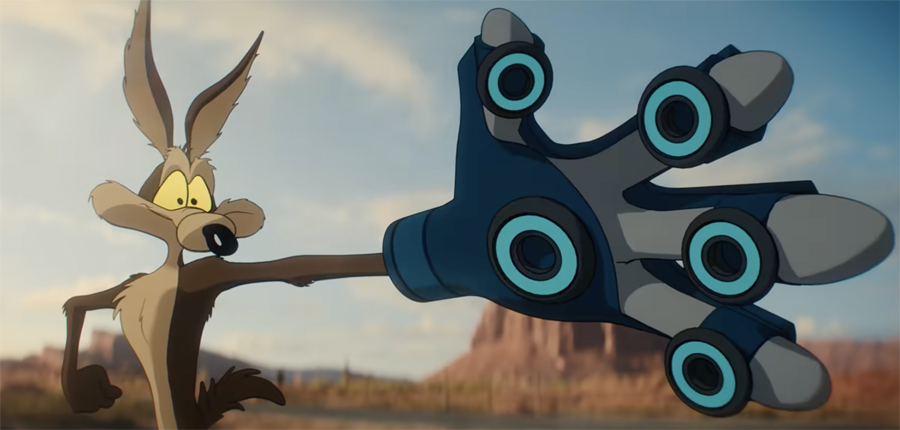
JM: There are absolutely layers to this. One of the most fascinating things about this movie is how you use the characters sort of in playing parts. There are classic Looney Tunes characters that are good guys in this movie, and there are classic Looney Tunes characters that are bad guys in this movie. It almost reminded me a little bit of The Muppets in how the characters kind of play parts in various ways. Was that a very interesting process for you deciding who’s a good guy and who’s a bad guy in this?
DG: Absolutely. Thanks for saying that, and that was one of our goals. We really thought about The Muppets and how The Muppets usually are not acknowledged in those films as The Muppets, or as a gang, you know. And sometimes in Looney Tunes films, you’ll see the opposite. You’ll see the Looney Tunes addressed as a gang, like an ensemble. “There’s the Looney Tunes.” And that’s something we really wanted to get away from because we wanted to be really not an ensemble Looney Tunes film in the traditional sense. We really wanted to tell Wile E.’s story first and foremost, and have him be the entryway to the rest of the characters. Sammy Burch, the screenwriter, actually comes from a casting background. Her mom was this legendary casting director named Jackie Burch, who cast movies like “The Breakfast Club” and “Die Hard”, and she’s absolutely brilliant. So Sammy grew up in a casting household and had experience with casting herself. And so when she came onto the project, she was like, “Oh, this is so much fun. If we’re gonna do this kind of family riff on a courtroom drama or courtroom thriller, who are these characters who we’d cast in these roles?” So we kind of looked at the cast of Looney Tunes as a casting pool, a set of talent that we could kind of pluck from and then place these actors into roles that made sense for them. So many of those ideas came from Sammy about who would fit in what role.
JM: That’s very cool. You have a lot of fun with that and a lot of surprises with that. This is one of those movies that, for me, you just never know what’s gonna happen next. It’s so unpredictable. Are those the kinds of movies that you love — these kind of unpredictable, you never know what’s gonna happen? ‘Cause that is on display here in “Coyote vs. ACME”.
DG: Always. Always. I love not knowing what the roadmap of a movie’s gonna be. That’s a great compliment. I really appreciate that. I love rug turns, and I love twists, and I like tonal pivots. Those are all part of our effort, so thank you for seeing that in the project.