Mickey Mouse is an cartoon character co-created in 1928 by Walt Disney and Ub Iwerks.












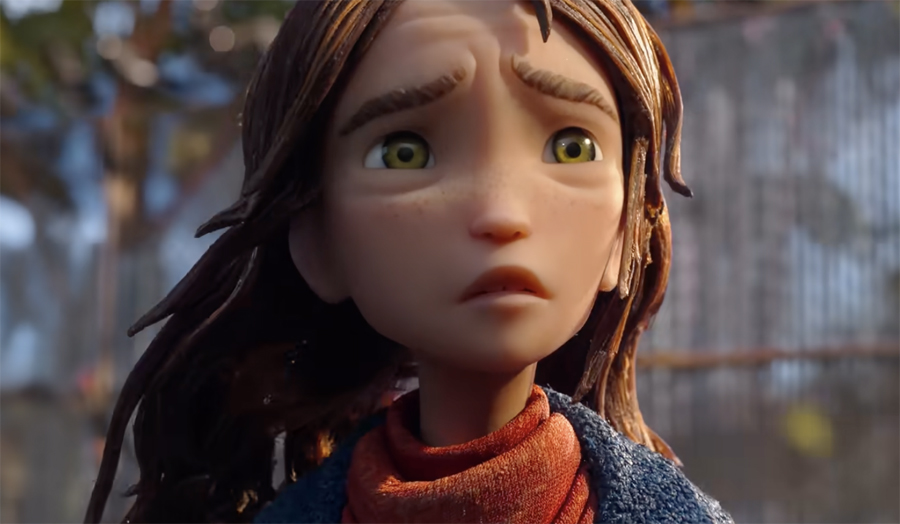
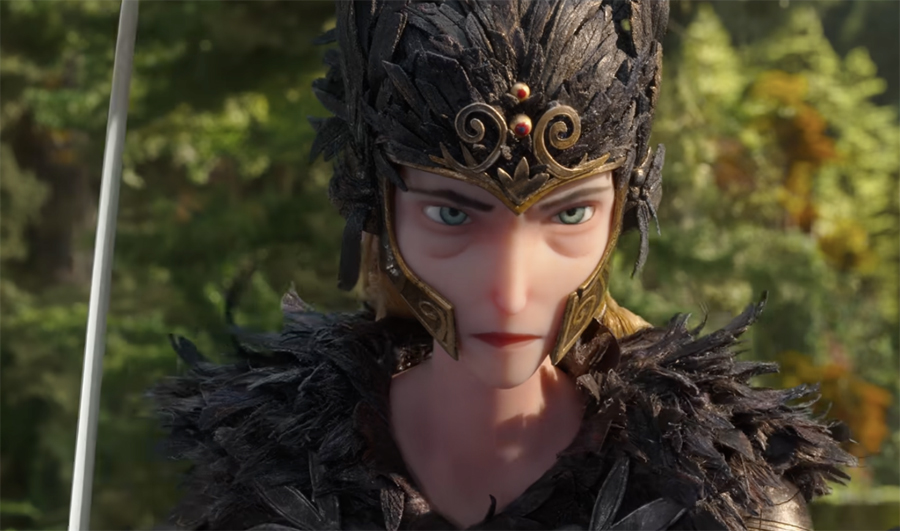
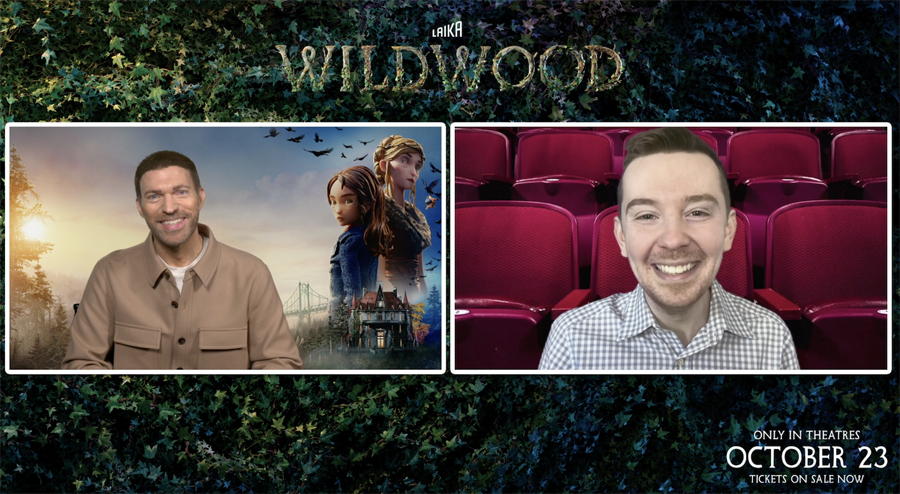
LAIKA’s highly anticipated new stop-motion animated feature Wildwood is now playing in theaters. The PG-13 action/adventure based on the 2011 novel, about a girl named Prue who must rescue her little brother Mac from the hands of an evil sorceress, is directed by Annie and BAFTA winner Travis Knight (Kubo and the Two Strings), who’s also LAIKA’s CEO. I spoke with him and the stars of the movie — Peyton Elizabeth Lee (the voice of Prue), Jacob Tremblay (friend Curtis), Jake Johnson (Prue’s dad, Mr. McKeel), and Golden Globe winner Awkwafina (the voice of rat companion Septima). (These interviews were conducted separately. This Animation Scoop piece was edited for length and clarity.)
Jackson Murphy: Travis, congratulations on this. The craftsmanship of the movie is unbelievable. What advancements did you do with the look of these characters and also the cinematography to make this look unlike any other stop-motion movie I’ve ever seen?
Travis Knight: Well, that was not happenstance. That was through a lot of hard work and effort and extraordinary craftsmanship and artistry on behalf of hundreds and hundreds of amazing artists. This film is extraordinarily ambitious. It’s one of the reasons why it took us 16 years to bring to the screen. It was so difficult. There was so much spectacle. There were so many characters and locations. It was really, really challenging to pull off. And in fact, it’s only because of all the technological advancements we’ve been able to do on the five previous films that we were even able to take something of this scale on. It was all incredibly hard to do — and yet I think it’s an extraordinary achievement because what you’re seeing, particularly with a stop-motion movie like this, is the accumulation of all these amazing acts of creativity, care and devotion on behalf of hundreds and hundreds of amazing artists.
JM: It’s really phenomenal to look at. I also feel like there are shots and edits in this film that remind me of a live-action movie. Obviously, you have live-action directing experience as well [“Bumblebee”, “Masters of the Universe”]. Do you feel like live-action and animation can co-exist in a certain way — in the style and form of a movie like this? I feel like the blend of that here was really strong.
TK: Having worked in both mediums, there are definitely things that are almost identical in terms of the process. And then there are things that are very, very different. The experience of working in animation and working in live-action did change the way I approached the way we were gonna make this movie. My relationship with the camera changed meaningfully when I worked on “Bumblebee”. Working in stop-motion, the camera is inert. Just like everything else, it has to be programmed and all those moves have to be designed — even something as simple as a camera panning across the room. That’s something that has to be programmed in a computer. And then it has to move a frame at a time on a motion control rig. It’s very complex.
But because I knew this movie needed to feel like a big cinematic spectacle — a big epic — like you would see in a live-action film, I wanted it to have that feeling and vibe. A big part of that was my experience working in live-action. So we approached the cinematography completely differently on this movie. And that’s why I reached out to an absolute legend — one of the most extraordinary cinematographers who has ever lived, Caleb Deschanel. I had no hope that he would say, “Yes” to doing this. I had no hope that I could lure him up to Portland, Oregon and say, “Hey, how would you like to spend years of your life working on a movie where you’re shooting a woman who’s the size of a burrito?” And yet, blessedly, he said, “Yes”, and it was one of the greatest experiences of my life, working with this amazing cinematographer, who brought a completely different perspective to how these things should be shot, because he was not burdened with all the many, many years of limitations of knowing it’s so impossible to do this in stop-motion. He didn’t have any sense of that, so he was like, “Hey, what if we do this?” And some of his ideas were insane. There was no way we could do them. But in other ways, he challenged the team to think differently, and I think that’s one of the reasons why the film looks so different and looks so beautiful.
JM: That’s fantastic. What makes Prue a LAIKA hero — right in line with all the other protagonists in the LAIKA catalogue?
TK: That’s an interesting question. It’s funny, I generally don’t think about them in that way. I think about these characters as interesting and complex people who have somewhere to go or somewhere to grow and have something to learn and have something to evolve into over the course of the story we’re telling. We always treat these things as if you only get one shot to tell this story, so the experience we’re seeing unfold on screen is meant to be the most significant, most meaningful experience of this character’s life… and how they deal with these circumstances. Prue is a very LAIKA protagonist because she’s a Portlander. And I’m a Portlander, and our studio is based in Portland. She’s a beautiful person who’s at this weird point in her life where she’s about to transition from one aspect of who she is to another. The movie is what she learns along the way — how she changes, evolves, the things she gains and loses along the way. That’s always an interesting story to tell — when someone’s going through a crucible where you see who they were at the beginning, who they were at the end, and how they change over the course of the movie. And that’s true not just of Prue but of Curtis, of Alexandra, our antagonist. Basically every character in the film — you see how this experience changes them, for good and for ill.
JM: Sure. There are very human themes in this movie… that are gonna resonate with everybody. How do you feel about having Fathom Entertainment distribute this in North America? They’ve always been a powerhouse when it comes to cinematic events… and now the cinematic event that is “Wildwood”.
TK: Fathom has been a great partner that we’ve worked with on a number of different things [including] some of our re-releases, where we’ve taken some of our older, legacy films and put them back out in the market to re-introduce audiences to these stories. And we’ve had tremendous success with them with some of those re-releases What Fathom is exceptionally good at doing, and their interesting point of view, is that they treat cinema as an event. They’re part of, as you say, event cinema. That’s what we felt the treatment of this movie deserved. This is a movie that deserved to be seen on the biggest screen possible with the best projection and sound possible, in the biggest room possible, where you can be surrounded be a group of fellow dreamers in the dark watching this story unfold on the big screen. Those are always the cinematic experiences that I treasure. This movie really does demand to be seen on that kind of platform.
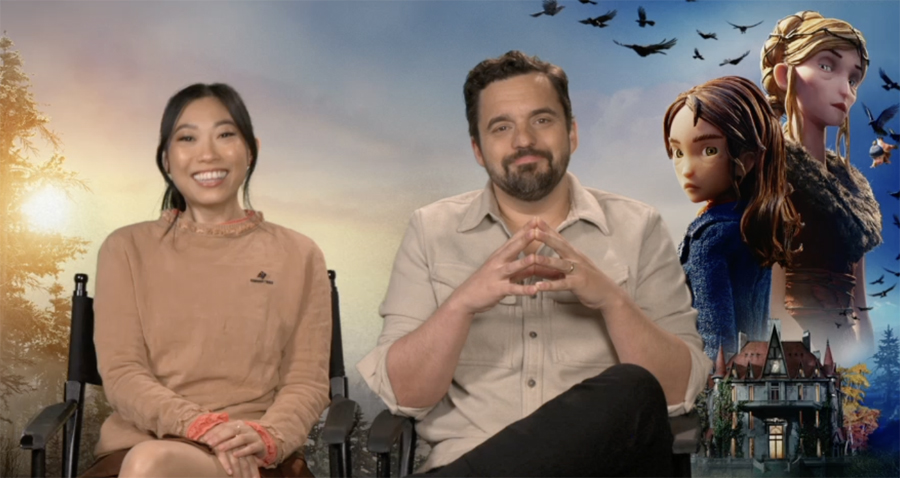
Jackson Murphy: Awkwafina, you bring humor to this movie in such key moments — and guidance for Curtis. Why do you feel that the humor and guidance [Septima] provides is so important in a movie like this that also has big action and very serious themes?
Awkwafina: When I first talked to Travis about what the role is, he said, “She’s not in it a ton but she plays an important part of the thread of everything.” I was really surprised when I was recording for Septima that… I was very emotionally moved by her arc as well. I think there’s always humor and guidance. You don’t want a serious guide. But she really took on a life of her own. Thank you for saying that.
Jackson Murphy: You’re welcome. Absolutely. And Jake, this is a really emotional, delicate voice performance. You have a lot to talk about with Prue. How did the themes of “Wildwood” resonate with you as you were delivering this voice performance?
Jake Johnson: The writing was so clear, so that makes it very easy as an actor. They knew exactly what they wanted, which is something I appreciated. I could lean into the visuals of their past work, so I knew that there was gonna be a lot of integrity to the artwork. I didn’t feel any pressure. I didn’t have to think about anything. I just wanted to deliver what they wanted. And when you’ve got a group like they have — they specifically know what they want — sometimes acting becomes like painting with numbers. Sometimes it’s not but sometimes you’re like, “Alright I’m Blue 4. Fill in 4 with Blue.”
Jackson Murphy: You deliver what counts with [Mr. McKeel], which is so important. And Awkwafina, you’ve had an incredible voice acting career, from “Raya [and the Last Dragon]” to “The Bad Guys” to “Kung Fu Panda [4]” to “Migration”. And the list goes on. What has the voice acting aspect of your career meant to you?
Awkwafina: It means so much. When I was growing up, I really didn’t like my voice. People were always like, “Why does it sound like that?” So when I’m able to be in the booth… when you’re doing voice acting, you can play an animal. You can play anything. And [Jake] said it really well earlier, when you’re in the dark in the booth, the only thing that’s alive is your voice. Nothing else matters. It’s such a special experience. And I’ve also had the most fun doing animated movies. I’m dying with laughter in some of those recordings. It’s a really good space to explore.
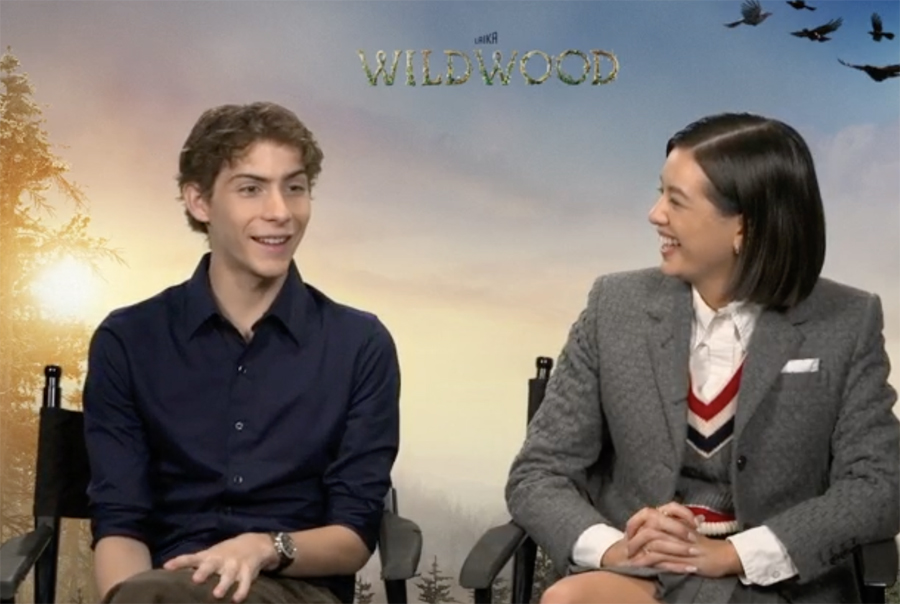
JM: Peyton, what do you love so much about Prue, who has to go through so much of this epic journey?
Peyton Elizabeth Lee: I love her so much and fell in love with her so quickly because I relate to her a lot. Though she goes on this mystical, magical adventure through an enchanted forest, the roots of her journey feel very authentic and universal to me to the experience of growing up. There’s a moment in every young person’s life where they realize that the world that they thought they lived in is different than they thought. Her ability to be adaptable and be flexible and in experiencing all these new things that are so surprising and overwhelming, she allows herself to grow and learn from that. That’s really beautiful. I feel so lucky to have gotten to play her and tell her story.
JM: Curtis has quite an arc too, Jacob. What surprised you about the layers of your character as you were reading the script?
Jacob Tremblay: When I first started reading it, I definitely expected Curtis to be more of the comic relief side character. I was really surprised about how much of a real arc that he has. It’s really interesting seeing how Curtis has his own arc. He starts out… he’s really passionate about fiction and fantasy in his life… but then he’s thrown into one of his own and he’s inspired by the stories in his life and being a warrior. The idea of being a warrior at the start of the film is very exciting for him — very different — be he soon learns what it means to carry a weapon.
JM: Peyton, LAIKA has such a great catalogue of strong lead characters. What was most exciting for you about this voice acting experience, taking on the lead character of a big LAIKA movie?
PEL: The excitement about this project is two-fold. First of all, the story itself is so beautiful and special. Prue means so much to me. It’s really important, and always has been in my career, to find strong female characters to play that I think can be inspiring and empowering to young people. And then also, LAIKA as a studio is so impressive and inspiring and unparalleled in the work they do in stop-motion animation. When you look at their catalogue of films, every single one is iconic and so special and such a revelation of artistry. Getting to be part of the next part of their story as a company was really special as well.
JM: The animation in this is unbelievable. Jacob, you’ve been in a lot of animated features, from “Luca” to “My Father’s Dragon”, voicing in “The Little Mermaid”, and “Orion and the Dark” was really good as well. What has the voice acting aspect of your career meant to you?
JT: It’s really different and unique. I think I’m able to kind of play so many different characters that you would never get to do in terms of live-action. You’re always limited to yourself — what you look like and who you are as a person, sometimes. It really gives you a lot of freedom to take it in unique places that you would really never get to explore before.
JM: When you were first seeing some of the footage, what blew you away the most?
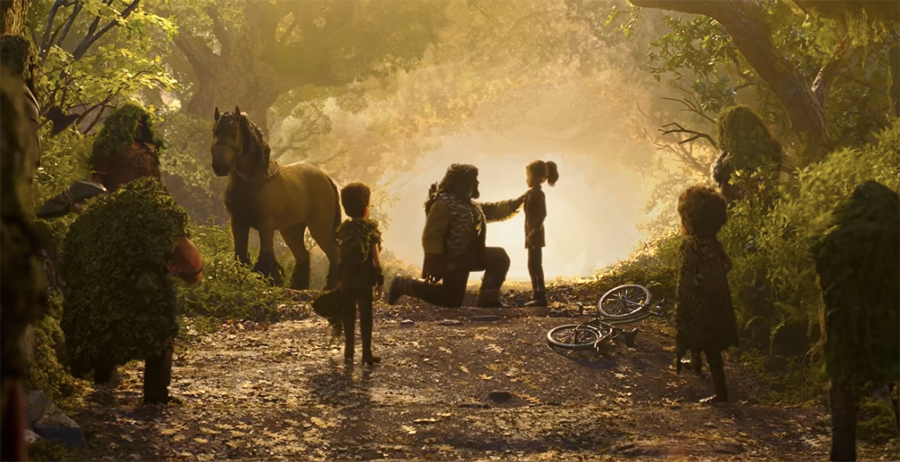
JT: Right off the bat I was blown away by the attention to detail in everything. It was so beautiful. We saw an unfinished version. And then visiting the studio for the first time and seeing how beautiful all the sets. I was really blown away by the scale of everything — how really big these sets are. That was surprising for me. How many of them they had and how big they were willing to go. For even establishing shots of the outside of a building, they build an entire massive set for it. So the dedication is really special.
PEL: I also think that the handmade aspect of the film, the fact that it was really artists physically creating these worlds and characters and building these homes, allows the film to feel incredibly immersive, like you could just reach in and touch this world. That’s special and beautiful about the film: the handmade quality of it, allowing it to feel that much more real and tangible.