Mickey Mouse is an cartoon character co-created in 1928 by Walt Disney and Ub Iwerks.












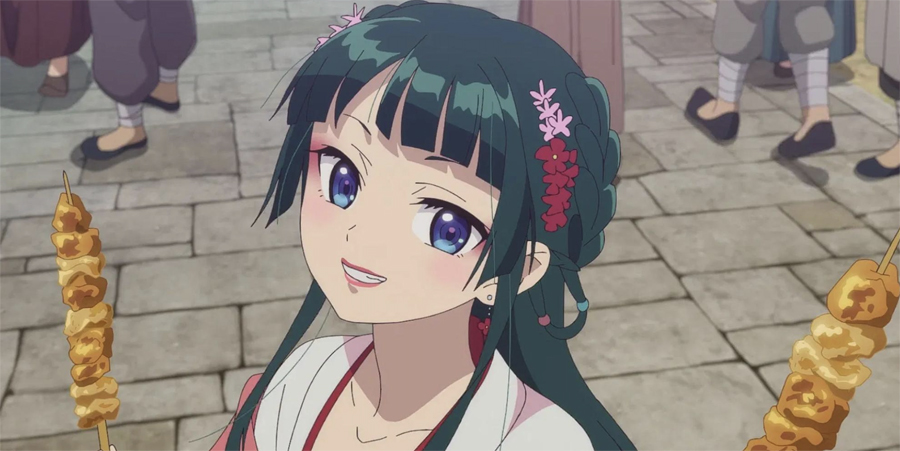
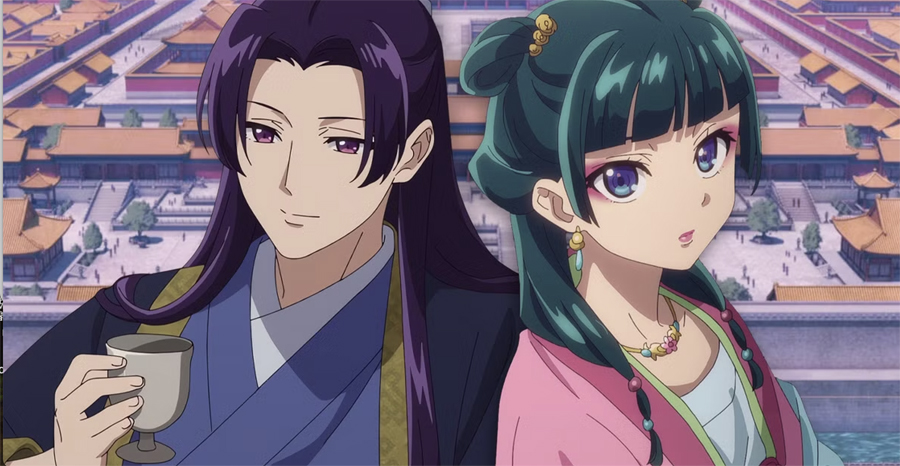
Picture this: In a land based on Imperial China, Maomao, a teenage girl, is kidnapped and sold to serve in the Palace. Due to her skills as an apothecary and her forensic approach to solving crimes, she comes to the attention of a handsome eunuch, Jinshi, who arranges for her to become a lady-in-waiting and food taster for one of the Emperor’s favored concubines. What begins with Maomao investigating mysterious illnesses soon draws her into increasingly dangerous court intrigues. Along the way, she discovers that there is considerably more to Jinshi than meets the eye and, despite her best efforts to ignore it, a slow-burning romance develops between them.
The Apothecary Diaries began in 2011 as a web novel by Hyūganatsu. A light-novel edition followed, illustrated by Touko Shino. In 2017, the property spawned two manga adaptations: a Square Enix version written by Itsuki Nanao and illustrated by Nekokurage in Monthly Big Gangan, and a separate Shogakukan adaptation illustrated by Minoji Kurata in Monthly Sunday Gene-X.
Then TOHO Animation and OLM produced an anime series, with Season One airing from October 2023 to March 2024, followed by Season Two from January to July 2025, 24 episodes per season. The series currently streams on Crunchyroll, with a third season set to begin this fall.
Maomao is voiced by Aoi Yuki, known for her roles as SaAYka Natori in Your Name (2016), Dearia in Dragon Goes House Hunting (2021), Reko in A Herbivorous Dragon of 5,000 Years Gets Unfairly Villainized (2022), and Tsuyu Asui/Froppy in the My Hero Academia franchise (2016 to date).
Jinshi is performed by Takeo Otsuka, whose credits include Lauda Neill in Mobile Suit Gundam: The Witch from Mercury (2022), a voice in Demon Slayer: Kimetsu no AYiba (2024), Ony in Gundam: Requiem for Vengeance (2024), Man C in Demons of the Shadow Realm (2026), and Alrose in That Time I Got Reincarnated as a Slime (2026).
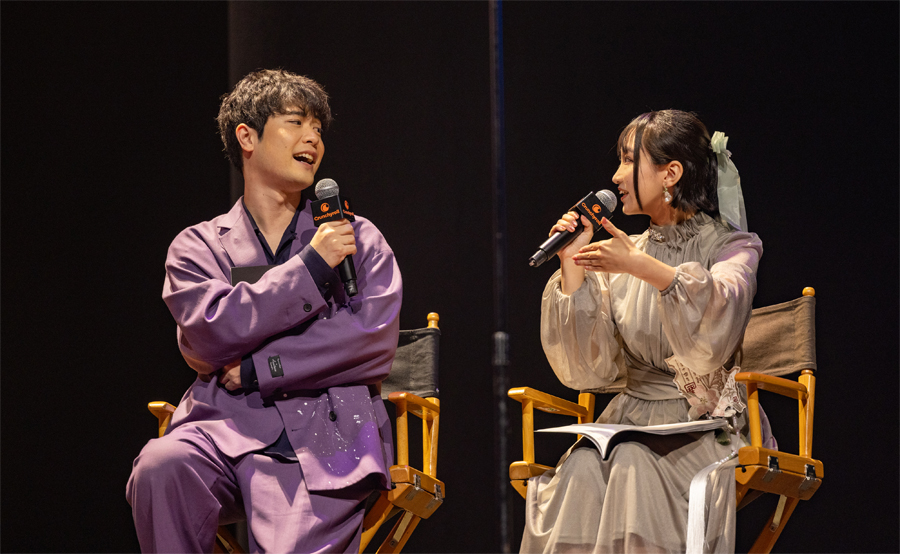
The lead actors came to Anime Expo 2026 in Los Angeles to promote the series. I interviewed them on July 3, with Mikey McNamara translating. We talked about their roles, the appeal and uniqueness of their characters, what their recording sessions are like, and the advice they would have given to their younger selves.
Bob Miller: Thank you for your time today. When did you learn about The Apothecary Diaries and that it was going to be adapted into anime?
Aoi Yuki: There’s a genre of media called a drama CD, where you interact with the characters through audio. That was my first time I played the role of Maomao.
I discovered the source material, the manga comics. And reading the manga and performing on this drama CD, I thought how amazing this could be as an anime. Fnally, that day has come. The reaction from fans around the world was really, really just very passionate about the show. So it’s been a very fun experience for me.
Takeo Otsuka: I never read the comics until I had the opportunity to audition for my character, Jinshi. But I knew that there was a franchise that was very popular, The Apothecary Diaries. Once I received the offer to audition, I began by reading the comics. And I think that’s when it dawned on me why this content, why this IP was so popular. I understood. Fast forward a few years and here I am in Los Angeles interacting directly with fans from around the world and getting to witness firsthand how that passion has translated across the ocean.
BM: What do you think is special about each of your characters? What sets them apart?
AY: For a girl in her teens she seems very calm and collected. And she has this power of deduction that she applies throughout the series. That is something that makes my character very interesting and cool. She’s very interested in medicine and comes off at first glance to be very indifferent to anything else. As I play the character and see her in the anime, I would argue that she’s quite observant of others. To be observant, you have to have a certain level of interest in that person to be able to notice certain things. Herbs. Medicine. Yes, definitely. But I think her very studious nature is something that makes her character very charming and adorable.
TO: Jinshi has many faces. There’s many angles to him as a character. And I feel we get to see more and more of these as the story and the show progresses. First, when the audience and our characters are introduced to him, he comes across as this very mysterious character you can’t quite put your finger on. But through different story arcs and character development, we see his different angles. Eventually his more personal side to kind of complete the character and help the audience understand what it is that he does and what he stands for. And I think this idea that his character is revealed in stages is what makes it very interesting for people to watch and makes it very attractive. And it becomes apparent he’s in a very very high-ranking, much higher-ranking position than we all thought. Despite that, because his characters is so earnest and humble before these reveals that happen later on. It also shows a much younger childish side to his character, I would say, that he always carries with him. In many ways, he’s very human. And I think he makes people relate to him in that sense.
BM: Do you record from the studio together or individually? Do you record from home? What is the recording process like?
AY: Unless there’s a special circumstance, like a scheduling conflict, the entire cast records together in the studio. We don’t record from home.
TO: During recording sessions, Yuki-san takes the lead in creating a welcoming atmosphere. Even when someone is joining The Apothecary Diaries for the first time, it’s an environment where everyone can feel comfortable talking with each other.
BM: Do you record your character before it’s animated or after?
AY: That depends on what stage of animation we record to. Usually we’ll see character expressions and basic character movement on the screen when we’re performing to them. The next phase in our pipeline is a video storyboard where the storyboard is put into a timeline and there’s some movement to it and that’s normally the stage at which we’re brought in to record the dialogue. Most of the time, we’ll have constraints on how long the dialogue should be. Our job then becomes, ‘Okay, here’s our script, here’s the video storyboard we’re watching on the screen, and here’s the length we’ve been given to put our performance into.’ We try to do the best and the most natural performance we can within those constraints. Every so often we’ll land this critical hit, so to speak, where we just stick a performance so good that might not fit into those constraints and that’s when the animators look at each other and say, ‘Okay, well, let’s try and adjust the animation to match that performance.’
BM: So you have the freedom to improvise?
AY: It really depends on the project how much improvisation is allowed. The Apothecary Diaries is perhaps one of the more lenient productions that I’ve worked on. There’s a lot of trust that’s been given to the cast because the cast knows the characters the best. It should be that the cast members drive a lot of that. That said, there are of course certain situations or certain scenes where the director or someone else has a very strong vision for hey this needs to be the right tempo or this is the intent or if we can match this timing, ‘I think it’s going to really land with all the other elements that I’m directing.’ You have a little bit of back and forth as we oftentimes love each other’s ideas anyway. That’s, I think. a very very nice production to be part of.
BM: What kinds of reactions have you seen from the fans?
TO: Well, of course, there’s the source material, the manga. Fans who knew of certain story arcs or certain story beats from before the anime adaptation, so a common reaction that I would get is, ‘I was so excited to see this scene in motion with performance and sound and animation and color, etc.’
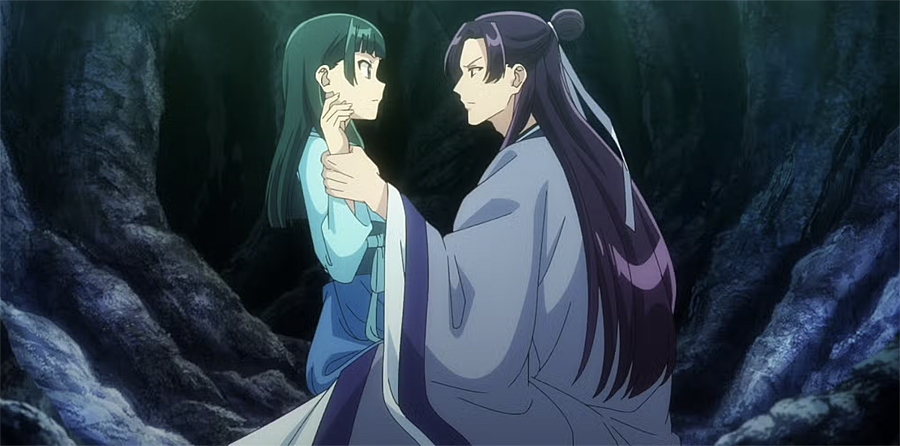
Some specifics are in Season Two. There’s a little arc where the two of us are trapped in this cavern. That was one scene that a lot of fans were very much looking forward to. And another one towards the end of the season where my character leads this army into battle. So there are certain scenes that people react to and say, ‘Hey, I was very excited to see this.’
But at the same time, seeing just how popular the series has become, I’ve really come to realize that, in addition to the existing fans, there are also a tremendous number of people who discovered The Apothecary Diaries for the first time through the anime.
BM: What do you know now that you wish you had known when you began your career?
AY: One thing that comes to mind is, oftentimes the scripts that I’ll be recording off of in the booth are written in Japanese. There are three sets of glyphs and alphabets. There’s the Chinese kanji characters that we’ve kind of inherited from China. And then there’s two phonetic ones, hiragana and katakana. Three writing systems that coexist that form the Japanese written language. Ironically, the Chinese characters are the ones that I can glance at and immediately know what the glyph is supposed to say. It’s the more alphabet-like simpler characters that you have to sound out. Those sometimes trip me up. Because when you see a string of it, it’s the way the information kind of carries over is different from the Chinese characters. So my pro tip is focus on the alphabets and then the Chinese characters and kanji will kind of automatically carry itself. You can act on that.
TO: Let me see… This isn’t exactly the most refined thing to talk about, but even now, I still find it really difficult to figure out when to go to the bathroom.
AY: I know what you mean.
TO: Learning when to use the restroom was a big pro tip I love to tell my younger self because when you’re in production and in the sound studio, there’s a lot of people there. All the other actors are recording together and off of each other. So when you go into recording, they close the door. You’re in your vacuum and then you record for an hour straight or however long. After we record enough lines, we’ll have a little break. And the director, the sound director and producers are deliberating. And sometimes this will last a very long time. Other times, this could be very quick. And the break will be over and we’ll go into our next recording session. So understanding the timing and kind of reading the room of, ‘Okay, Now is a good time to use the bathroom so I’m not stuck there.’
And the opposite was also true.
One time I misjudged it. I went to the bathroom. The deliberation was so quick that when I got back they were already beginning the next session. I ended up locked out—I couldn’t get back into the studio.
AY: What did you do?
TO: There was a glass window in the door, so someone signaled to me, ‘You can come in now!’ and somehow I managed to get back inside without causing a problem.
That was something that I learned over my years.
The Apothecary Diaries is rated TV-14 due to mature subject matter, including poisoning and drug use, violence and death, prostitution and courtesans, concubines and sexual relationships, pregnancy and childbirth, sexual innuendo, and occasional disturbing medical situations.
Season Three will be released with Part One in October 2026 and Part Two in April 2027. A film called The Apothecary Diaries: The Deceased Empress’ Treasure, is slated for December 11, 2026.
Special thanks to Stephanie Wong, Senior Publicist, Streaming Content & Awards, and her team from Crunchyroll, Blake Shuster, Pamela Abeka, Kaitlin Hargrove, Taylor Cocke, and Cameron Winston.