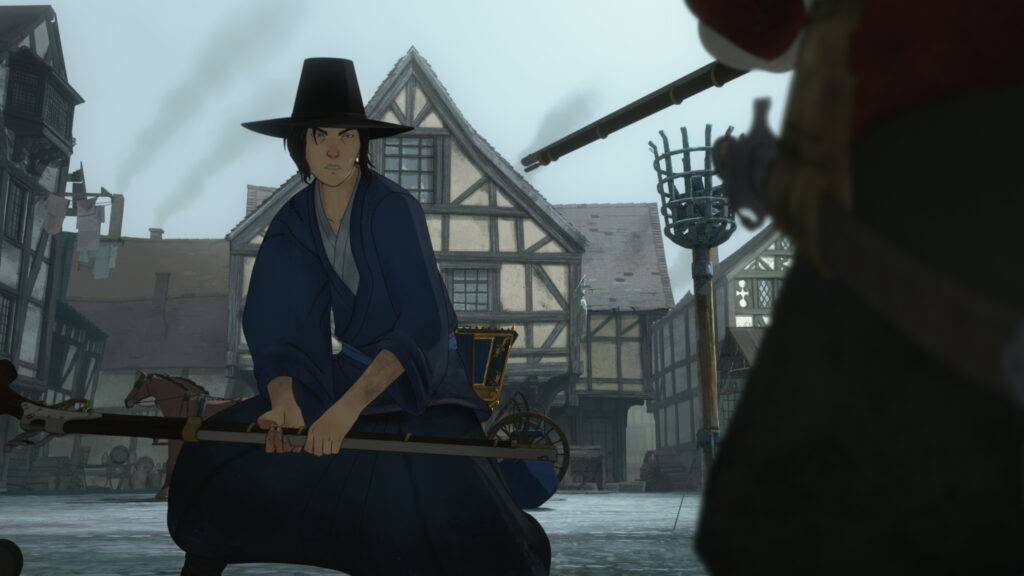
Mickey Mouse is an cartoon character co-created in 1928 by Walt Disney and Ub Iwerks.








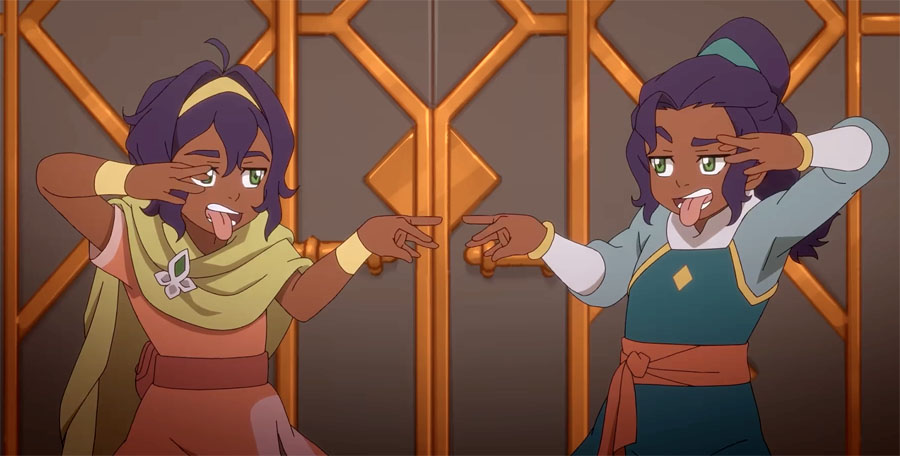
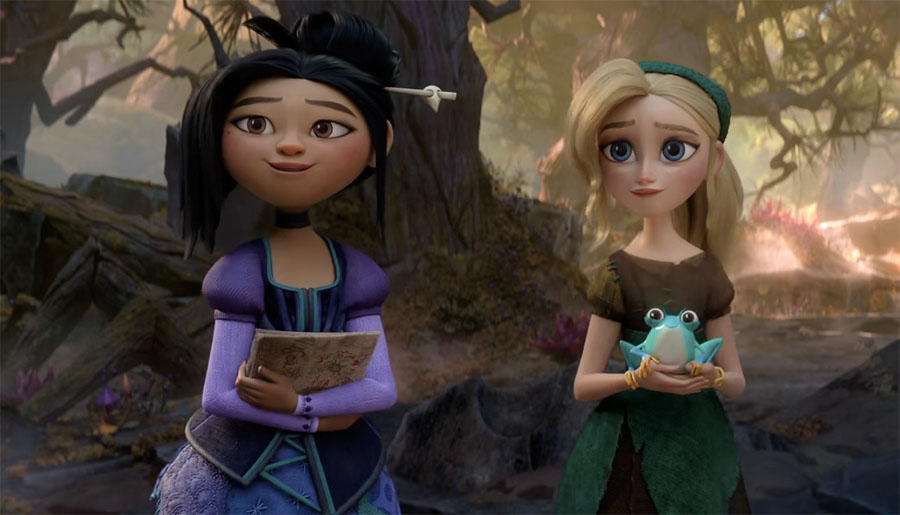
Steps offers a fresh take on a classic tale, with a focus on stepsisters Lilith and Margot and the evolution of their relationship with Cinderella over a pivotal few days. Directors Alyce Tzue and John Ripa join me to share insights on the new Netflix animated feature, which debuts Nov. 20. (This Animation Scoop Q&A was edited for length and clarity.)
Jackson Murphy: Alyce, I love that this movie has so much energy to it. What was most exciting for you about putting a twist on the Cinderella tale?
Alyce Tzue: Putting a twist on the Cinderella tale was exciting to me because I could channel some of my experience and give a sense of vulnerability and I guess realness the stepsisters’ perspective. I grew up a little girl in a suburb that wasn’t very diverse, and always felt like I was so different that I probably wouldn’t find my happily ever after like the other girls would. And so, looking at the stepsisters in the Cinderella story that never got the magic, were perceived as evil… there are just so many layers to dig into there and really have fun with the idea that this kingdom isn’t perfect and maybe is a conformist kingdom that doesn’t accept them. That’s been really, really compelling to work with.
JM: There’s a lot that you do here, like you said, a lot of layers and surprises. And John, you were also a story artist on “Tangled”. So what excites you about coming into something like this and shaking things up… shaking up these iconic stories?
John Ripa: Yeah, I’ve certainly worked on some fairy tales. But yeah, what was really exciting about this, ’cause there’s such an incredible history and legacy to the Cinderella story that goes back to almost every culture kind of having their version and contributing to it. So us getting to, in the beginning, sort of see the Cinderella story and a lot of the familiar stuff through a new perspective was really cool. And then we get to break it, and we get to try some really wild things, some really fun things. To put some other fairy tale elements in there, like trolls under a bridge, and to really go to some fun places with our climax and with our characters. And depth and layers to our characters that I haven’t really seen in a lot of other versions.
JM: Yeah. Lilith and Margot are the stepsisters, and they have such honest emotions, Alyce, and there are so many emotional truths that you explore through the movie and I think are very contemporary and will impact a lot of people. What interested you the most about that aspect and exploring them and the emotions that they have?
AT: Well, that’s a great question. I feel like Lilith’s journey has a lot to do with her immigrating to Alouette and being so hopeful. Believing in everything that fairy tales have to offer, including happily ever after, getting rejected, and the consequence of that being her putting up these emotional walls. And also even ejecting her own culture for the middle of the movie. It’s a subtle cultural nod that when you’re made to feel not enough, not good enough for a place, sometimes you kind of subconsciously reject your own identity. But of course we bring her full circle in that in the love of her sister, through sisterhood, she then gains full confidence in herself and embraces her culture by the end. And… what’s beautiful about Margot is that as an older sister, Lilith protects Margot from the cruelties of the world, I suppose. And Margot’s then able to be herself and have confidence in her identity more so than Lilith, thanks to her protection.
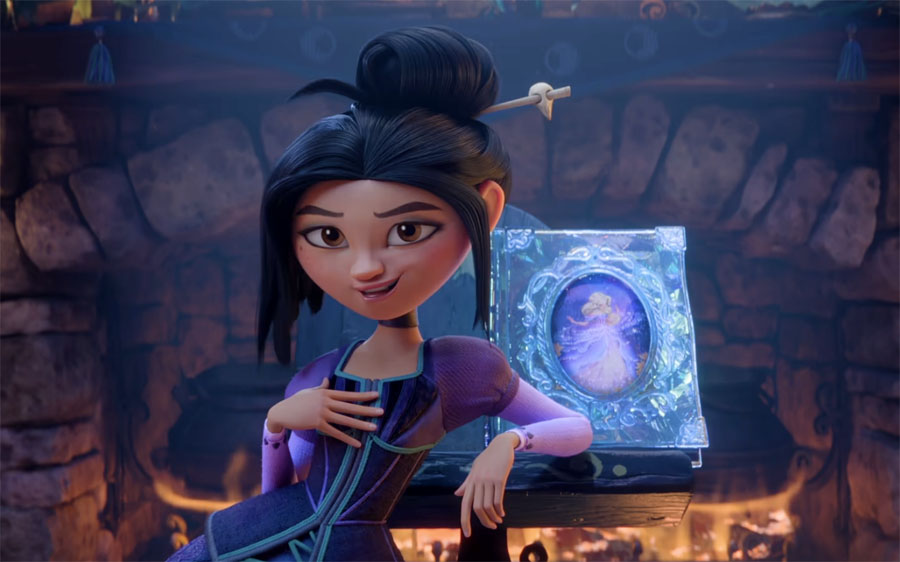
JM: Confidence is a good word to describe a big theme of this movie, and there’s so many dimensions, John, to the Cinderella character as well [and] her arc. Was it challenging to figure all that out? And I think what Amanda Seyfried does with that voice performance is very challenging, and she pulls it off really well.
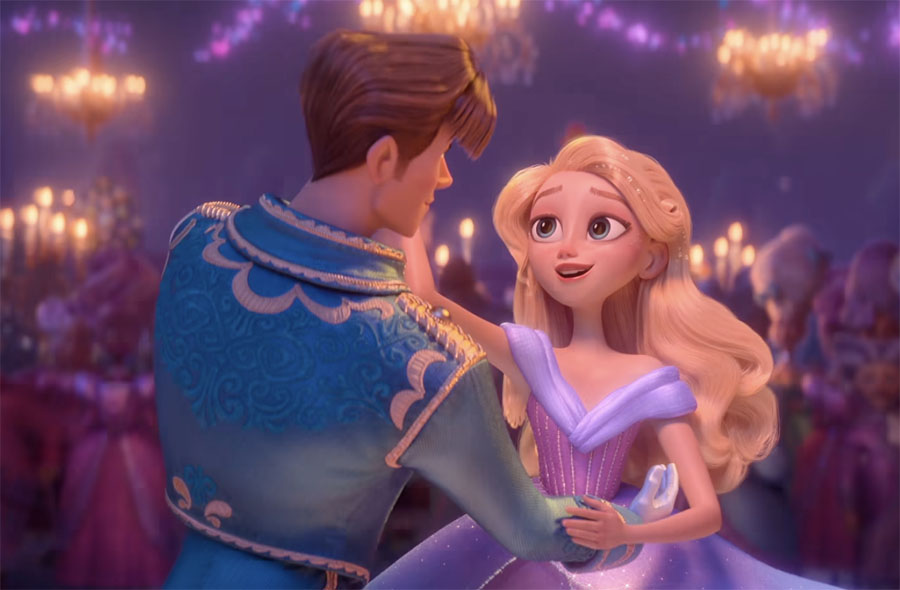
JR: Oh, yeah. Thank you. She is amazing. We can’t say enough incredible things about Amanda. Her singing voice. How she handles the humor of Cinderella, but then also the depth and the heart. Cinderella was a challenging character to create because she is so iconic, and people come into it with a lot of preconceived feelings and emotions. And they know the character really well from all these film and animation iterations. So finding the right way to portray her on the screen took a while to kinda figure out. We had to have some trial and error and get some reactions until we kind of found a version that we felt like can pay tribute to a lot of things that we know about her — but then really explore the fact that this character has lost two parents and is struggling within her new family. And no one really dives into sort of what that means. And Amanda brought that out with such sincerity and such incredible subtlety in her performance. It was really interesting to go there with this character.
JM: There’s a lot there. And also this song, “A Smile and a Song”, which as it was happening, I was like, “Wow, this is charming. This is funny.” And also kind of a tightrope balance of you don’t wanna make fun of the fairy tales, but also you wanna put this spin on that. Was that an interesting experience to incorporate that song into the movie?
AT: Yes, it was a discussion because it is the only song in the movie that [a character] sings. We decided to put it in because it is something that you assume of Cinderella. She seems the perfect fairy tale archetype because she’s so nice to animals, and she sings, and she’s graceful, and she cleans. And so there are these assumptions about Cinderella you bring into the story, but we use it as a symbol of almost her privilege in a way of the fact that she benefits from magic. And so she kind of is able to float through the world and have everyone love her in this way that Lilith is like, “What are people drinking in this town? What’s going on?” And Cinderella also goes on her own arc. When she doesn’t have magic, she has to traverse through the forest, getting attacked by wolves and things like that. But the song ended up being more of a symbol for us of a lesson that Cinderella has to learn that, hey, a smile and a song can’t fix everything.
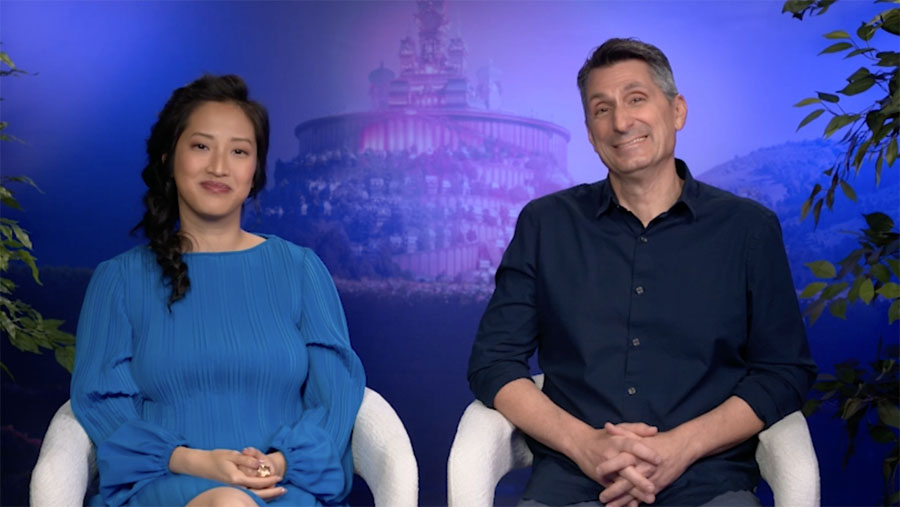
JM: And Alyce, I think communication is a big theme of this movie. And I’m sure as you’re making an animated feature, communication is so key to making key decisions. When you think about that word communication when it comes to making “Steps”, what comes to mind?
AT: Communication is so important, especially for such a collaborative project. When I think of communication, I think of our partnership. I feel like a lot of any kind of partnership and collaboration comes from being able to share one’s values and share enough so that we feel aligned. Share enough so that we know what to focus on in terms of, “Okay, well, my strengths are here, your strengths are there.” And my partnership with John has been so valuable to me, and so I feel like he’s taught me a lot about communication as well.
JR: Just to echo that too. It goes both ways. Our work together as well. I learned a lot from Alyce on this that I can carry forward and continue to learn and work on myself. And so really, it was a good kinda back and forth and respect and communication.
JM: I love hearing that. And John, you mentioned a little bit earlier about some of these adventurous aspects of the film, and some of the sequences you have are so well shot. We kinda go on rides at a couple different points, and there’s very cool angles to this. What was most fun for you about the adventurous side of the movie and having it work so well tonally with everything else you have going on?
JR: We love these characters. All of ‘em. We have a great cast, and all of these characters really shine. And then you get to have some fun as storytellers and filmmakers to see what kind of situations you can put them in. And we definitely have come up with some very unusual things, like goater-cycles on these BMX-like tracks being chased by trolls, and giant mechanical monster suits, and into our climax. I think you’re always tracking the character, their arc, and their relationship, and making sure you’re learning over the course of these scenes, and you’re putting them in situations where they can react, and the audience can kinda really enjoy them. I think a really fun part of breaking the story was getting to try all these really different wild things, and then see how our characters respond.
JM: I think a lot of families are going to remember a lot of these sequences for a long, long time, because they stand out so much. We mentioned Amanda Seyfried. This voice cast: Ali Wong, Stephanie Hsu, Nikki Glaser. Daniel Radcliffe is very good at this. Peter Dinklage. Bette Midler. Can you guys believe Bette Midler is in your movie?
AT: We still can’t believe it. We pinch ourselves every second.
JR: Young Mazino as well. Damian Priest. They’re the best people in the world. All of them were incredibly kind to work with, incredibly talented, and willing to go some — as you’ve seen the film — some really fun, quirky places. Bette… you’re working with a legend. How could you not love that?
AT: Bette the legend. She wrote some lines. She immediately got the tone of Fairy Godmother right off the bat. And Ali Wong brought a lot of, sharp social commentary to her role. Amanda Seyfried obviously the humanity and the catharsis of this one scene during the mech chase is seared into my mind. But everyone did such an incredible job. Truly. We were so lucky.
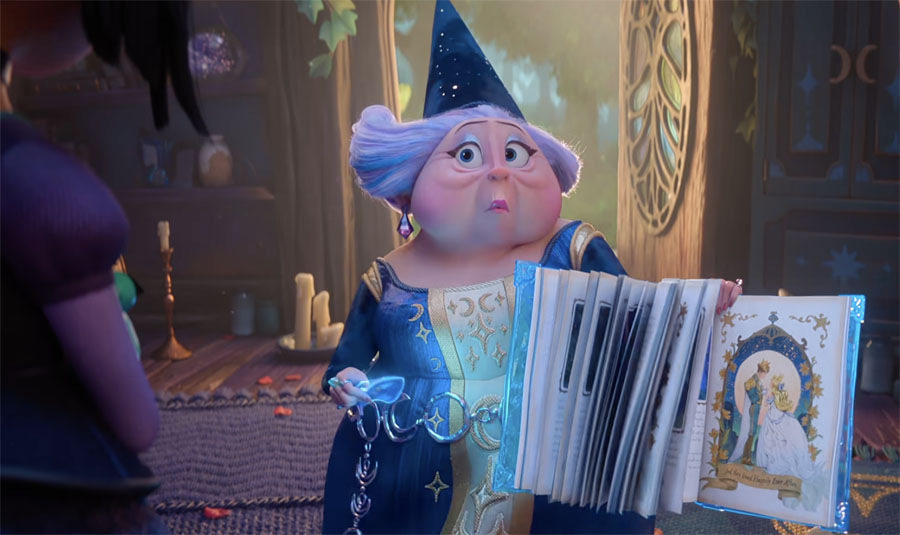
JR: And just call out Nikki Glaser, too, as a villain in this. Her wit, her sharpness, her timing, her delivery, but also her acting chops. She created I think a really appealing, memorable character.
JM: It’s definitely an excellent ensemble. So before the clock strikes midnight on this interview, I have to ask the both of you, since you’re animation directors, do you like tight deadlines? Did you enjoy having tight deadlines while working on “Steps”?
AT: We had them all the time, at the same time, compared to live-action, we had six and a half, seven years on this. Actually, one of my lessons was being able to make a decision, because that’s our job, to make decisions, but then also be strong enough to realize when we maybe need to change course. “Actually, that was the wrong decision. Let’s change our minds.” And yes, we have tight deadlines. At the same time, with animation you do have a bit of a privilege to see how this plays out and then change your mind.
JR: It’s very definitely, too, a blessing and a curse in that you always want more time, but if you have more time, you’ll never finish.