Mickey Mouse is an cartoon character co-created in 1928 by Walt Disney and Ub Iwerks.






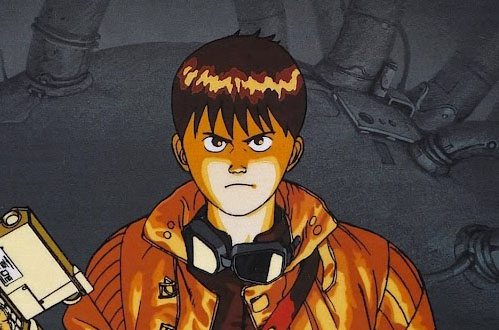







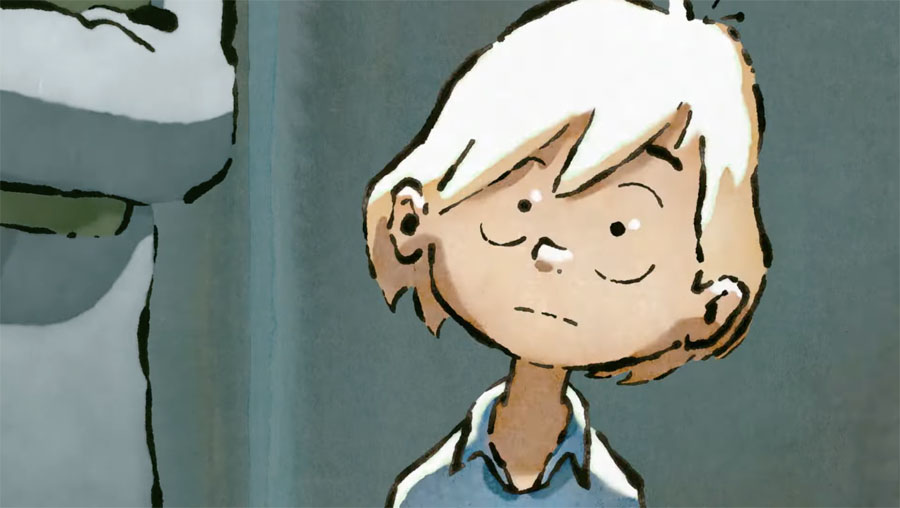
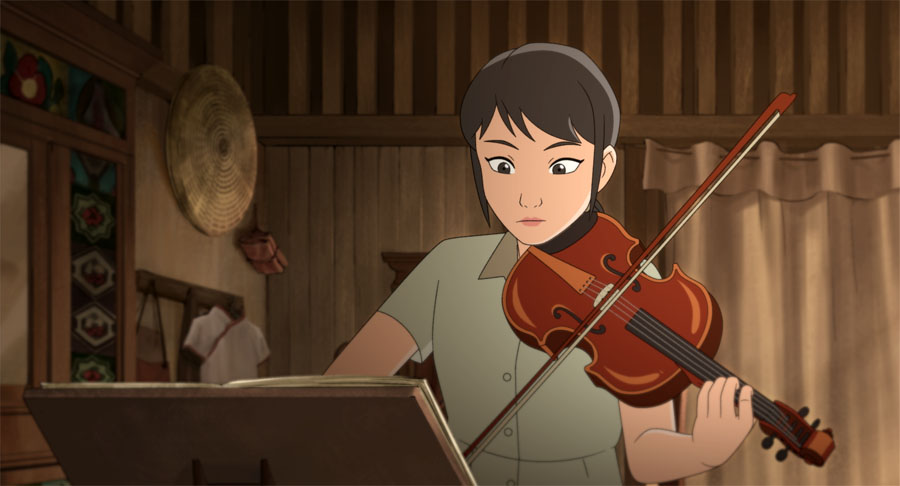
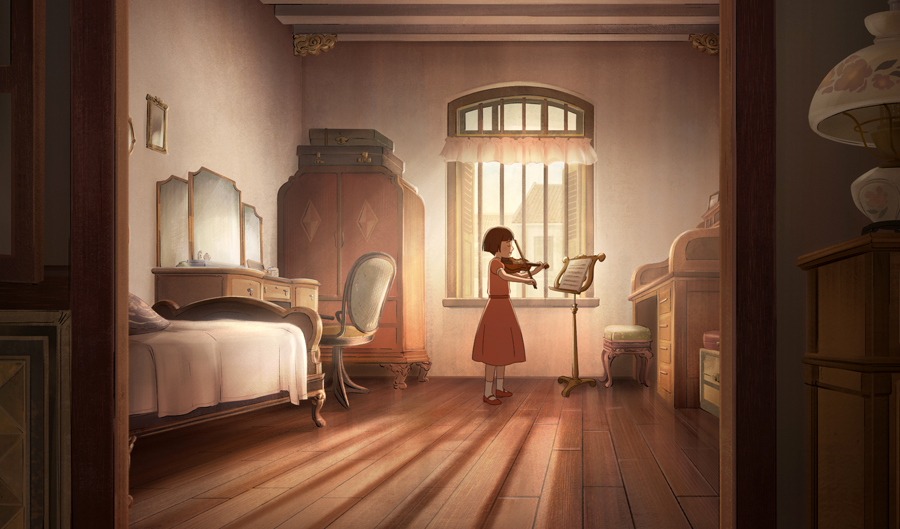
Music and war have never been combined so dramatically through animation, as in The Violinist, the Annecy Cristal Award winner from Singapore director Ervin Han and Spanish director Raúl García. The hand-drawn co-production between Robot Playground Media (Singapore), TV ON Producciones (Spain), and Altri Occhi (Italy) spans eight decades in Singapore, following two childhood friends and gifted violinists, Fei and Kai, who are separated during the Japanese occupation in the ’40s.
The project began as a 15-minute short by Han commemorating the 50th anniversary of Singapore independence in 2015 with just a musical score. But then Han and Garcia met in Singapore and developed it into a feature to celebrate the country’s beauty and culture, and offer its historical perspective during World War II.
“The idea was if we could tell this story as a feature film,” Han said. “We had to come up with a new story, new characters, but the idea of using the violin and music, in particular, as a vessel for a person’s memory and her story remained the core concept. It’s been a 10-year journey. In between, we had COVID and the world changed. But in some ways, I still can’t believe this film exists, and somehow we made it a reality. So I’m very grateful.”
And yet using music and war to tell a love story in animation was unique. “Because we did it in animation, that’s why it works the way it does, particularly with the music,” added Han. “And we found a way to portray a very dark chapter in Singapore’s history, to imbue it with a different kind of beauty, and different kind of quality. Hopefully, something also that younger audiences could engage with.”
“One of the major battles that we have in this movie is to convince the audience to leave the prejudice aside, thinking that animation is only for kids,” said Garcia, who spent decades as a senior animator at Disney before making the Edgar Allan Poe anthology, Extraordinary Tales.
“And to convince them to come to the theater to experience the movie, and to let themselves go,” Garcia continued. “Lately, the animated movies tend to be like a roller coaster ride: non-stop action, an assault on the senses. And this movie asks the audience to sit back, relax, and enjoy the view, even if the view sometimes is bleak and complex. But it’s a more poetic, contemplative kind of film. And I think it’s a way to make animation that is not very usual these days.”
The Violinist combines artists from across Southeast Asia and Europe and relies principally on hand-drawn animation with CG-enhanced environments and set pieces depicting war action. It also contains a sublime original score by Ricky Ho and Isabel Latorre (HMMA nominated and CCA shortlisted), with the Sunset Sonata as the central musical piece that connects Fei and Kai.
“We needed a reference of the music to properly animate the playing of the music, so the finger position will be in the proper place, and everything will be believable,” Han explained. “And then there’s another side, where Kai is writing the Sunset Sonata, and we see how he goes into the music and writes the notes. We needed the actual music to animate those things.
“So it was a back-and-forth between the composer and us and the animation team to make the thing work properly,” Han added. “It is the romantic fabric of the score.”
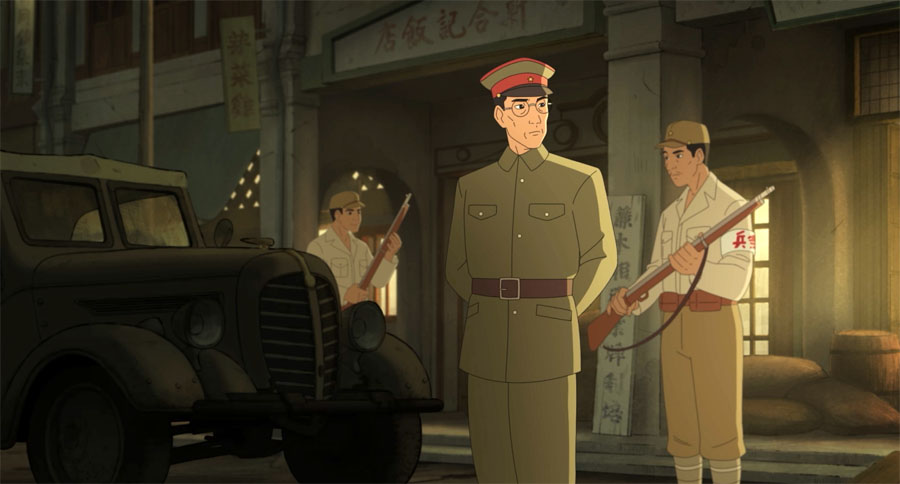
The animation, meanwhile, required experimentation to find the right balance between 2D (a combination of anime and European sensibilities) and 3D. The biggest camera moves and use of CG were reserved for such set pieces as the initial air raid sequence.
“So what we did was to make a hybrid where we used the formality of the movement characteristic of anime with a more graphic style close to the graphic novel or the comic book,” Garcia suggested. “And from that, we got the style. I don’t know if we created a new style per se, but that’s not important.”
Han affirmed that animation makes this unique because memory can be a little bit fuzzy. “We tend to remember things differently than what they often were,” he said. “And, with animation, we could recreate Singapore’s past in a way that suits the story. I told the production team that I wanted the film to look like it was remembered rather than reconstructed. That was a very specific artistic direction. A certain memory chooses you, you don’t really choose the memory.”