Mickey Mouse is an cartoon character co-created in 1928 by Walt Disney and Ub Iwerks.












What do you do if you’re a Japanese animation studio and you want to promote your show to the American market?
What if you’re an American fan who wants to learn about the latest anime, directly from the filmmakers?
Answer: Attend Anime Expo in Los Angeles, or “AX,” held each July at the Los Angeles Convention Center and surrounding venues. The 2026 convention drew an estimated 133,000 to 135,000 unique visitors. A total turnstile attendance tallied over 422,000 entries, up 12,000 from the previous year, with visitors representing 65 countries.
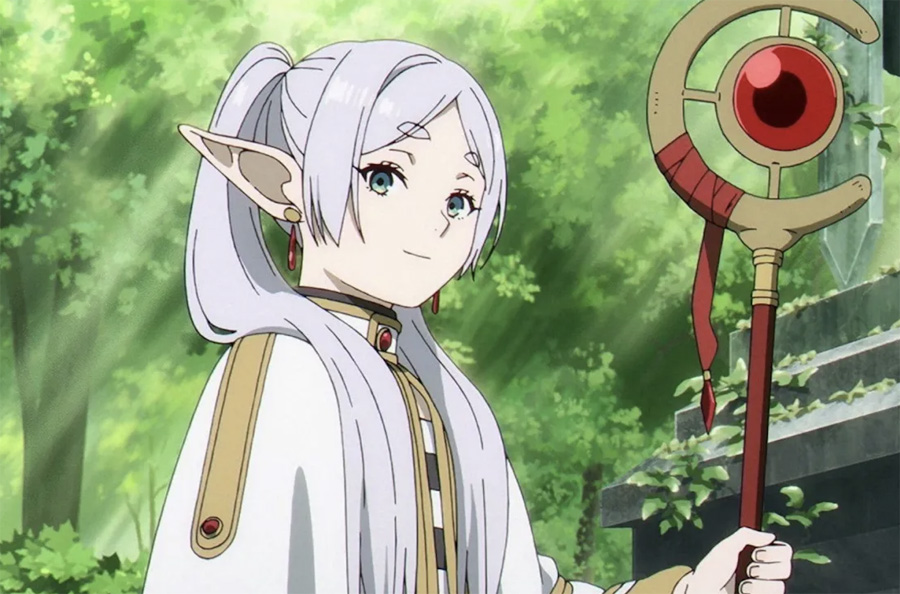
Among the 75-85 anime productions receiving attention was Frieren: Beyond Journey’s End. The series reached 38 episodes when its 10-episode second season wrapped in March. A third season—the much-anticipated Golden Land arc—has been announced, but alas, fans will have to wait till October 2027 to see it.
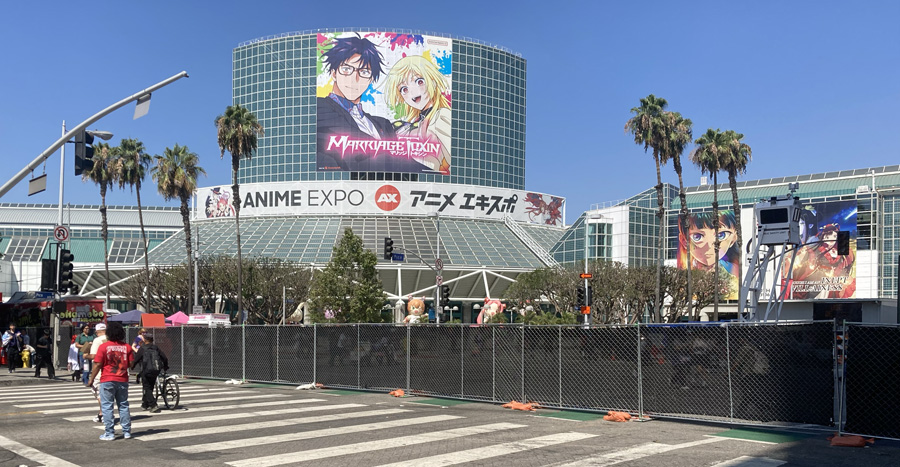
To keep interest alive, TOHO Animation hosted a panel featuring creatives from animation studio Madhouse on Saturday, July 4, at the JW Marriott. Fans packed the Platinum Ballroom, with a seating capacity of 2,100. Alas, photography was prohibited of the presentation.
The panel focused on behind-the-scenes of Season Two, noted for Team Frieren’s epic battle against Divine Revolte and his fellow demons, in Episodes Six, Seven and Eight. Keisuke Kojima served as Chief Animation Director for those episodes, as well as character designer for the series.
“I drew a lot of the main characters, but also Methode, Genau, and Revolte,” Kojima said. “Since there is such a large volume of work, I stepped in sometimes ahead of time as the chief animation director in places where the regular animation director couldn’t fully keep up so we could produce something better within the schedule.”
He added, “Because the animators did such a wonderful job drawing Revolte and his three subordinates, I really focused more on Revolte. The Solide versus Methode scene, which was basically Kōki Fujimoto’s key animation, was just incredible. So I just let him run with it.”
“Revolte has four arms and is very muscular,” Kojima said. “But he also has a lot of ornamental aspects and long hair. So I focused on balancing the beauty and the strength in that character. Because the beast-like movement was already really well expressed through the skill of the key animators, I approached my job as the animation director doing corrections with the mindset of adding beauty and masculine strength on top of that.”
Kojima spent the rest of the panel drawing the First Class mages, Methode and Genau, for the viewing pleasure of the audience.
Of particular interest was second season director Tomoya Kitagawa’s explanation of the flower imagery in the opening—imagery that carries more meaning than it might appear.
“I focused on Frieren’s life up until this point and the continued journey that she’s going on. So I connected Frieren’s meetings and partings with Flamme, with Himmel and others, using flowers as a motif, and I linked them forward to the current journey with her companions, Fern and Stark. The opening really is from Frieren’s point of view, depicting the continued journey.
Kitagawa continued, “Once the storyboard was complete, I had [Seiko] Yoshioka-san create the color script that would define the overall color tone and the look. The design leaned into the colors that convey a sense of light and textures to retain the brushstroke feel, which is a very different atmosphere from the main series.
“All of the flowers were selected by Yoshioka-san and turned into their very colorful variety.
“More variety and detail means a lot more animation work. The animation staff and animation director carefully drew out all those intricate flowers and made this a gorgeous sequence. Flowers are also a motif that appear throughout Frieren as a series. They also appear in Episodes 2 and 25, which I worked on in Season One. That experience carried over well into this opening.
“It starts with the white flower, which symbolizes Flamme and then Frieren picks up a single petal of the blue moon leaf and colorful petals fall into Frieren’s hand. And the change that Frieren’s goes through gradually as she encounters different companions along the way is something that I wanted to express through the use of flowers. There’s a lot of emotion that can be expressed with flowers. A blizzard of flower petals is such a difficult thing to animate. But the assistant director [Daiki] Harashina-san was great in executing this task.”
According to Kitagawa, Harashina drew over a thousand frames for the second season opening.
The moderator then asked Madhouse producer Yūichirō Fukushi about what he jokingly called a “controversial” scene, that of Frieren engaged in a three-day tantrum.
“I heard that everybody loves this scene in Season Two, and actually all of the staff really love this scene as well,” Fukushi said. “This scene was actually created by the director Yohei Tsuchiya and the animator, Toshiyuki Sato, and they drew it with perfect comedic timing. This was a really fun scene, and I think it expresses Frieren’s charm.”
The discussion then shifted to the season finale, which expanded on a concept from the manga, that of a field of snow crystals.
Keiichirō Saitō, who served as director in Season One, and returned in Season Two as a supporting director, commented, “We knew that we needed to come up with a worthy ending for Season Two. So we thought, how do we kind of amplify everything that’s included in that? There weren’t a lot of lines in that scene. As an advisor I was able to have this objective view. And so I would be in these meetings with our director and with [Tomohiro] Suzuki-san, who is the screenwriter. Discussions that would get quite chaotic. I offered ideas, but Kitagawa-san and Suzuki-san are really the ones who put it in into action and created what you see on screen.
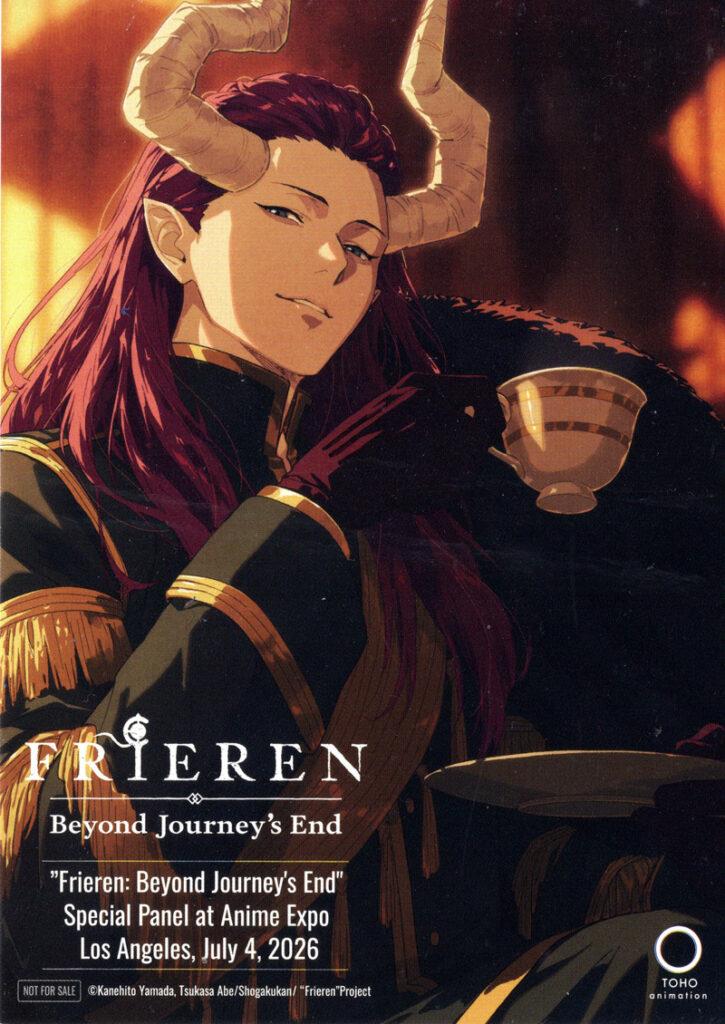
Producer Fukushi revealed little more about Season Three, other than confirming that most of Season Two’s creative team was currently working on it. The Golden Land arc will center on Macht, a demon described as the last and strongest of the Seven Sages of Destruction. For those who want an advance look at what happens, one can purchase the manga version of the arc now.
“Our mentality is to always do better every time that we make something. And we have all the best staff that we worked with on this next season as well. So that is our intention,” Fukushi said.
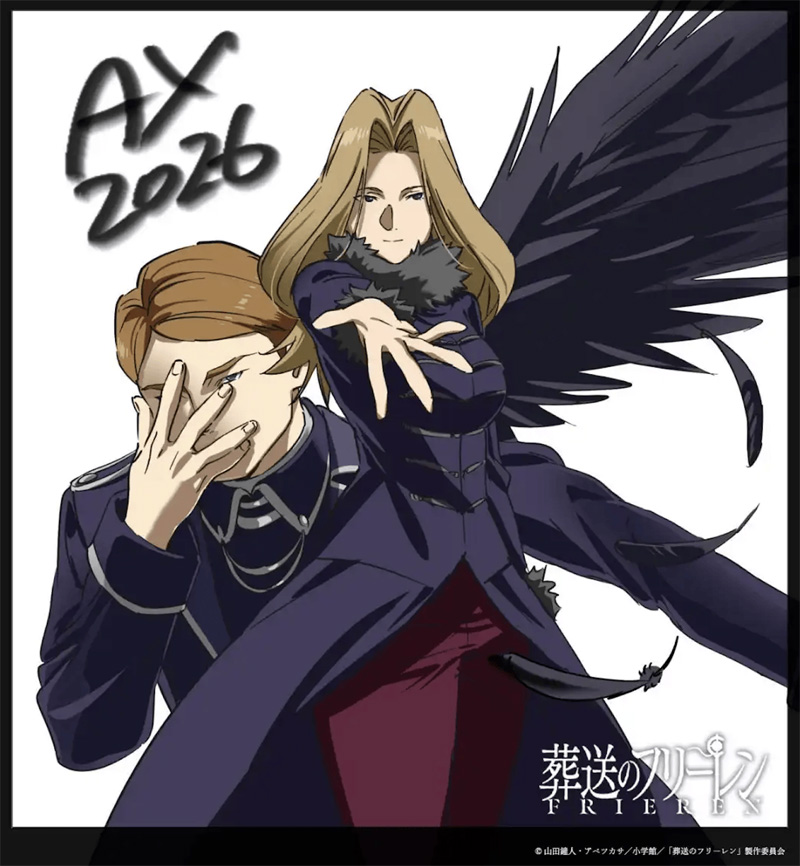
The panel closed with staff passing out a commemorative postcard depicting Frieren’s next villain.
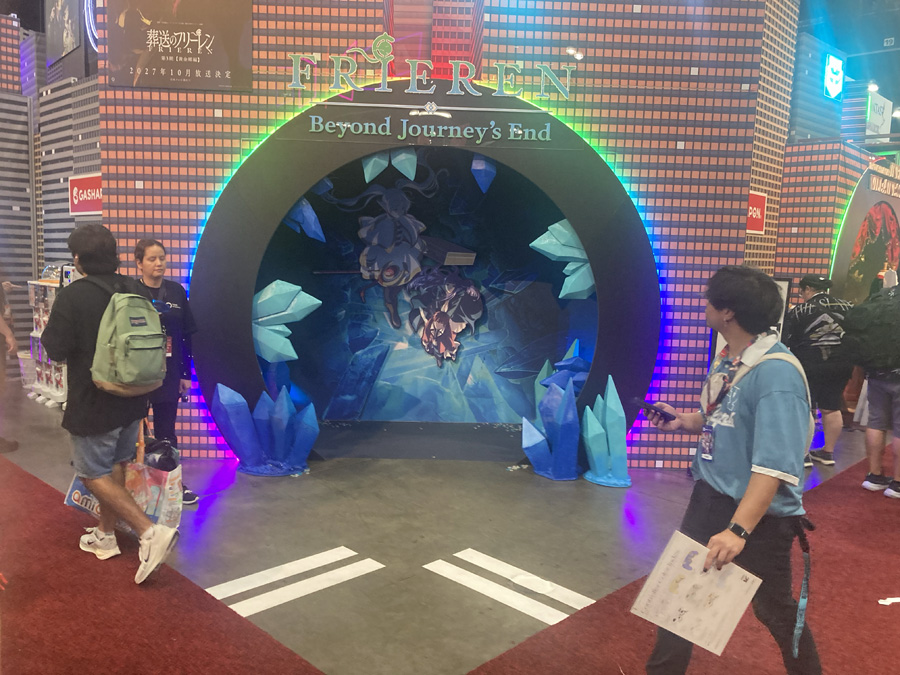
The moderator invited fans to visit the TOHO Animation booth 3601 in the South Hall for some photo ops and swag. The massive booth featured a makeshift Frieren cave lined with blue crystals that, in the show, robs mages of their power the way green kryptonite affects Superman. Fortunately, the Anime Expo version was harmless.
Which is a good thing. Eager Frieren fans will need all their mana for the wait until October 2027.
• Frieren: Beyond Journey’s End is currently streaming on Crunchyroll, Hulu, and Netflix.
Special thanks to Crunchyroll senior publicist Stephanie Wong.