Mickey Mouse is an cartoon character co-created in 1928 by Walt Disney and Ub Iwerks.









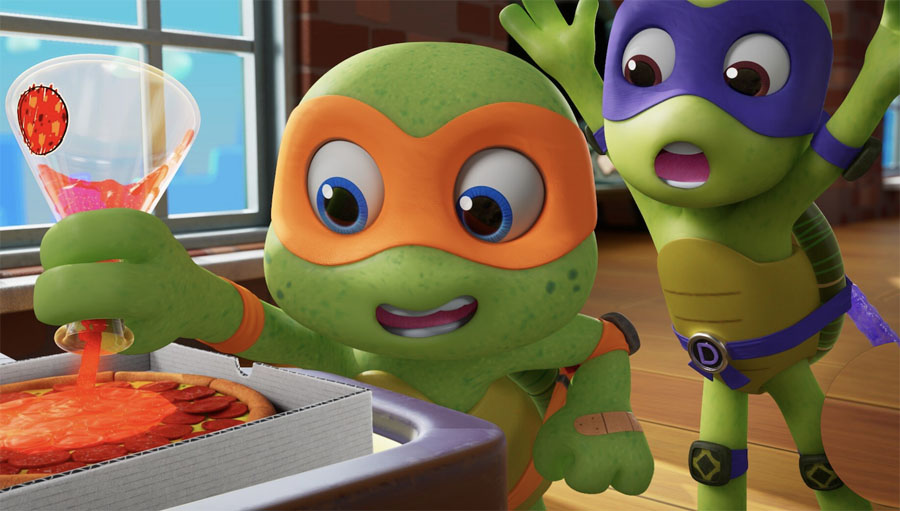
Eliza Hart, VP of Preschool Development at Nickelodeon Animation, joins me to talk about the new CG family series Teeny Mutant Ninja Turtles, centered on the eight-year-old versions of the beloved brothers. It premieres this Friday July 24th on the Nick Jr. YouTube channel. (This Animation Scoop Q&A was edited for length and clarity.)
Jackson Murphy: I really wanna know your perspective of how invested Nickelodeon is in the TMNT brand through the movies, through the shows, now through this. It seems to be an incredible time to be a part of the TMNT family.
Eliza Hart: I think it really is. I think the fact that the company has decided to invest in a preschool show really shows how invested they are in the overall sort of world of Teenage Mutant Ninja Turtles. Obviously, we have the movies. We have big kids stuff. We have games. It’s across our whole ecosystem. It’s a super important brand for us. And so I was really, really excited that the company also decided to get behind preschool in a really big way.
JM: And what were some of the thoughts behind this decision to go in this direction and feeling like preschoolers could really immerse themselves in this universe?
EH: I think there’s a couple things. I’m a mom of two kids, and so always looking for things that feel like it’s made for them. Things that are safe for them, entertaining for them, relatable to them, good for them to watch. As I oversee preschool development, I’m always thinking, “What in our brand ecosystem, our IP ecosystem as such a large corporation would be well translated into preschool?” And so a few years ago we started talking about, “Well, what would a Teenage Mutant Ninja Turtles show look like for a preschool audience?” And just as an IP, as a brand tonally, it just made so much sense. And when we announced it, too, everyone’s like, “This makes so much sense. Why hasn’t this been done before?” The characters are so relatable. They have fun. They love what they do. So the idea of being… “Okay, what if we took them and made them eight-year-olds and really explored what it was like to be a kid mutant ninja turtle before they became teenagers?” And really tell stories that felt really bespoke for a preschool audience. And then we brought in Max Beaudrey and Francisco Paredes and Sarah Johnson. All three of them are sort of our three lead creatives on the project and all grew up as massive Teenage Mutant Ninja Turtles fans. And so what we really did was channel, “What did you love about the Turtles growing up, and how do we think we want to translate that for today’s preschoolers?”
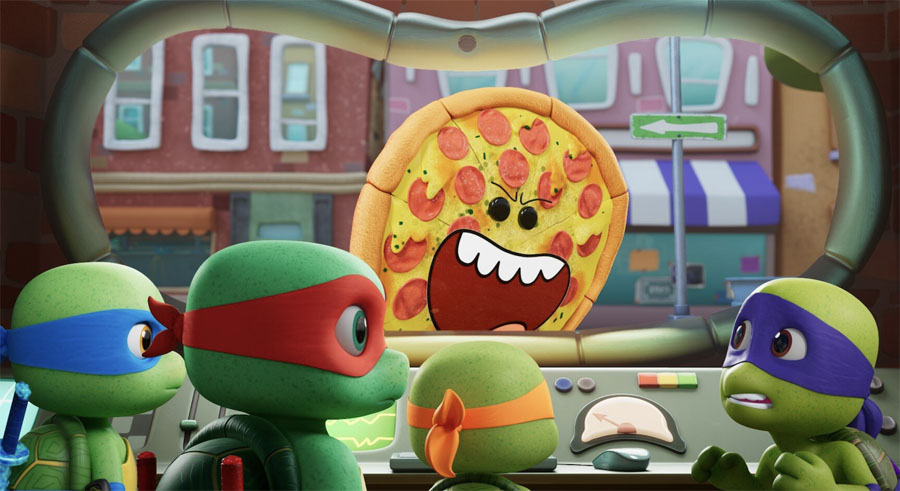
JM: And it really shows that you have TMNT fans behind this show because of the energy and enthusiasm that Leo and Donny and Raph and Mikey have — you can see it come across in the episodes, and I’m sure that was so important to showcase in this show.
EH: Yeah, 100%. One of our big sort of missions was, “How do we differentiate from all the other Teenage Mutant Ninja Turtles content that exists?” And what was special about being eight years old and being a Mutant Ninja Turtle versus when you become a teenager? How do we really play up the fact that they’re kids and Splinter is their dad? All that kind of fun stuff that we really got to really dig into in a different way than some of the other content can.
JM: Kids love pizza, and pizza is a huge part of this show.
EH: (laughs) I know. Okay, I know you screened the first two episodes. I will say not every episode has pizza in it.
JM: (laughs)
EH: But the first two and a lot of them do. A super iconic part of Teenage Mutant Ninja Turtles like lore and the world, but also relatable to kids, so what a win.
JM: Absolutely. So these episodes are three to four minutes long. What was the decision behind that? Was it tricky to have stories only be that length, and do how you feel about that? ‘Cause it’s unique in terms of animation that’s out there these days, including for kids.
EH: So we developed Teeny Mutant Ninja Turtles as a traditional, 11-minute series, and we really then took everything we had developed and made sure that we were telling the right stories for the YouTube platform. And for us, for our YouTube ecosystem, we know that shorter episodes work really well, and so that was where the decision came from to make them three and a half to four-minute episodes. I will say we also do know what that longer version looks like. We know what those longer stories look like, and I think we look at everything from a franchise point of view at the company. On YouTube, this is the experience kids are gonna get. If we do an 11-minute series, this is the experience they’re gonna get. If we get to do a 44-minute or a full-length movie, this is the experience they’re gonna get, and we really just build out the world and the characters in a way that will be specialized for the platform that they’re on.
JM: Interesting. So you’re leaving the door open for more because you came in thinking it would be maybe 11 minutes and now the opportunity for this, but you’re leaving the door open for the possibility of expanding this out in the future.
EH: Everything we develop we wanna make sure can be a book and a video game. Because kids experience their favorite characters and their favorite shows and their favorite IP every way possible. They play it, they watch it, they read it. And so we wanna make sure we’re building out the world and the characters in a way that they can experience it the way they’re going to naturally.
JM: And this is a big deal to launch something like this from Nickelodeon that is CG animated on YouTube, and you feel that that is a very comfortable avenue for this to debut on.
EH: It is. It’s actually our third original series that we’re debuting on YouTube. We had an original series called “Kid Cowboy” that premiered last January, and then we have a show called “Star Trek Scouts” that was he first ever preschool iteration for “Star Trek”. That’s been out for almost a year. Our YouTube ecosystem is really, really strong, and so it’s where our audience is. And I think at Nickelodeon, one of the great things is we always listen to our audience, and we really have to meet kids where they are. Our Nick Jr. channels… we have many Nick Jr. channels across YouTube. This is globally, but we have almost 100 million subscribers. We would be foolish to not pay attention to the importance of that platform and really take advantage of the fact that our audience is there. And this is a place where we can find them and they can find us, and introduce them to new things or possibly reboot or spin off favorite shows, but just really, really utilizing that platform really strategically.
JM: The look of this show is so friendly, and that had to be significant for all of you to make a friendly experience for the kids watching this.
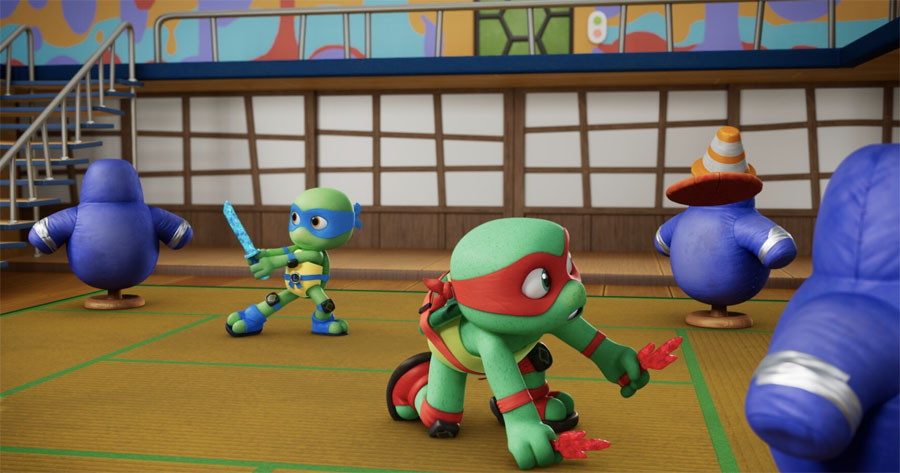
EH: Yeah, it was one of the first decisions we made. And actually it was Max and Cisco when they came in with their pitch. They were like, “This version of Teenage Mutant Ninja Turtles… they are not hiding in the sewers. They’re not hidden.” We have this cool turtle tower with a dojo. Mutants and humans are living amongst each other out in the open.” And for a preschool audience, it is really important for it to be bright and appealing and accessible, and not feel overly dark or grungy. But we really made sure we kept a lot of the really important iconography. You will see a sewer on our show. We use it a lot. They just don’t live in the sewer. New York City. Pizza. All that stuff. You’ll still see it. It’s just represented in a new way.
JM: Cool. You have worked in your career at Sesame Workshop and Hasbro, and now here at Nickelodeon with beloved brands and beloved IP. How have you seen firsthand the impact of beloved characters and franchises and IP on families and on the work that you love putting out?
EH: I feel a really deep sense of responsibility because I think we all know that our favorite shows and movies and characters were super formative to us as kids. So I feel like I remember that, and I think about that a lot as we’re figuring out how to bring beloved characters and worlds to today’s kids. I always come at it from, “What’s the creative reason we’re making this? What are we offering that hasn’t been offered before? What are we giving to today’s audience that is different from when we were kids? How has that audience changed? How are their viewing habits different? And how are we appealing to them and giving them something of quality?”
JM: Yeah. This is a quality show. How do you feel that “Teeny Mutant Ninja Turtles” represents where Nickelodeon and Nick Jr. are at in 2026, beyond, and how deep you wanna go with this?
EH: It’s a really lovely introduction to this universe for the audience. It’s something that’s made just for them, and as they grow, we have so many other things… so many other ways they can enjoy the Teenage Mutant Ninja Turtles universe. But this is sort of their first stop. I’ve always talked about it sort of as a primer into the world. So it’s gonna have all the greatest hits from Teenage Mutant Ninja Turtles just really taken to that preschool level.
JM: And investing in content like this for preschoolers ahead for Nickelodeon because that’s always been important for you guys, and I think it’s more important now than ever — in talking to parents and other family members — of just looking for things to watch that are appropriate and that are just good quality content. I love that this show represents that, and that you stand for that with what you do at Nickelodeon.
EH: Both in my job and just as a parent, I think it’s really important. We want to put something positive out into the world for kids. It’s entertainment. I always say kids are just littler versions of us. They’ve had a long day at school, even if it’s preschool, or they’ve had a tough time with a friend. Let’s give them something to help them smile and laugh and enjoy, and also, we like to say we hide the veggies… with good lessons and good themes of friendship and teamwork. Some of those really evergreen ideas. And even on “Turtles”… siblings. Sibling dynamics. And yes, there’s our bad guys, and our bad guys are very silly on this show, but… perseverance. Really great evergreen preschool themes that we’re really able to highlight even in this three and a half to four-minute format.







One Response
I still feel like this would have been the perfect opportunity to introduce a female turtle from the outset (Jennika/Venus/Lita/someone new)