Mickey Mouse is an cartoon character co-created in 1928 by Walt Disney and Ub Iwerks.













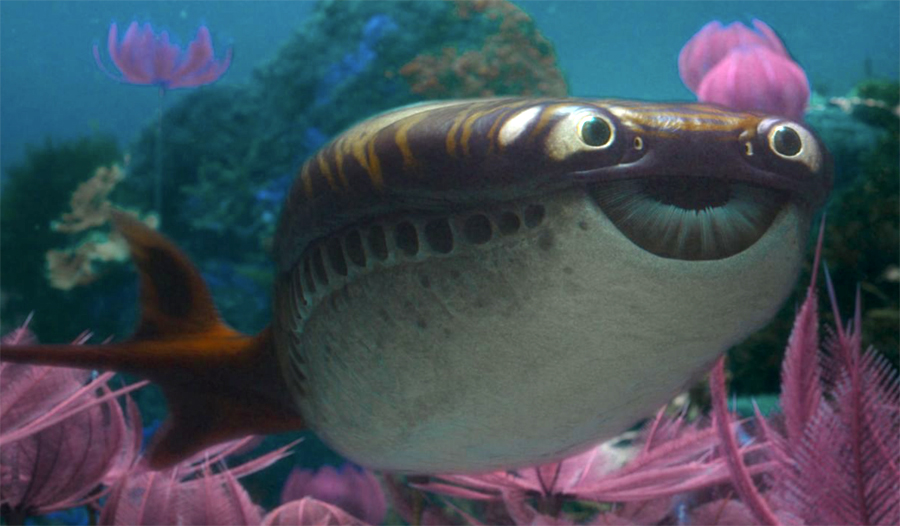
Surviving Earth chronicles the creatures and major changes of the planet over thousands of years — and the impact today. It premieres Thursday June 11th at 8pm (with episodes available next day on Peacock). Joining me to discuss the show are VFX supervisor He Sun (The Lion King) and animation supervisor Joe Tarrant (Ex Machina). (This Animation Scoop Q&A was edited for length and clarity. Images Credit: NBC)
Jackson Murphy: He Sun, how does it feel to be a part of another event series like this? “The Americas” was such a big hit. You showcase the history of our entire planet. [How] did you think about the epic scale of the planet and everything it offers?
He Sun: This show is very unique because it’s eight episodes long. We are talking about 43 minutes for each episode. You have about a half-hour of visual effects shots. You need to be scientifically accurate because we are… showcasing Earth’s extinction events. We have to have a lot of science behind it. But really in how we wanted to make it different, instead of a traditional documentary, we wanted to make it fun. Almost like a drama. Pushing the boundary of the creativity. How much can we push? From each creature design to the animation Joe’s been doing, to the effects and the environment — stuff people have never seen. We have to recreate them completely in full CG environments. Really exciting to be part of this.
JM: And I’m sure you’re both learning so much as you’re making this — about the creatures you’re depicting. Joe, what was most surprising or fascinating for you about the educational experience you’re having… and now the viewers are also gonna have?
Joe Tarrant: The educational experience was amazing because we spent some time with paleontologists talking about the physicality of these creatures and how they would move. You have so much respect for these paleontologists and you want to be as accurate as you can because you don’t want to frustrate them watching these things. But you also have to think about tomorrow’s paleontologists and make it an entertaining piece for the family. So often we found that we would push to the very boundaries — the very edge of the scientific consensus. And sometimes we might dangle a toe over the edge, but I think we got the balance just right.
HS: A very collaborative process. We felt like we were part of the production team. That’s very unique. Two years’ production. We were right there at the start when the treatment was written. As a VFX company, we would normally be at the end. For this, we were there at the start to the end, which made the collaboration really strong.
JM: That’s fantastic. He Sun, I’ve always been fascinated with weather. You show a lot about the different temperatures of the planet and the climates. How was it for you studying the weather and its unpredictability?
HS: This is showing the disasters, and most of the disasters are because of the climate changing. This whole narrative of these eight episodes is: we’re showing a lot of disasters but we also give the emphasis of new life coming back. A lot of big event sequences we have to tackle (including tsunamis — very intensive) and make it visually appealing and fit it in the production timeline. We transfer that energy into a new life. Afterward we show a new world and how it’s being rebuilt to give new hope to the next generation. Being part of designing the world was amazing. The carbonated forest is not like the forest you’d see today, so we actually built a carbonated forest in a studio. We redesigned it with the production team to have the very specific species of the trees and vegetation.
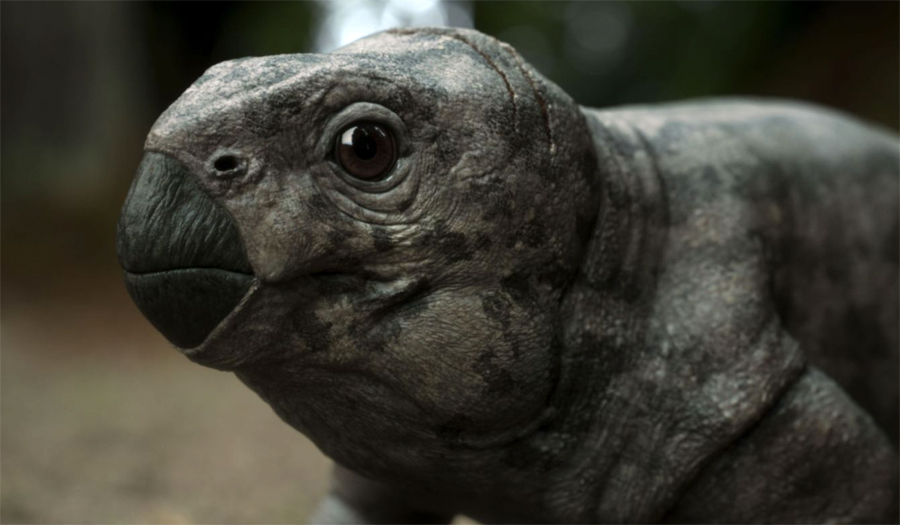
JM: Amazing. Anybody interested in science and nature is gonna love this show. Joe, these realistic looking creatures you show in the first couple episodes I screened — the gorgons and the dinosaurs (and more to come in the rest of the season) — you had to have them be as realistic as possible based on the information you were given, but also giving them enough personality, but not over the top.
JT: It was science first and then the drama and entertainment value of it. We had these moments in there… Tim [Haines, executive producer] would say, “We’re not going for Pixar. But there has to be that moment — that connection.” That’s worked very successfully in Tim’s previous projects, especially for that younger audience to find something in there that interests them — from a scientific point of view, fascinating, but I think it will be the emotional aspect that really draws them in. That is something we tried to do for every episode.
JM: Yeah. I think this show will bridge the gap for kids who are out of the school for the summer, for the end of the school year to the beginning of the school year — something entertaining and educational in the summertime for families. He Sun, I know you worked on the 2019 “Lion King”, which was a huge hit for Disney. An epic scale of nature for that movie. How did your work on that movie and other projects prepare you for something like “Surviving Earth”?
HS: I originally come from a game background. With the rise of virtual production, a lot of companies, including “The Lion King”, have used elements of game engine, like virtual production technology to enhance the creativity for filmmaking. The nature of the real-time, of the faster iterations, and allows the director to have a more fun and collaborative experience with post-production companies. So I carried that synergy from my original game industry experience to “The Lion King” and to “Surviving Earth” to bring that virtual production technology inside unscripted environments. Not many people have explored that before. Whenever you mention virtual production, people think “The Mandalorian” — big productions and dramas. But you can actually use it for unscripted, documentary styled TV production as well. You manage the scope of it. “Surviving Earth” is a great example of how we can use modern technology in conjunction with traditional ways of working, making the working environment a lot more collaborative.
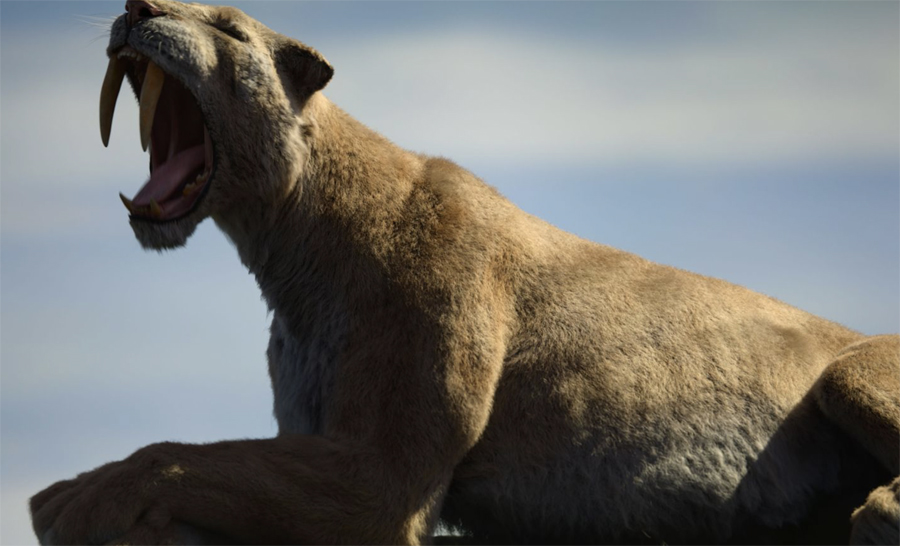
JM: Very cool. Joe, you were a VFX artist on the Oscar-winning “Ex Machina”. I love that film. I’m glad it won that VFX award because it deserved it. Has that movie stayed with you… as one of the highlights of your career?
JT: Yeah. It was a highlight. Sara Bennett, the VFX supervisor at Milk who won the Oscar — it was the first Oscar I ever held in my hands, as part of the team. That was quite a magical moment. I’ve been quite lucky in my career that I’ve worked with some amazing directors. And working with Tim Haines is one of the best experiences I’ve had.
JM: Nice. On “Surviving Earth”, there’s so much movement with the creatures — and you have so many creatures. Because of that, how would you sum this up as one of the most ambitious projects you’ve ever been a part of?
HS: We have about 73 creatures and about 55 variations of the creatures, on top of that. Over 100 assets, including the environment and effects (like fire and water). Over 1,000 shots across eight episodes. The largest show Milk has probably ever been part of. Great for the company and the team. The only reason that this show was so enjoyable for us and Tim’s production company is because we’ve been collaborating from day one. So much respect and trust.
JT: The entire process was amazing. Tim allowed creative input from the animators. I had an amazing team. We’d present ideas, and as long as we didn’t go too wild with it, we could push things along. It was good fun.