Mickey Mouse is an cartoon character co-created in 1928 by Walt Disney and Ub Iwerks.











The new animated show adaptation of the popular online game Among Us is now streaming on Paramount+. Series creator Owen Dennis (Infinity Train) shares what he values in the characters, cast and art of comedy. (This Animation Scoop Q&A was edited for length and clarity.)
Jackson Murphy: How familiar were you with the game heading into making this in-depth, very funny show?
Owen Dennis: Like everybody, I had definitely heard of the game and played it a few times. I definitely saw people driving by during the pandemic with the characters on their cars. My neighbor had a birthday party, and the kids couldn’t come out for it, so they drove by with “Among Us” characters on their cars. And I was like, “These people have no idea I’m about to make a show about this.” (laughs)
JM: (laughs) And now you have! I like how you show the movement of the characters in the spaceship, especially in the first episode. That’s a real nod to the players for the game. Really smart in how you did that.
OD: Thank you. We tried to make it that players are going to have fun when they watch the show, but also… people who haven’t played the game are gonna have a good time. That’s very important to me. If you’re gonna make a TV show of something, it has to stand on its own two feet and its own merits.

JM: These “crewmates” are on a mission transporting an energy source. What were your goals for the arc of the show and making it relatable for everybody who’s gonna experience this?
OD: When you play the game… the whole concept is, “Do I trust this person and why?” What I wanted to do is make the show an exploration of trusts and why we trust people and why we don’t trust other people. Throwing little stones at that theme and seeing how we can deal with that. Paranoia starts to set in. When I play the game, I get, “I think they did it! They did for sure!” And then you get stuck on one person for no reason, except that you didn’t see them at one point, which is insane. If that were real-life, that’s an insane thing to think about somebody. But that’s how I try to think about everything on the show: trust, why we trust who we trust, and how that affects our actions.

JM: And also you have to trust your team in making this show.
OD: I’ve got like 100 people who are helping me on every aspect of this. I knew that I wanted to make it not just look like the game. I wanted to do something that made it its own visual language. I brought in artists who had their own unique voices and styles they would put on the show. I had Alex Myung and Alex Klein come in, and they did various concept art. We took inspiration from Mike Mignola and “Rocket Power” and “My Neighbors the Yamadas”. We took a lot of inspiration from things… you wouldn’t associate with “Among Us”. We have characters with no faces, so how do you make them expressive? I wanted to make sure all of our board artists and teams could do whatever they wanted with the characters, backgrounds, and how the characters expressed emotions. It’s hard if characters don’t have eyes or mouths. It was important to me that all of the artists were able to have as much of their own voice in it as they could so they could be as expressive as possible and emotive.
JM: The personalities come through. Each of these crewmates has a distinct color and also a distinct voice actor. You have Elijah Wood, Yvette Nicole Brown, Randall Park, Dan Stevens, Wayne Knight. An incredible cast. That must’ve been a lot of fun for you.
OD: It was very fun. They’re all actors I love. It wasn’t a hard casting process. They would get super into these characters. On “Infinity Train”, we’re always, “Keep it grounded.” For these characters, we had a “keep it grounded” sort of thing but also we were able to push it to extremes here and there and get to see actors who don’t normally do that get to get a little weird, which was fun.
JM: What I noticed about this show is that the comedy is confident. You don’t hesitate with anything. It’s bold. It’s there. Do you believe in confident comedy like that?
OD: 100%. Nothing makes me more annoyed than comedy that tells you what the joke is. So if a joke happens and then someone goes, “That happened”, I hate that. I hate that so much. I don’t want quips after something important happens. I would prefer not have to have referential jokes. References are very easy. You can do them sometimes but it’s a very easy joke. It’s like lowest hanging fruit. I feel like it’s just good to do jokes that are… good and not worry about what other people are gonna think about those jokes. Sometimes people make jokes and then get this self-conscious thing about a joke and they lampshade it. They’ll do a “Well that happened.” Or one person will be sarcastically against the joke, or somebody will reiterate what the joke is. “Here’s a goofy plant.” And someone will go, “That’s a goofy-looking plant.” Yeah, I know. I can see it. I don’t need you to tell me. I care about jokes and joke structure.
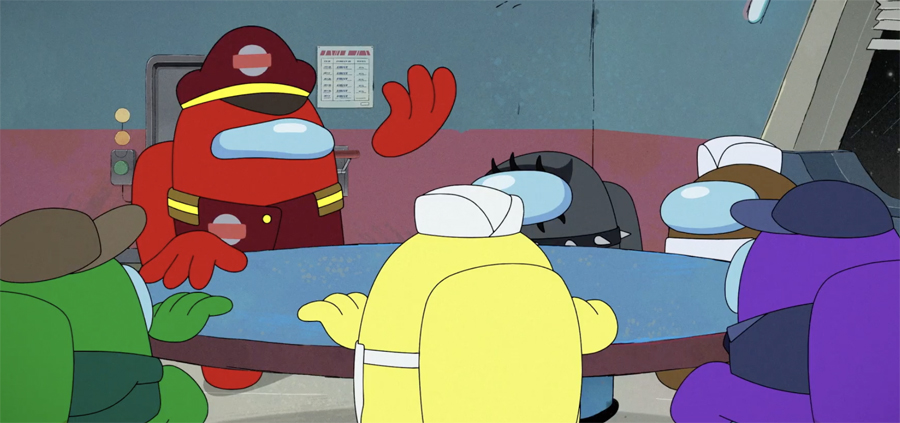
JM: I could tell in watching this show. I watched “Galaxy Quest” for the first time recently and enjoyed it. “Star Trek”. Now this show. That idea of an ensemble in space. What do you love about an ensemble in this kind of setting?
OD: If you do something like this, especially with “Among Us”, you don’t know who… for at least most of the show, you’re not fully sure on who your main character is. You start giving everybody arcs and the audience starts following these arcs, but then if one of those characters gets murdered midway through their character arc, you feel really sad because they never got to experience the euphoria that comes with, “I’ve achieved my goals. I’ve become a better person.” The thing I think is very funny is when you take characters that look like these “Among Us” characters, which look… let’s admit, they look kinda stupid… and make people feel emotions about them. That’s very funny to me. My goal is I just want people to feel emotions about characters that look ridiculous, and that’s very funny to me.