Mickey Mouse is an cartoon character co-created in 1928 by Walt Disney and Ub Iwerks.











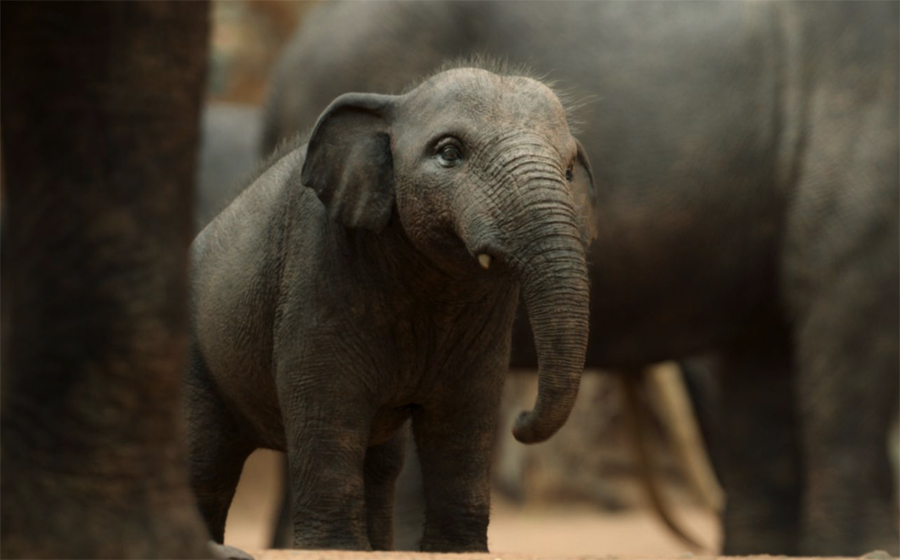
In 1999, Tim Haines created the iconic Walking with Dinosaurs TV series. Now he’s returning to nature storytelling on television as the executive producer of NBC’s new summer event program Surviving Earth, premiering this Thursday June 11th at 8pm. (This Animation Scoop Q&A was edited for length and clarity. Images Credit: NBC)
Jackson Murphy: I think it’s gonna be great for kids who have summer off from school, and it’ll kinda bridge the gap from the end of the school year for one year to the start of the school year for the next. How much do you think about kids and education, and entertainment value as well, when you’re making a show like this?
Tim Haines: I think if you’re making something for NBC, it’s very much an entertainment channel. But actually what I’m talking about is factual, and it’s quite complicated. So we have to make something that people can watch, follow a story, but learn something at the same time. In fact, probably learn something without realizing it, which is the best way to do it. And of course, it’s not just kids, it’s adults too.
JM: Yeah, this is gonna be a big hit for NBC. They had “The Americas” last year, which was a great success. They’ve also been prominent with their Green Is Universal campaign at Universal, and the Greener Light campaign. So working with them, how was that experience knowing that they’re so all about protecting the environment and nature?
TH: They were a pleasure to work with, both the people at studios and the people at the network, ’cause they both had different representatives. But it was the first time for me. I’ve worked before for Nat Geo, Discovery, people like that, but this was my first time working for a network. But I found them all really, really helpful. In terms of the environmental message, I think… one of the reasons I made it was because when everyone talks about climate change and subjects like that, they very rarely reference what happened in the past. And if you look back to the past, you can learn a lot about your future. And each one of these extinction events tells us something about what’s happening at the moment. And overall, and this is how I felt, and I certainly do feel about the subject, they are encouraging because it shows just how strong life is. No matter what the world gets up to, and it’s done some pretty awful things, it always survives. And that’s what it’s evolved to do, and you see that in these shows.
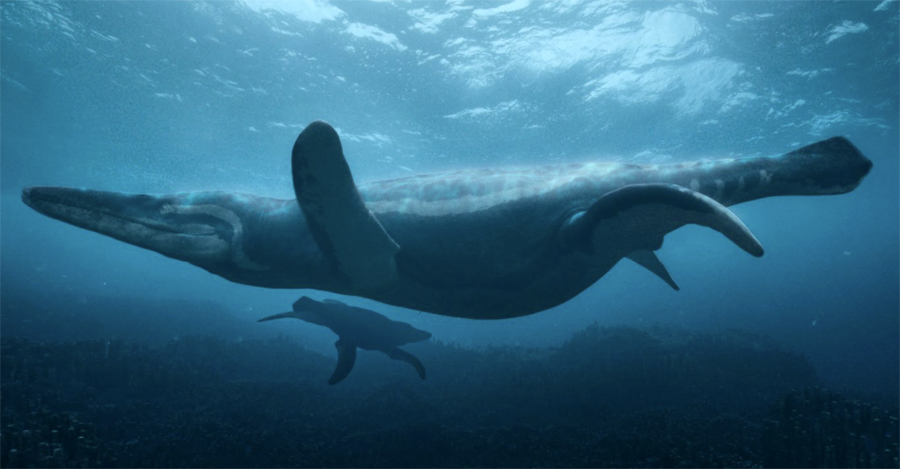
JM: I love how you give us the stories of all these creatures, all these animals, and the environments in the episode, and then you do at the end take us to today and show the impact of today. And from an emotional storytelling perspective, that makes complete sense of why you chose to do that. So how important was having that little ending like that at the end of each episode in the way you wanted to structure these?
TH: I think given that I’ve made something like “Walking with Dinosaurs” before, when I came back to this subject… “Walking with Dinosaurs” was great. You got to see these wonderful creatures. But often I could see people going, “So what? What has this got to do with my life now?” And the truth is it does, because they went before us, and they lived through all these things. So the little bit at the end is simply saying, so there was global warming, or there was unstable climate, or changes in sea levels. “Is that happening now? What’s it like?” In most cases, what is happening now is quite small compared to these events we talk about in the past, but it still allows you to relate to the past. You relate to those creatures. You relate to your own history, which is what it is.
JM: Absolutely. When you’re figuring out and structuring eight episodes and how you want the show to go, there has to be a lot of research involved in what you’re gonna talk about and what you’re gonna showcase. How fascinating of a research process is that for you to go through so much information, spotlight what you wanna talk about, and learn so much yourself in the making of “Surviving Earth”?
TH: Normally we do a lot of research into paleontology, but this time it was as important to go back to paleoclimatology as well, to talk about what the Earth was doing at these different times. I’m always astonished how much time scientists will give you to talk about their subjects, and in each case we often had to find the expert in that animal to give us the most up-to-date view. There is only one problem with scientists. You get two in a room and you’ve got a disagreement already. (laughs) So sometimes you had to negotiate between those to decide what color a crest was or whatever.
JM: I talked with He Sun and Joe Tarrant a couple weeks ago — the VFX supervisor and animation supervisor of “Surviving Earth”. [They did] a wonderful job. How was it working with them? And I’d love to know your perspective on a lot of the animation and the visuals that went into the show. Very ambitious work here.
TH: Milk, the company they work for, and JC who was sort of lead creative director on it, I’ve worked with him before. He Sun I’ve worked with before. Joe was new. Very experienced animator. One of the cleverest things about the animation is to indicate character without falling outside of what that animal could do. So you really want someone to feel for this little creature, but you can’t have it going, “Ooh,” or anything like that. It’s got to do what that creature does, and Joe really, really did very, very well with that, and it was great to sort of brief him on a scene and go, “Now give me your interpretation of that.” And as far as He Sun’s concerned, I remember at the beginning we were doing one or two programs which are using Unreal Engine, which I’m sure you know all about. This has been a long time in the making. When we started, He Sun was going, “Well, none of the trees can move. So you can’t do this, you can’t do that.” By the end, all the trees are waving away and the water’s flowing, and the whole technology just kept on moving on while we were actually making it, and so we had to run to catch up.
JM: Wow. So how many years in total have you been involved in “Surviving Earth”, then?
TH: Well, “Surviving Earth” was commissioned back in 2021. And it took us about two and a half years to make. There was a delay before it was transmitted and various other reasons. So you kind of add in an extra two years to it. But that’s fine. It’s come out now, and that’s all we wanted.
JM: It’s a big time for the planet, a big time for America with America 250, and just everything that you do and you showcase in this show is so impactful. And yeah, you’re right about the characters and the creatures. When I talked with He Sun and Joe about them, they have to convey a lot through their eyes without, like you say, the sort of wink-wink nature of it, and that has to be challenging… to make sure you do that consistently over a 42-minute episode length, but you guys really pull it off.
TH: It’s a huge temptation to go full drama. You’ll notice we never give them a name. We’re not gonna call him Eddie or Stan or whatever. There are males and females. We don’t ever do anything the animal couldn’t plausibly do because if we do, then suddenly the audience, which is so sophisticated, will jump into a different mindset. It’s like if you don’t get your photo-real animation good enough, it starts to look hyperreal, then people suddenly go, “Oh, animation,” rather than reality. If they start to behave like drama characters, then you’re going, “Oh right, so we’re going to have depth of emotions. We’re going to start seeing backstories,” all this. And no, none of that happens. They are all driven by mating, surviving, eating, and within that, you want your stories to be as compelling as possible. But honestly, if an animal looks cute, that’s because the scientists think, “Yeah, they were cute.” So we didn’t have to do any of that.
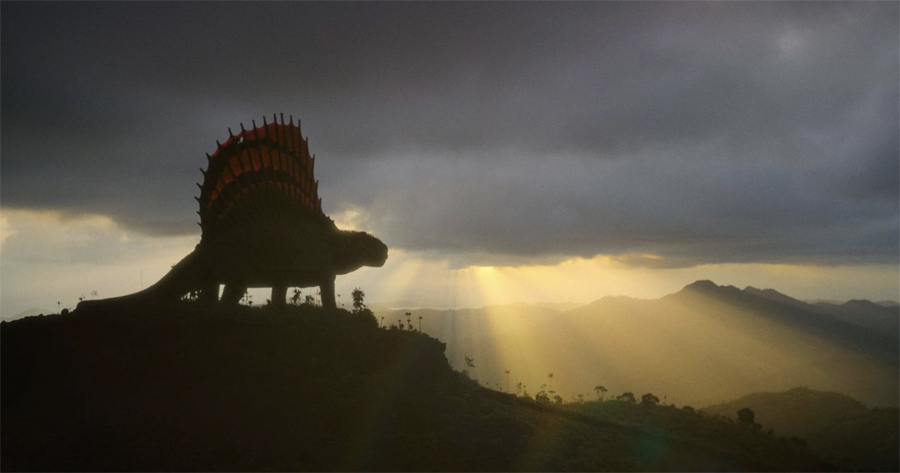
JM: We’ve talked about how technology has changed so much, even since the start of the production of this show. For you, since “Walking with Dinosaurs” in ’99, what has changed for you about the storytelling nature of nature stories and the TV business, and what has kind of remained the same for you throughout these decades and this experience?
TH: The kind of natural history storytelling is quite familiar, and when you’re doing such an alien thing as showing people dinosaurs, you want to lean into the familiar to a certain extent so that it helps persuade people it’s real. As for the technology, the humans are typical. The better the technology gets, the better you want, the more you want, and that’s sort of ranked up over the years. I think there was a bit of a moment, sort of 2005, 2010 onwards, when actually we were bumping on what we could do, and therefore the shows kind of looked a bit samey and there wasn’t any kind of advance in the technology. But more recently, I think one of the reasons you’ve had the work at Apple and at Netflix and what have you is because that CGI that you can put on television has become so much better than it was, so that it was worth revisiting these things, because technically they look so much better. Scientifically, I had new stories to tell, feathers and all that sort of stuff, but I think it was that wonderful technology that was now available that really tempted me to come back.
JM: Yeah, it looks so good. You also have narration guiding us through the episodes, and I’m sure the copy of that and choosing the narrator has to be an important process and guiding us through what happens over these emotional arcs.
TH: The narrator’s Josh Goodman. He’s a very, very great narrator. Not a huge sort of starry name, which often you get, but… I find that quite refreshing because you’re not thinking about some actor’s face when they’re talking to you. The voice is doing the job, and that is to seamlessly guide you through the story. And so I think that’s quite useful.
JM: I like that, too. I thought he did a great job because we’re presented with a lot of information and some depth and some emotion and some layers there. So I really thought he did a great job as well. So after working on something like this and putting years and years of your life into it, do you think about another project similar to this down the line? Are you gonna take a bit of a break now? What’s next for you?
TH: There are other things. I do make dramas as well, and we’re working on some of those. I think from this particular area, there is of course, and I’m sure you’ve talked about this before, a new technique coming along like a giant bull T-Rex towards the whole area, which is AI. And I think that there is a way in which some of the wonderful work that’s done by artists with their art and AI can be incorporated within CGI pipelines to make a really stunning looking show. And so I think the next generation, if I were to do something like this again, I would definitely be incorporating the two, fusing them together. Not going full AI. Not abandoning the sort of work that Joe could do, but to combine the two and therefore give us something that looks even better.