Mickey Mouse is an cartoon character co-created in 1928 by Walt Disney and Ub Iwerks.









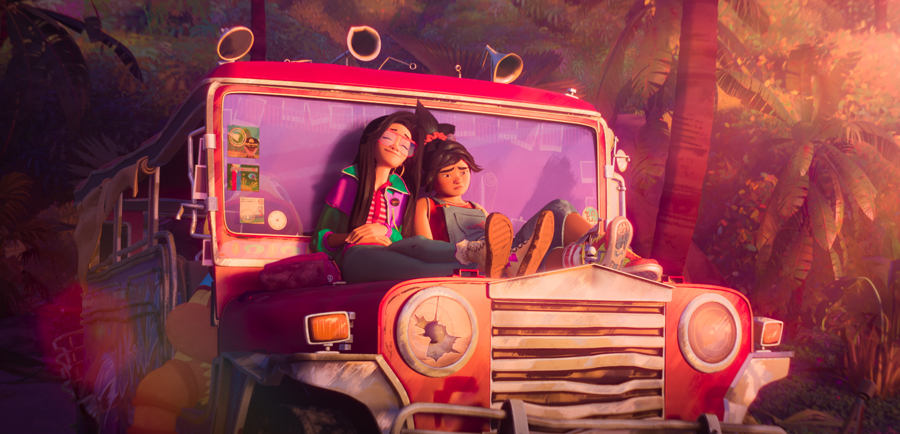
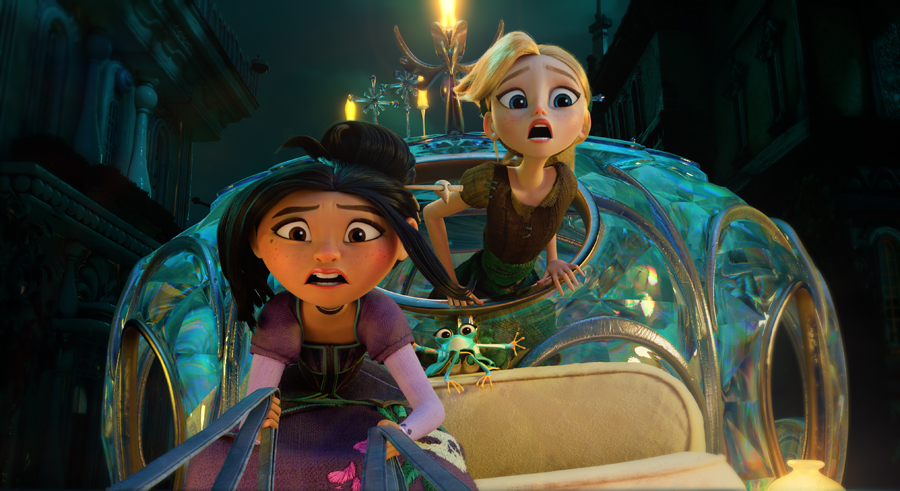
For DreamWorks directors and best friends Joel Crawford and Januel Mercado (Puss in Boots: The Last Wish), Forgotten Island offered an opportunity to make an original movie that was a wildly imaginative love letter to their shared Filipino culture and mythology.
Through Jo (H.E.R.) and Raissa (Liza Soberano), Crawford and Mercado fashioned a fantasy comedy about friendship, memory, and nostalgia. And that friendship is tested the the night before Raissa leaves the Philippines to attend Caltech. That’s when Jo discovers a magical portal to Nakali, the titular island filled with supernatural creatures that has stirred their childhoods.
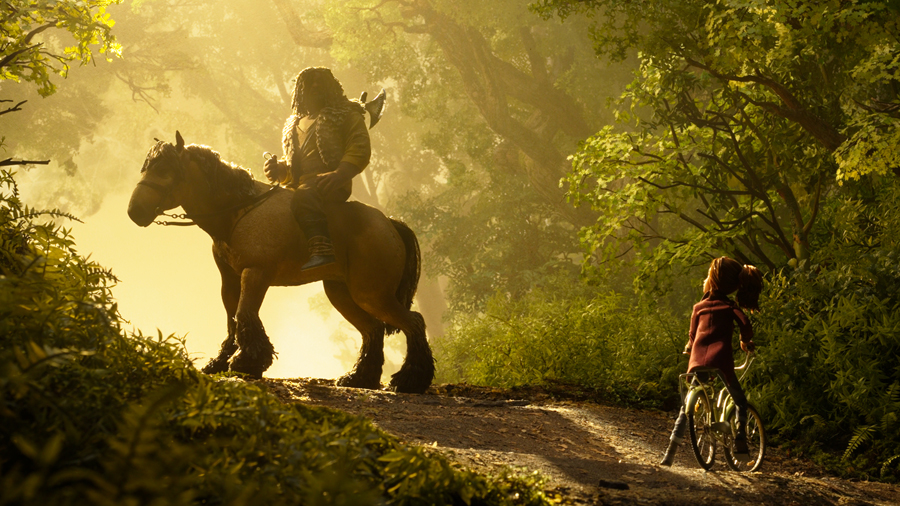
Supercharging the 2D-like graphic and painterly aesthetic of The Last Wish, Crawford and Mercado created two distinct worlds: the warm and colorful ’90s-era Philippines and the fantastical, dream-like Nakali. This was defined particularly by Filipino touches, black-light photography, and vivid bursts of cyan and magenta.
Indeed, Nakali seems like a surreal fever dream. “I think especially being able to do a little bit of Wizard of Oz inspired this magical world of Nakali,” Crawford explained. “We were pulling from multiple loves that we have of the ’90s aesthetic with these bright, saturated colors, a lot of Filipino artwork in terms of pattern, tribal marking.”
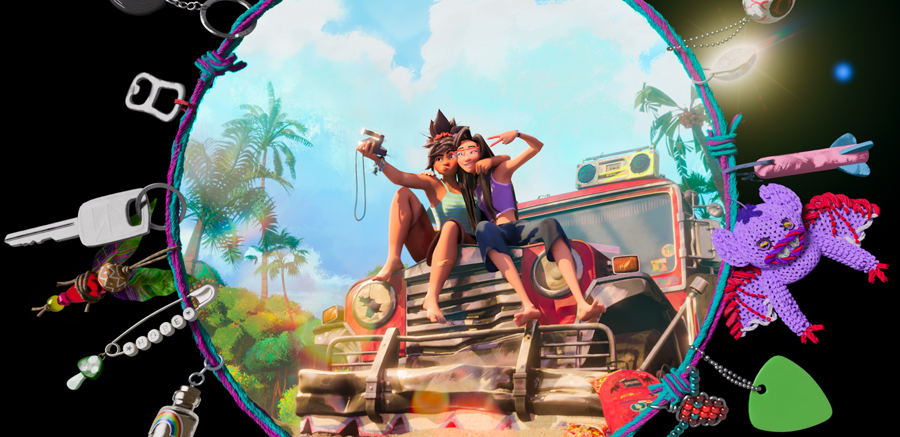
Yet the mythology of Nakali was tricky. There were seven moons and a stylized sun to contend with. “The lighting is not based on science but is based on magic,” Mercado said. “And I think especially in any movie where we’re taking the audience on a journey: visually, sonically, the whole thing should feel like this roller coaster ride.
“It was important to us in the first act to show the sandbox that we’re playing in so that nothing comes out of nowhere,” added Mercado. “And, in a way, these moments early in the film that are little teases of turned up anime moments, stylized painterly moments, pay off in a bigger way later on.”
Building on the tech used for The Last Wish, The Bad Guys, and The Wild Robot, Forgotten Island benefited from new DreamWorks advancements. “Especially with the cinematography and just pushing the lensing with our head of cinematography layout, Sean Cullen, and our animation team led by Sean Sexton,” Mercado continued. “The way that they pose the characters work hand in hand with these anamorphic ultra wide lenses that we wanted to take further into our movie just to give a bigger breadth of scope, not only in the fantasy world, but even in these intimate moments between friends in the real world.”
When it came to populating Nakali with its mythological creatures, DreamWorks reached new animated heights. The highlights include the tree-dwelling Batiba (Jenny Slate), the weredog Raww (Dave Franco), the giant baby demon Bungi (Manny Jacinto), the blue merman Prince Mermahn (Kevin McCann), and the vampire-like Manang (Lea Salonga).
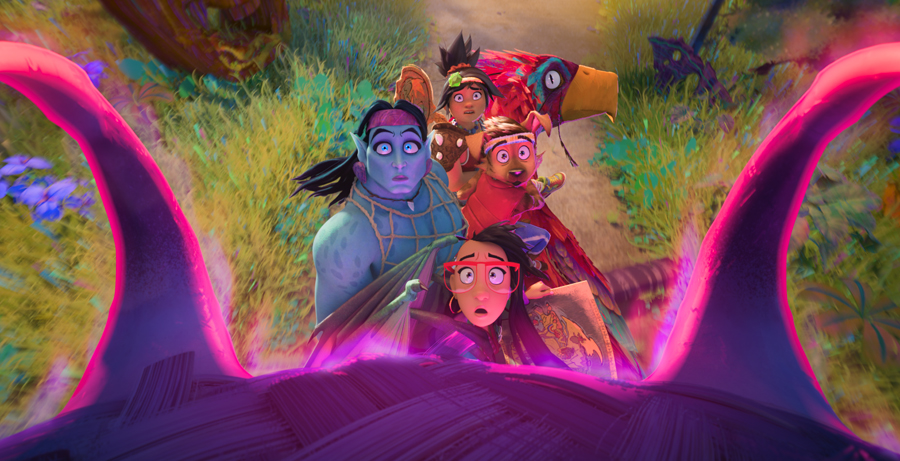
The latter, whose torso separates from its legs and whose wings get stolen by Raissa, required nearly 10,000 rigging controls. “Manang is essentially two characters by splitting in half, “ Crawford explained. “ In her movements, there’s this surfacing that’s like obsidian rock, which is hard and stiff, and then there’s serpentine soft movements. So the rigging of that model is more complex than anything we’ve done before. And then the wings were another layer of complexity that we actually didn’t find out until really late in production. We were just seeing this beautiful animation [and all the rest]. It was just so many points of articulation. They’re like different digits and kind of ribbony, so it’s even more complex with how they move.
With Raww, DreamWorks used three different models (a human, a canine, and the weredog) at the same time with a variety of limbs and finding ways to hide them. “They actually pioneered this on Kung Fu Panda 4 with the chameleon,” Mercado offered. “You feel so supportive that someone’s going to figure it out, and they always do.”
Meanwhile, there are three 2D flashbacks narrated by Raww, Bungi, and Prince Mermahn explaining what happened when Jo and Raissa first arrived on Nakali. These were animated by Manila-based Snipple Animation.
“Snipple matched our crazy genius with their energy and talent,” Crawford said. “In each flashback, it was important to us that it felt like the character who was telling it , and that it was inspired by ’90s anime. So for Raww, the touchstones were Street Fighter and Dragon Ball Z. It’s pretty obvious because of just how over the top it’s being told by Raww’s personality.
“With Bungi,” Crawford continued, “he’s actually not in his flashback because he was the one doing the tapestry pictures. Everything needed to be rounded lines and feel soft, and there’s this anime, Crayon Shin-Chan, that’s like this. And Prince Mermahn, of course, being narcissistic, this glamorous point of view was inspired by Sailor Moon, heart-shaped lens layers, Vaseline on the lens, and sparkles.”Yet there was one happy accident with the Raww flashbacks that Crawford pointed out. “There’s one thing that I just love with Raww being an unreliable narrator. He easily gets confused in his story, so when he’s doing voice-over, he’s not speaking on screen. Except for one shot. The animator had done lip sync with him and he’s just standing there and he’s talking. And when we met with Snipple, they told us that they made a mistake. But when we saw it, we were blown away by all the work that went into that and how beautifully the animator did the lip sync. This felt right for Raww being inconsistent, so we kept that happy accident in the movie.”